A facade that reduces concrete’s weaknesses in exterior applications
Seoul, South Korea
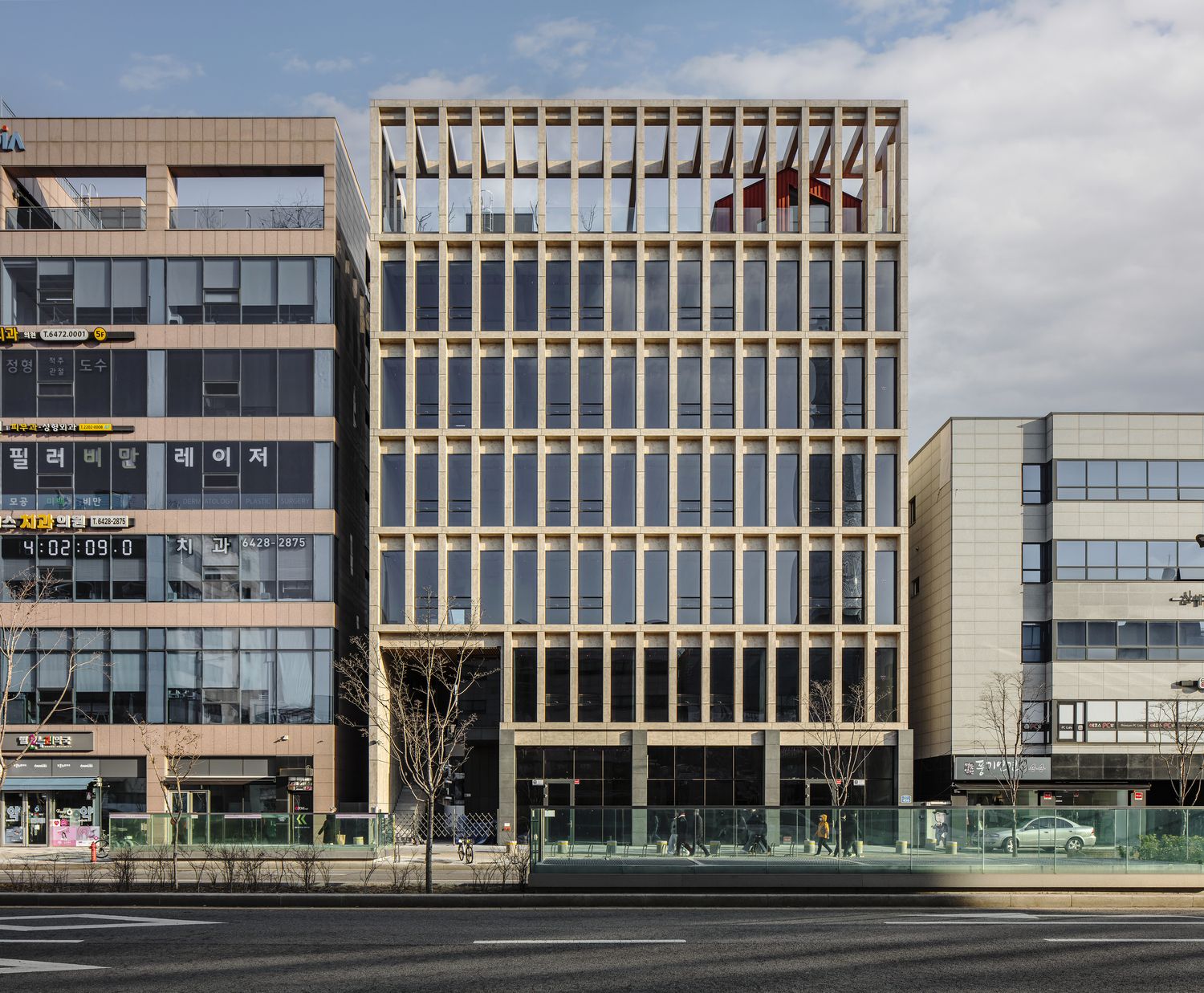
Precise architectural presence with a material built to stable over time
|
Project location: |
Seoul, South Korea |
|
Project type: |
Mixed-use building |
|
Design: |
Hanul Architects & Engineers |
|
Partner: |
GAI International |
Located in Bangyi-dong, within Seoul’s Songpa-gu District, JP D&D Building sits in an area that has experienced strong growth in recent years. The addition of new residential, retail, and office developments has increased activity and complexity, placing greater demands on architectural quality and performance.
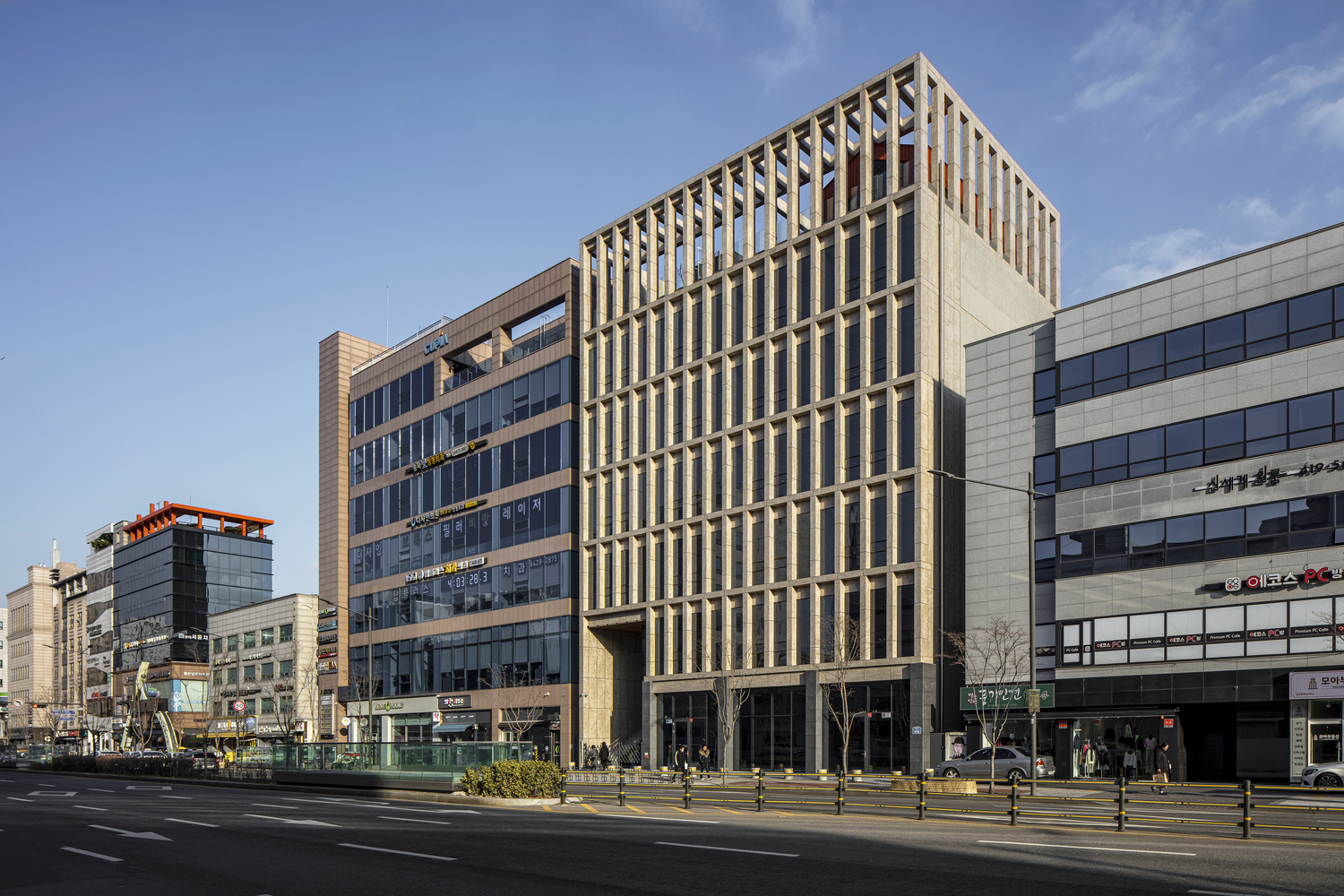
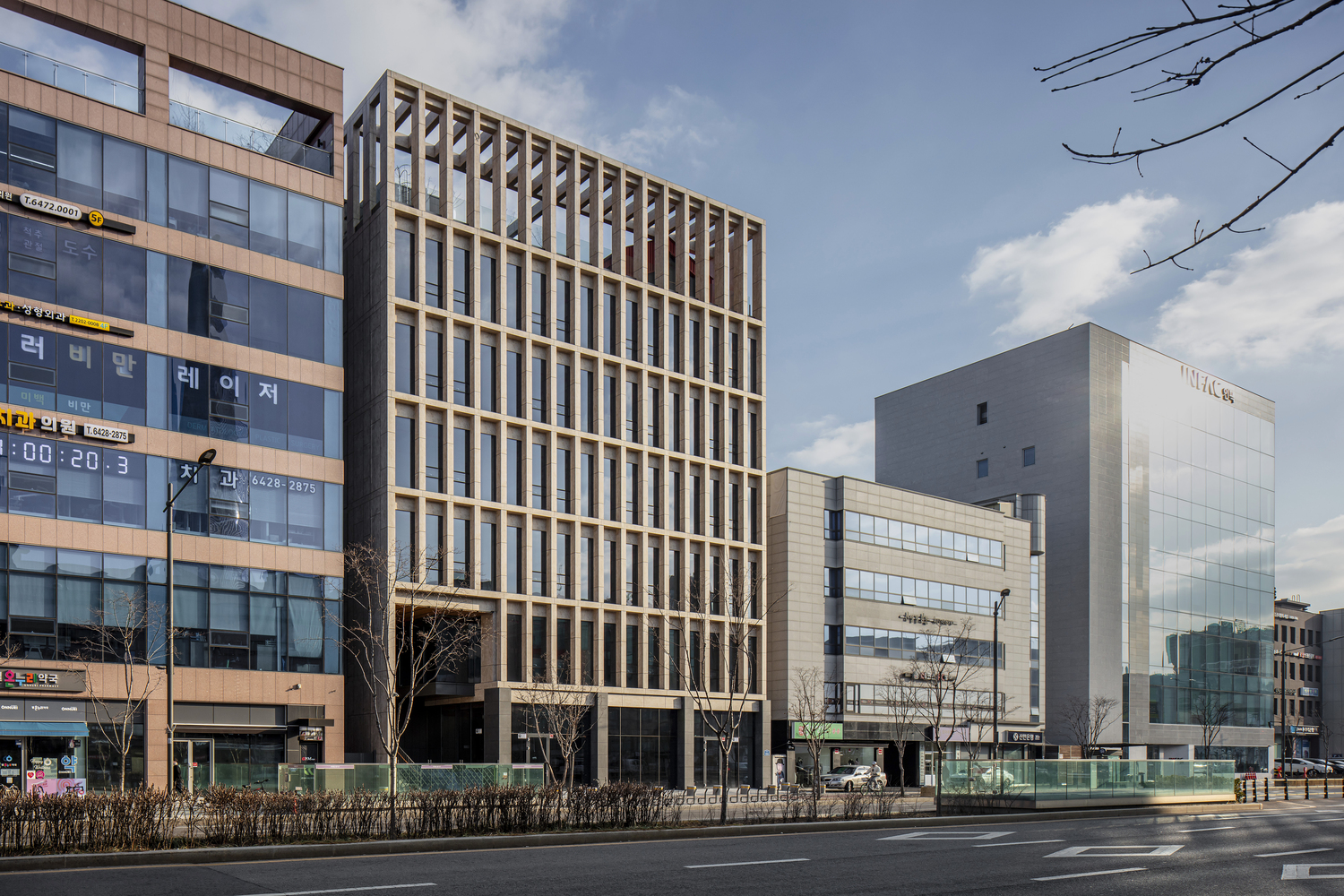
Within this context, the building is defined by crisp massing and a concrete structural frame that provides stability. On that foundation, the exterior envelope becomes a key element of the project. Executed as a ventilated facade system clad in Neolith sintered stone, it establishes the building’s identity, clarifies its reading from the public realm, and enhances technical performance.
Compositional order and a modular rhythm along the street
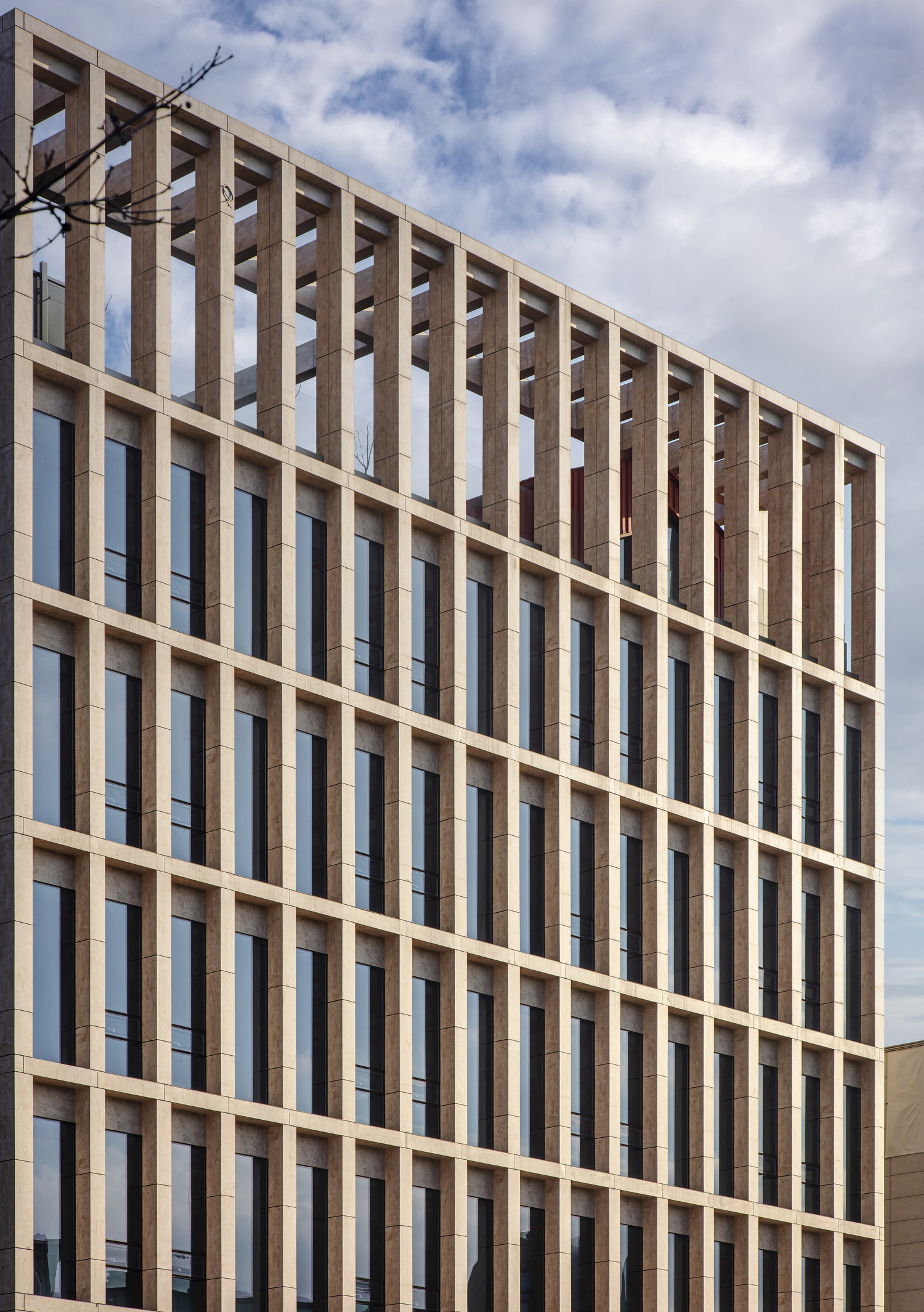
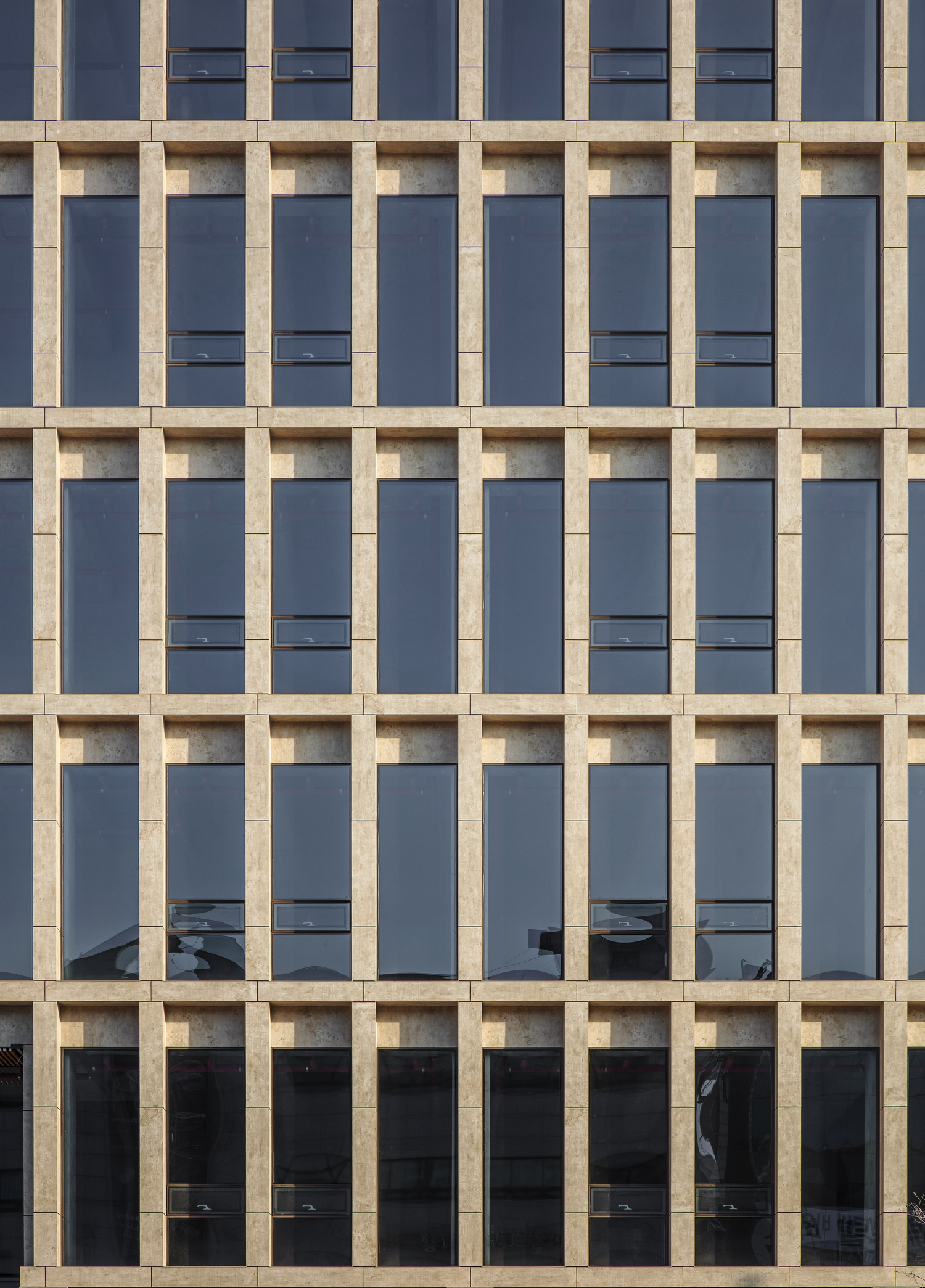
The elevation follows a clear compositional approach that reflects the structural logic and organizes how the building is perceived from the street. A restrained modular system governs the facade, where the repetition of carefully proportioned openings creates a steady, recognizable rhythm. This consistency, reinforced by the continuity of the claddings, supports the impression of a coherent, solid volume designed to remain relevant over time.
 |
 |
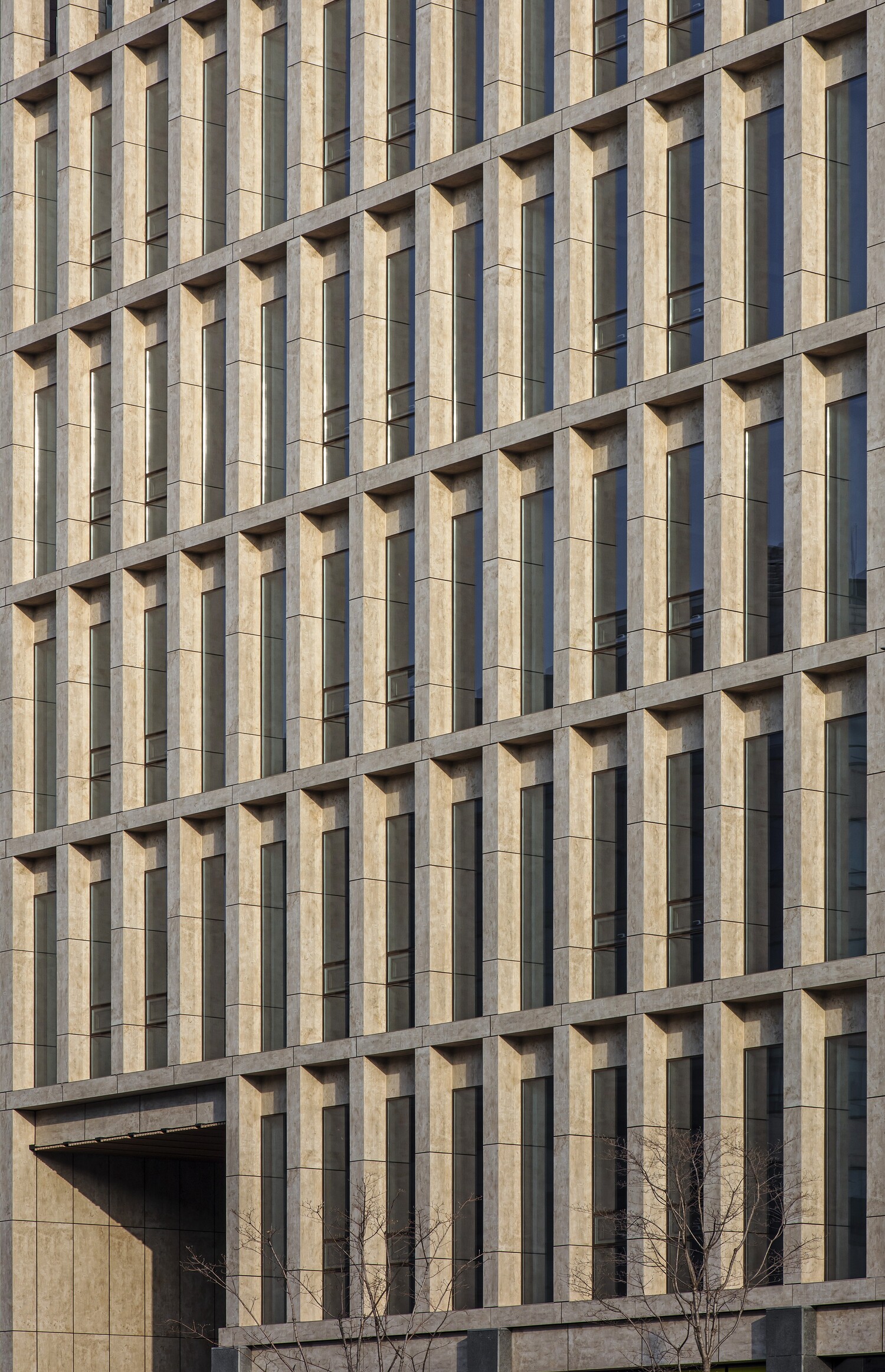
Slightly recessed vertical planes introduce depth and help modulate daylight into the interior, while also bringing a more human scale to the pedestrian experience. The building aligns with neighboring structures, respecting heights and street lines, yet its refined geometry and disciplined pattern give it a distinct presence within the surrounding urban fabric.
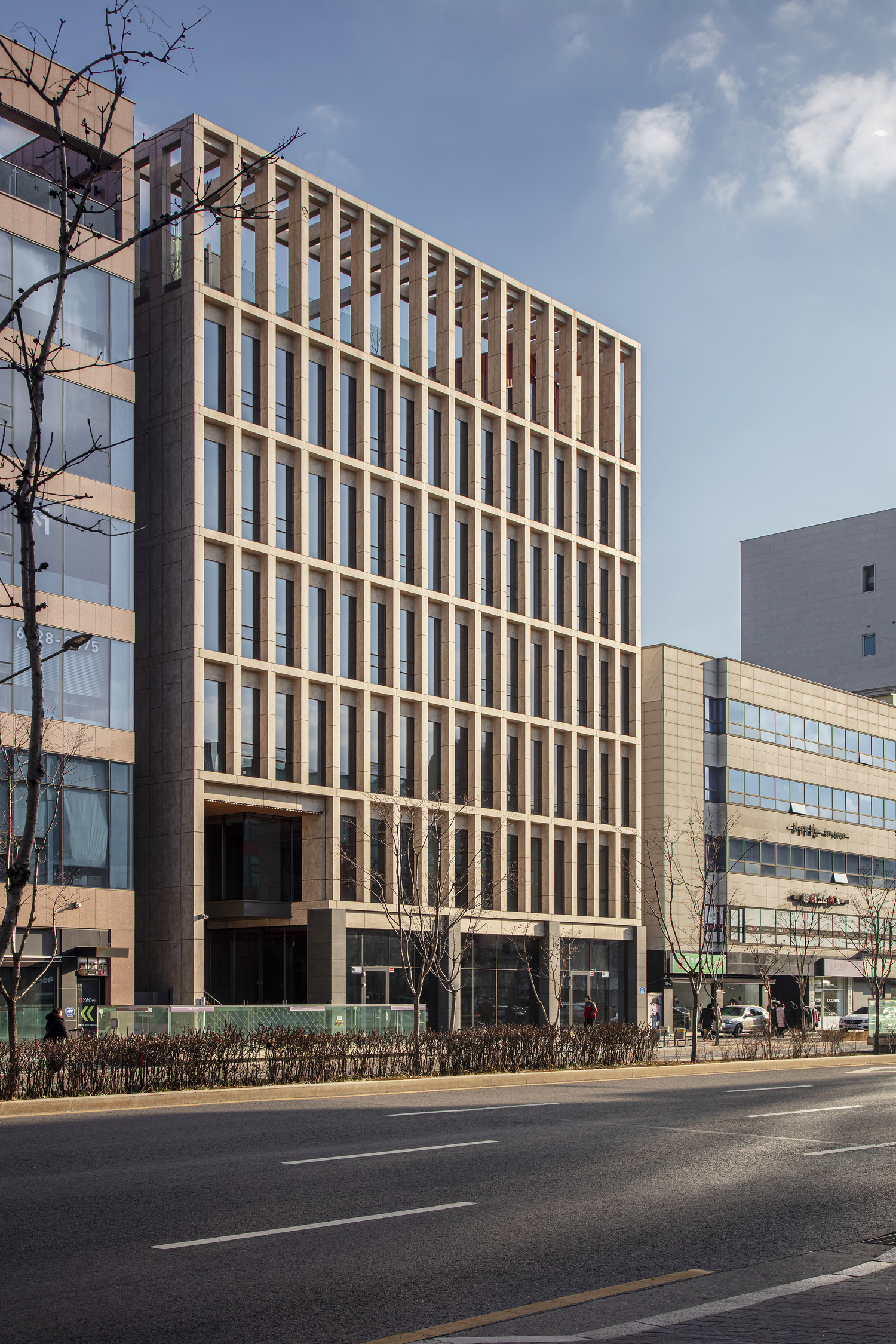 |
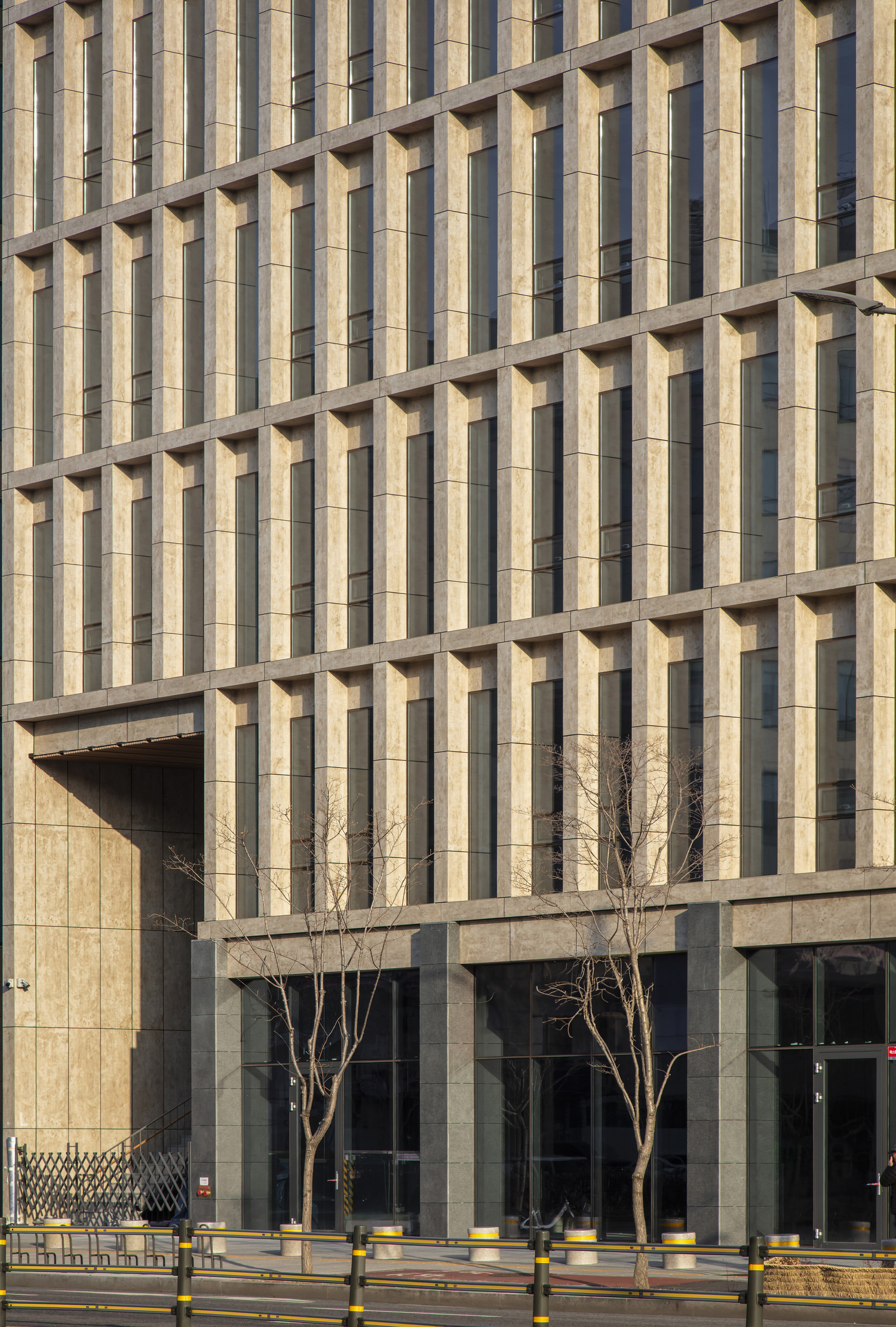 |
Access is defined by a large opening that acts as a threshold between the public realm and the interior. More than a simple entry point, it functions as an urban gesture that gathers the street and extends it into the building, reinforcing a direct connection to the immediate context.
Visual coherence and construction performance with Neolith’s sintered stone
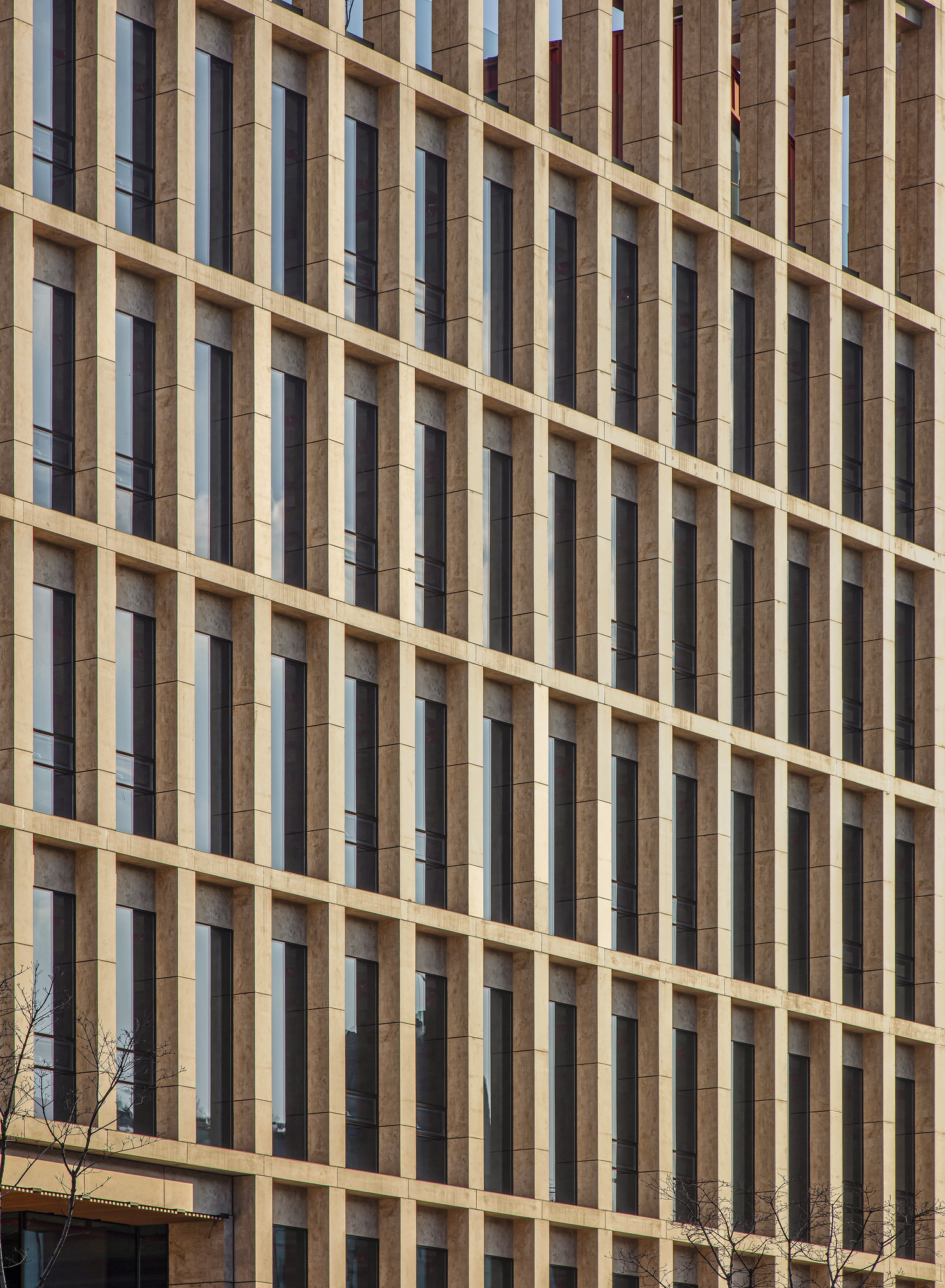
For the cladding, the team selected Neolith Concrete Taupe in the Silk finish. The large-format slabs made it possible to create broad, continuous surfaces, reducing visual fragmentation across the facade. Joint layout was developed to reinforce the architecture: seams align with the building’s rhythm and contribute to a clean, ordered elevation.
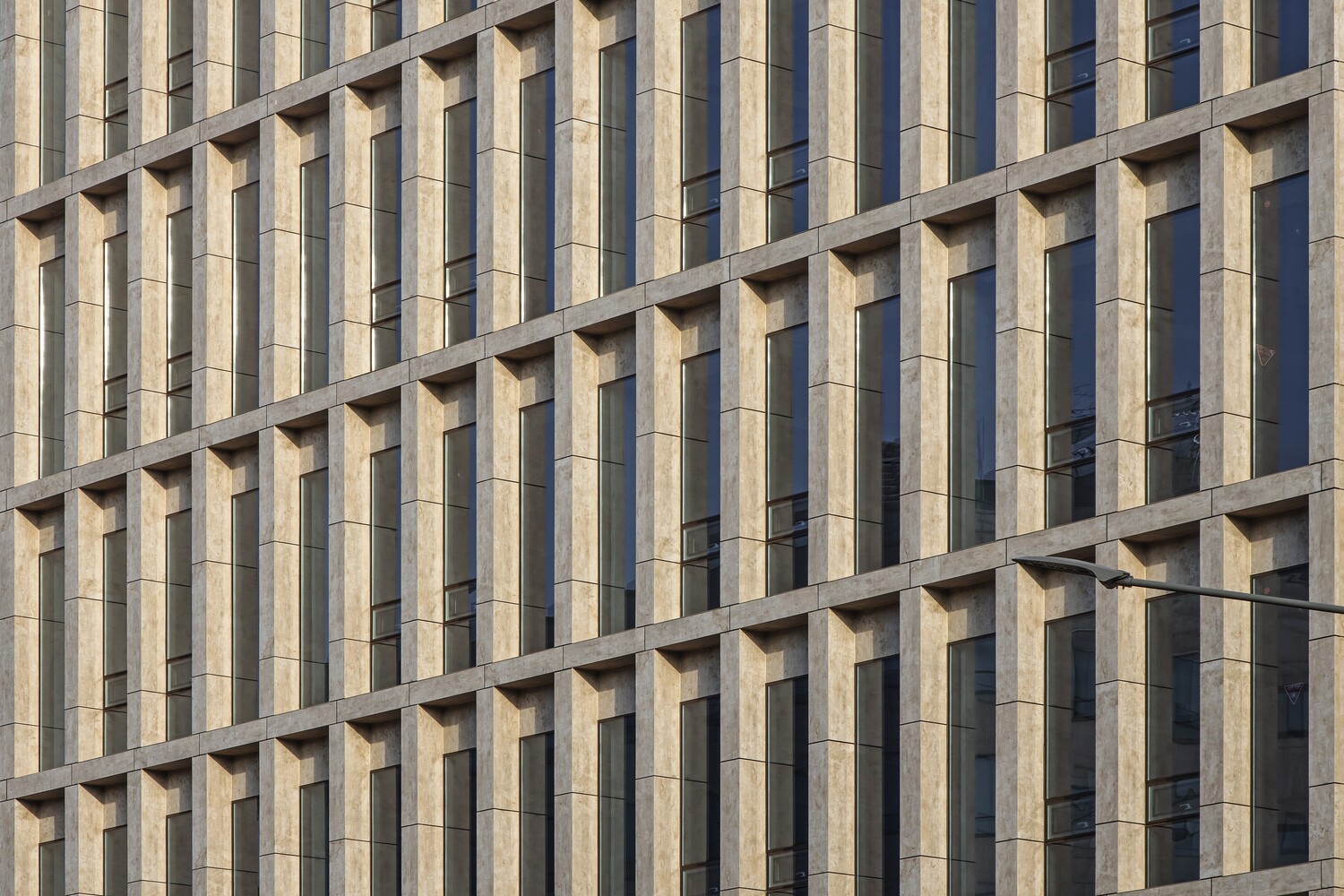
Neolith sintered stone’s lightweight composition also supported seamless integration with the ventilated facade system developed and installed by GAI International—an important advantage in a project where precision in alignment, transitions, and edge detailing is critical.
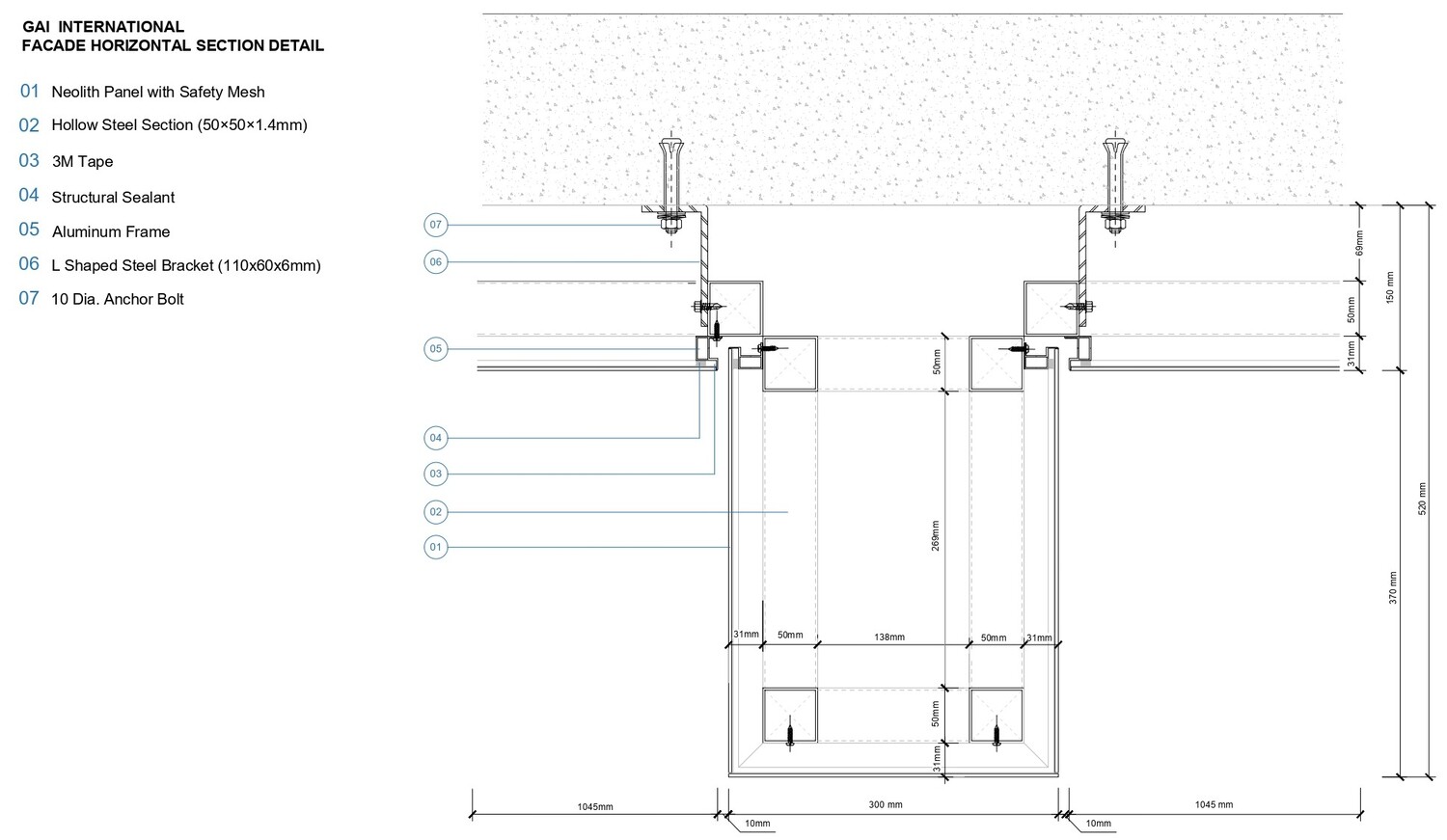
Detail of the exterior cladding junction and fastening system.
“For this building, we needed a solution that balanced design, sustainability, durability, and low maintenance. Neolith aligned well with that goal.”
– GAI International
The Silk finish delivers a nuanced, matte texture that references polished concrete through a contemporary lens. In this way, the project maintains its aesthetic intent while incorporating performance qualities that are particularly valuable in Seoul’s climate.
Neolith as a technical alternative to exposed concrete for exterior cladding
In a climate defined by humid summers, cold winters, and elevated pollution levels, the performance of an exterior material becomes a decisive factor. Concrete is widely used in architecture, but when left exposed—and expected to maintain its appearance over time—it can show limitations. Its tendency to absorb moisture may lead to staining and visible changes in tone. Repeated thermal movement and freeze–thaw cycles can also contribute to microcracking and surface wear, increasing the need for routine cleaning and repairs.
Neolith responds to these conditions differently. With virtually zero water absorption and a non-porous surface, it helps maintain dimensional stability and reduces sensitivity to temperature swings and environmental exposure common in demanding urban settings. In practical terms, this translates into clear advantages over exposed concrete: easier cleaning, better long-term retention of color and finish, and lower susceptibility to deterioration associated with porous materials in humid, polluted environments.
The ventilated facade approach further strengthens overall performance. The air cavity and system configuration help manage moisture more effectively and improve thermal behavior across the building envelope. In climates like South Korea’s, this strategy provides a robust solution to support durability and long-term performance.
“Durability and ease of maintenance were key to the decision. For a facade exposed to humidity, cold, and pollution, those factors are essential.”
– GAI International
Environmental impact and life cycle benefits through reduced intervention
Comparing concrete and Neolith is also relevant from an environmental perspective. Concrete manufacturing carries a substantial impact due to energy demand and the CO₂ emissions associated with production. Neolith, produced from natural raw materials through a sintering process, offers a significantly lower environmental footprint, supporting strategies that aim to reduce impact without compromising technical performance.
 |
 |
Over the building’s life cycle, the difference becomes even more tangible. Concrete facades may require more frequent cleaning and repairs to preserve appearance and prevent degradation. Neolith significantly reduces the need for intervention, translating into fewer resources, less downtime for maintenance, and lower associated costs—particularly important for buildings in active urban environments.
JP D&D Building also highlights Neolith’s ability to meet specific aesthetic requirements. Beyond the standard range of models, finishes, and tones, Neolith can support custom productions when a project calls for a particular solution—whether by reintroducing references or developing tones for specific applications. In this case, Concrete Taupe was produced within that scope, ensuring material coherence and continuity across the elevation.
A solid facade designed to perform over time
JP D&D Building presents a contemporary exterior solution in which material and construction system work together to respond to Seoul’s climate and urban demands. The concrete-inspired aesthetic remains intact, paired with improved performance: virtually zero absorption, greater stability through thermal variation, simpler cleaning, and long-term durability under challenging conditions. Supported by GAI International’s expertise in ventilated facade systems and the performance of Neolith, the building delivers a restrained, consistent architectural image designed to endure.
Technical data sheet
Project name: JP D&D Building
Location: Seoul, South Korea
Typology: Mixed-use building
Architecture firm: Hanul Architects & Engineers
Distributor: GAI International
Area: 760 m²
Neolith material: Neolith Concrete Taupe
Fixing system: GAI International
Year of completion: 2022
Neolith products
in this project

Neolith Concrete Taupe
