Contemporary rehabilitation of a residential facade
Santander, Spain
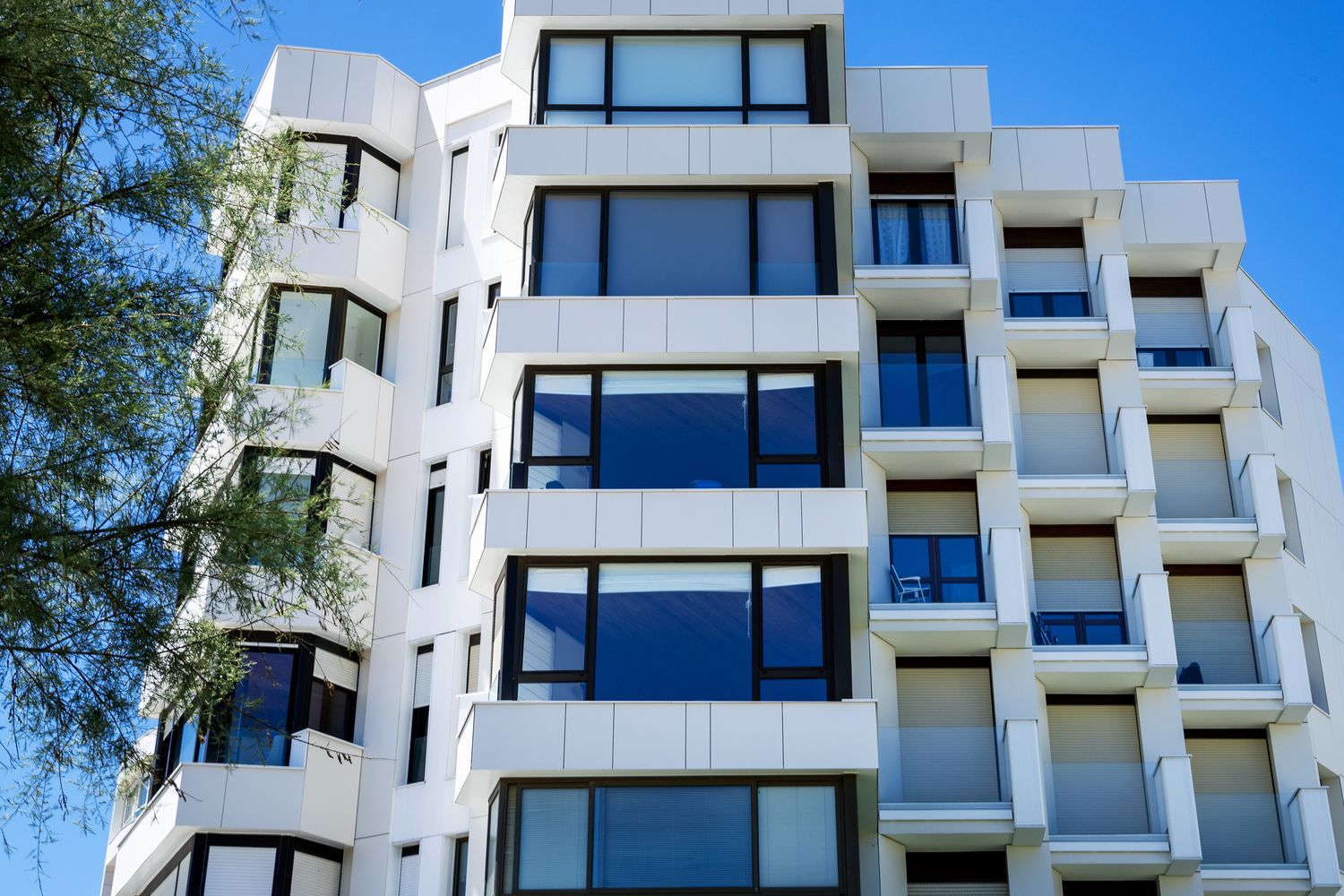
Technical upgrade and formal control in a residential building
|
Project location: |
Santander, Spain |
|
Project type: |
Facade and roof rehabilitation of a residential building |
|
Neolith materials: |
Neolith Just White |
|
Architect: |
Javier Sáenz de Santa María |
|
General contractor and installer: |
Construcciones Agüero Sandi S.L. |
The rehabilitation of the facades and roof of this residential building in Santander, Spain, delivers a comprehensive cladding upgrade aimed at improving technical performance, durability, and the building’s architectural character.
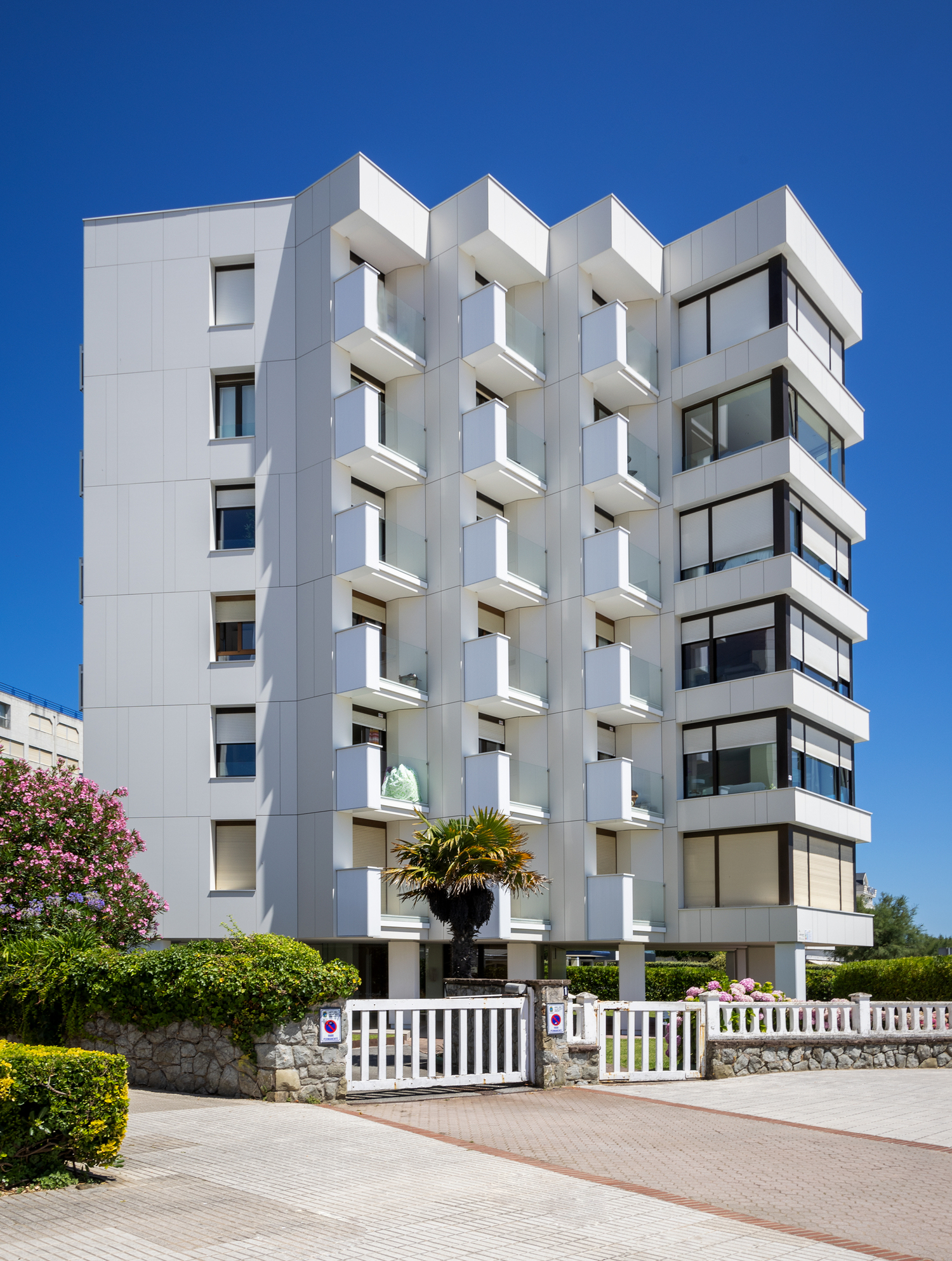
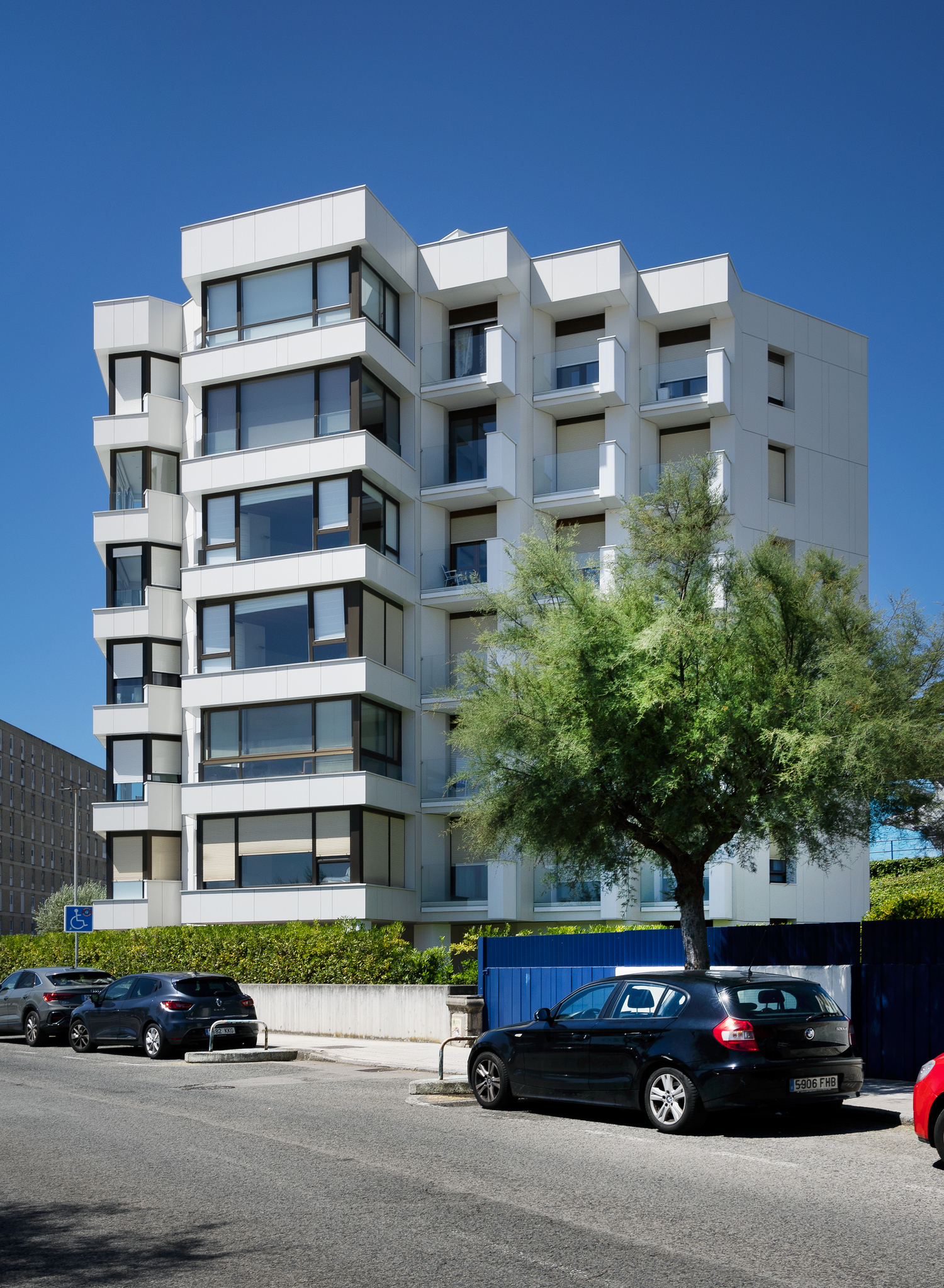
Designed by architect Javier Sáenz de Santa María and executed by Construcciones Agüero Sandi S.L as both general contractor and installer, the project addresses a housing building whose original configuration—defined by a symmetrical sawtooth plan and a sequence of cantilevers and setbacks—calls for precise construction solutions fully compatible with a notably complex geometry.
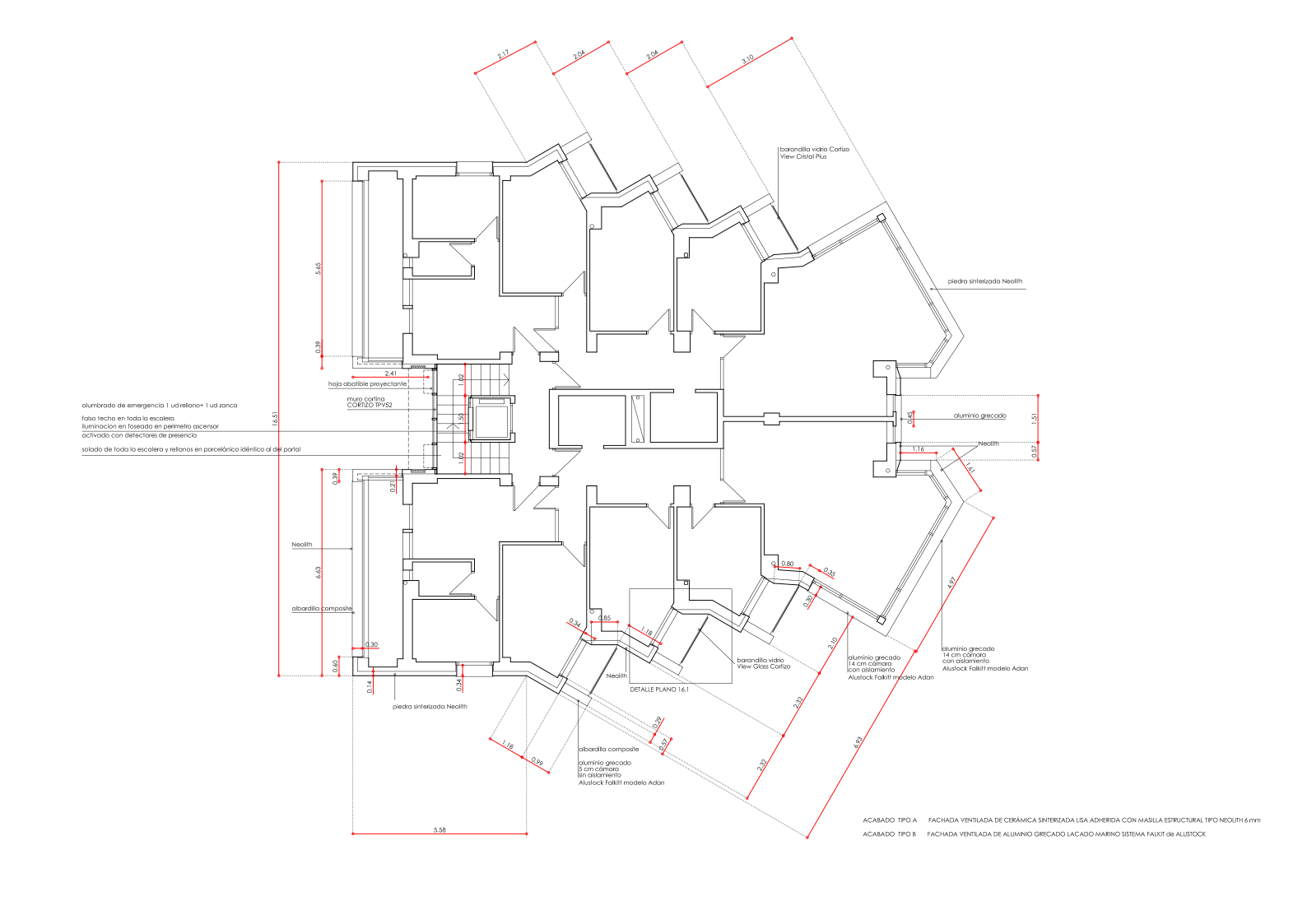
Typical floor plan. Image courtesy of the architect.
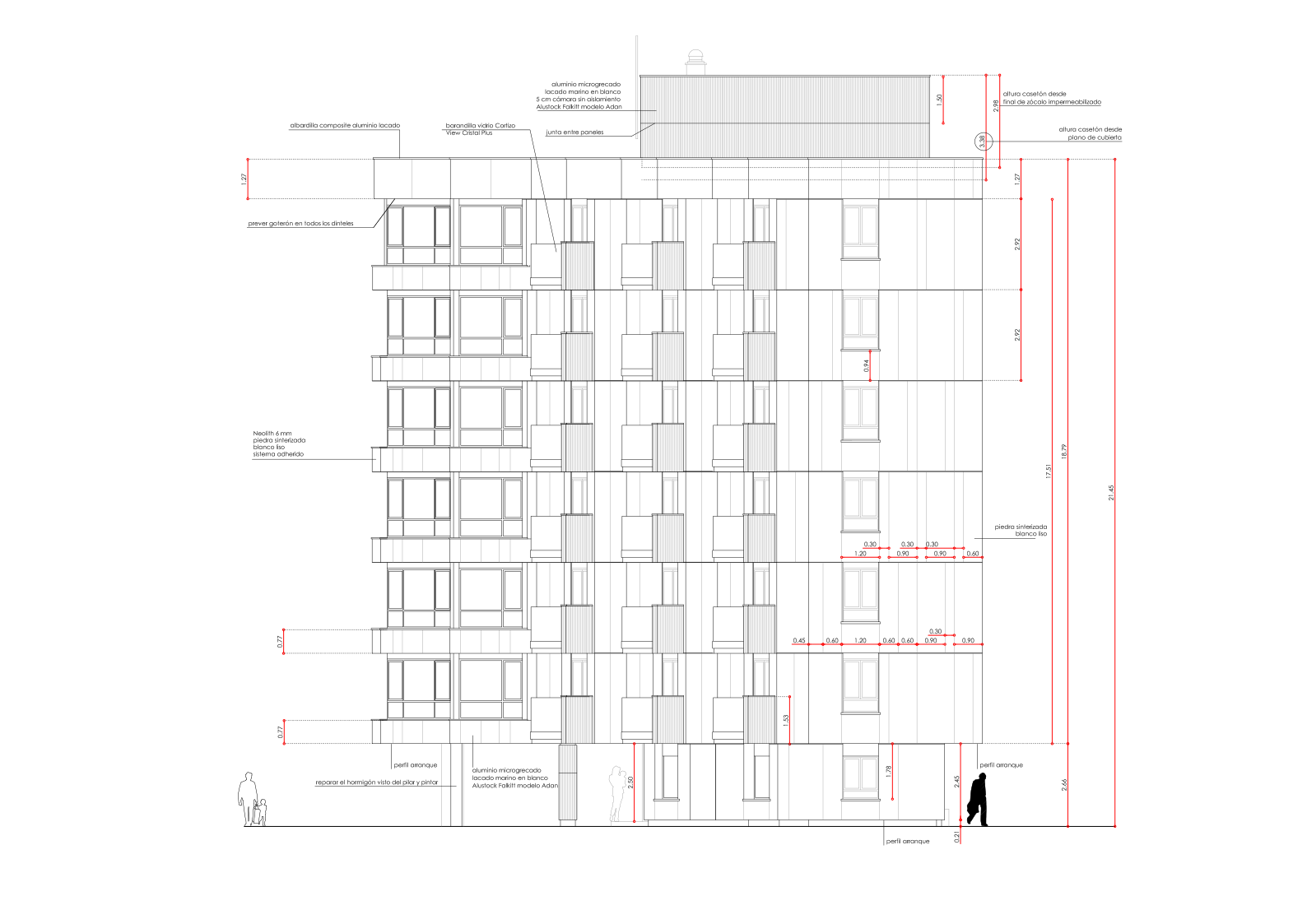
Northeast elevation. Image courtesy of the architect.
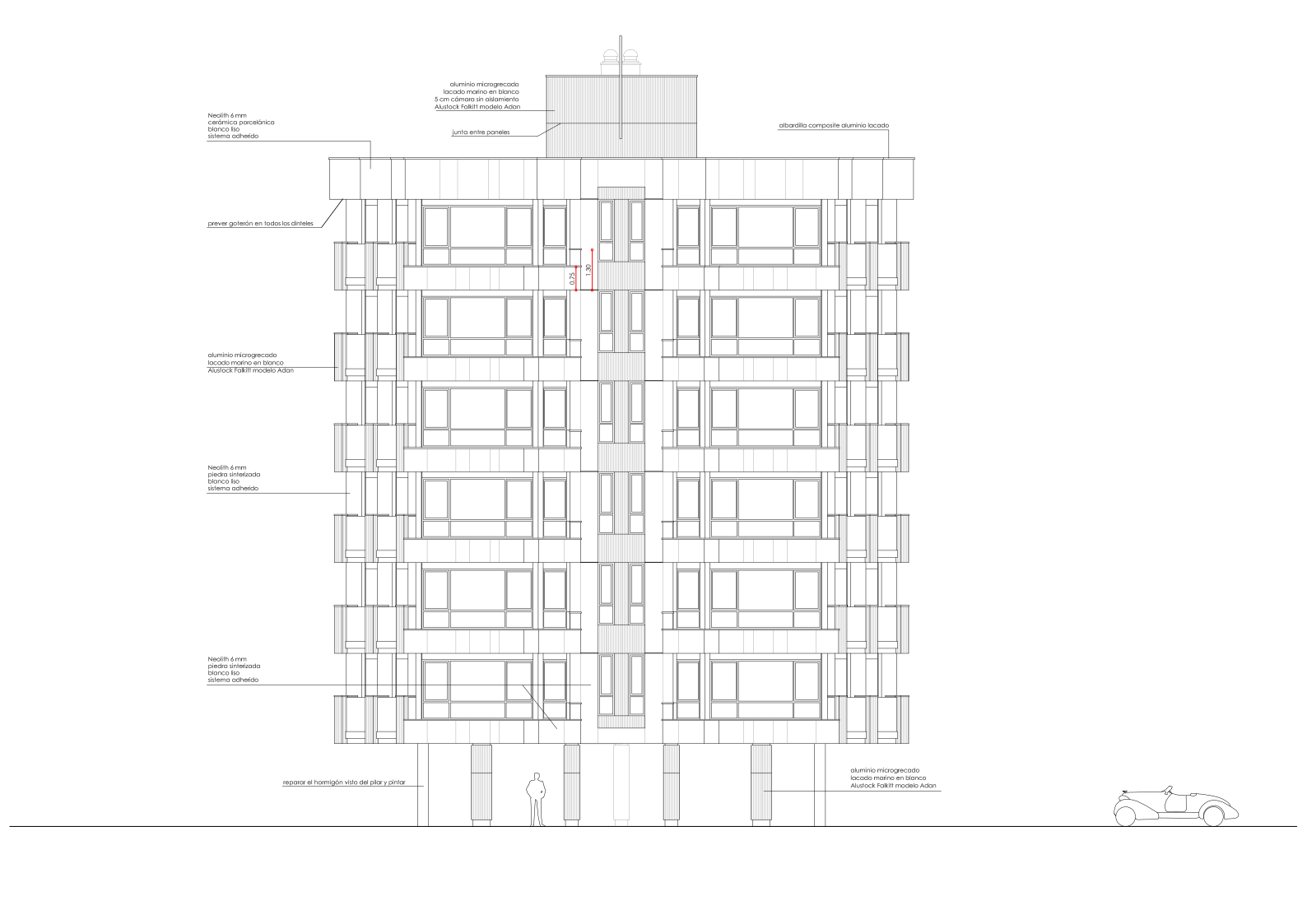
Southeast elevation. Image courtesy of the architect.
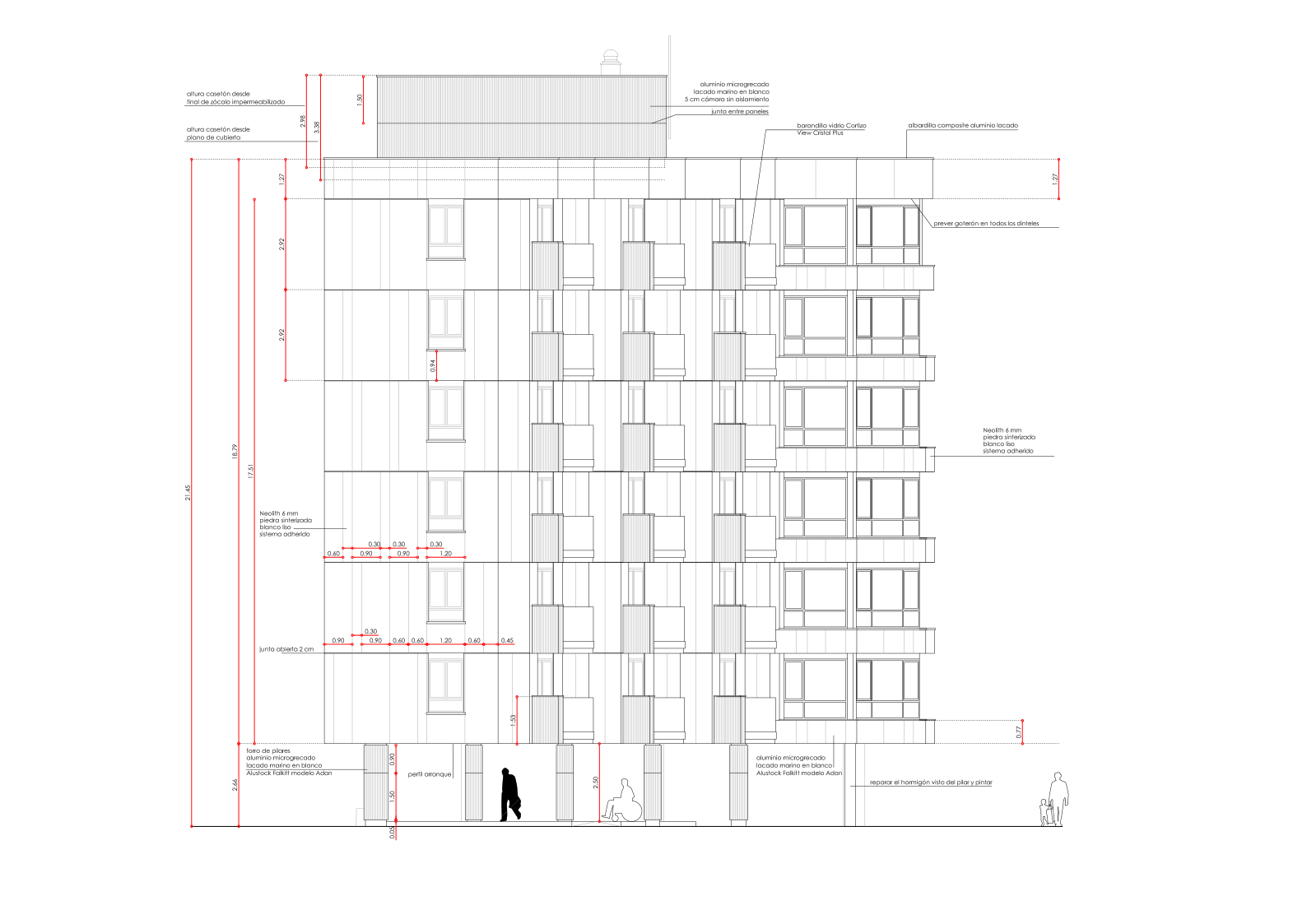
Southwest elevation. Image courtesy of the architect.
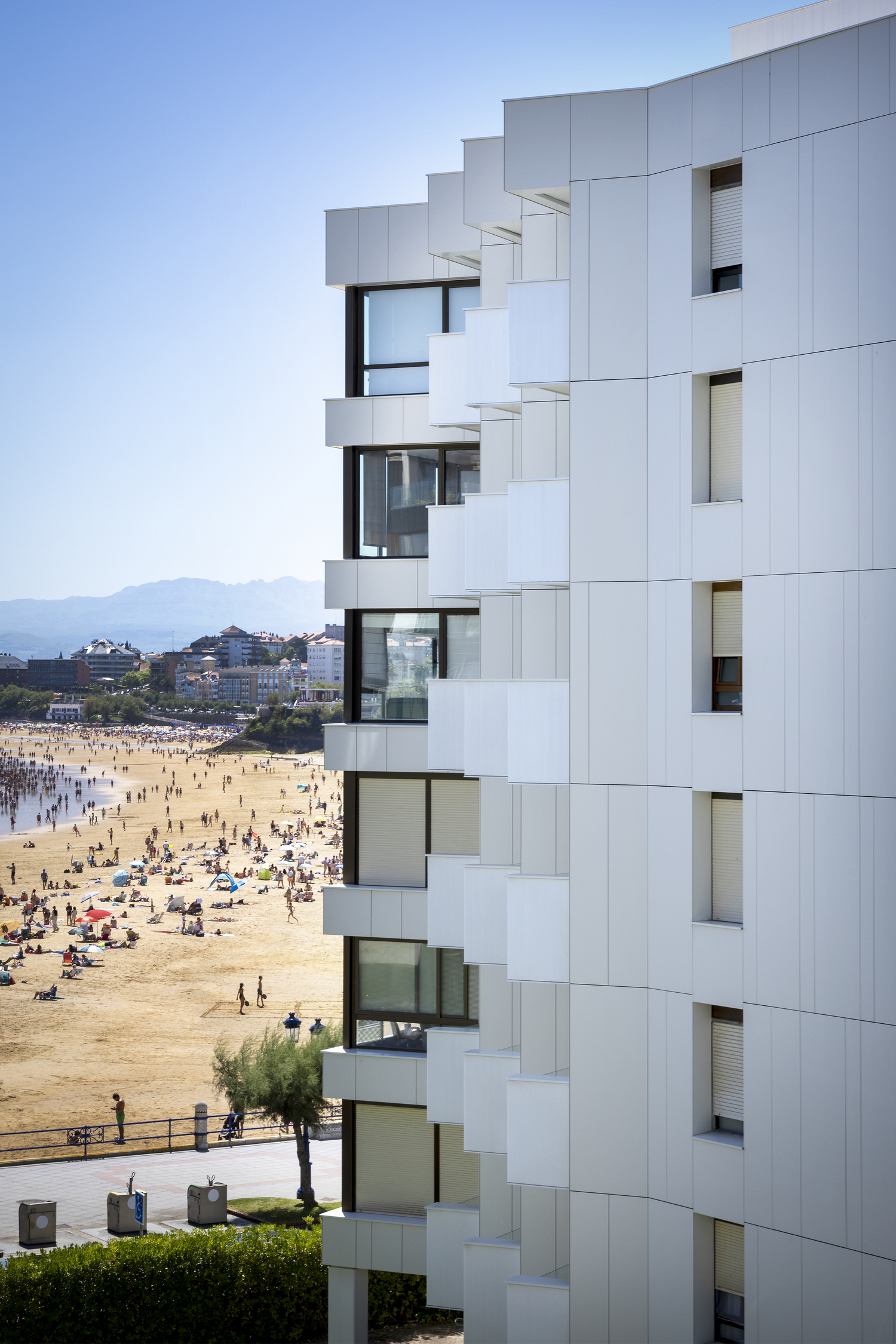
The new solution builds on the existing cladding by incorporating a ventilated facade system, strengthening hygrothermal control and updating the building’s appearance through a contemporary approach—always consistent with the original architecture and its presence within the urban context.
 |
 |
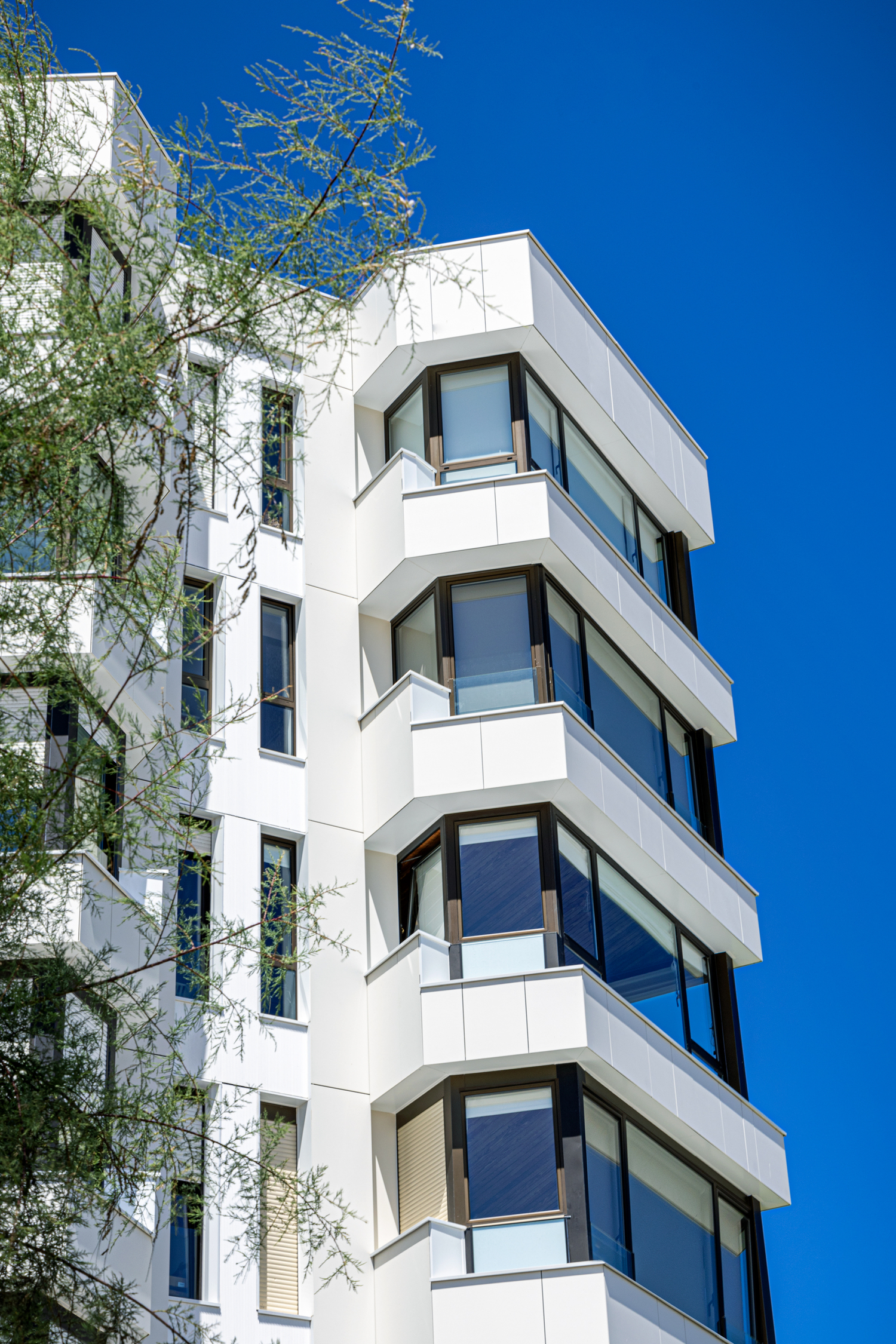
The building’s proximity to the sea and to El Sardinero beach significantly shaped the facade design, making durability and ease of maintenance top priorities. Neolith was selected to provide a material capable of maintaining its stability and appearance in the face of humidity, salinity, and coastal exposure.
“In this case, durability and easy maintenance were decisive, because the building’s location demands high performance on both fronts.”
– Javier Sáenz de Santa María
Architect
Large-format ventilated facade as a construction strategy
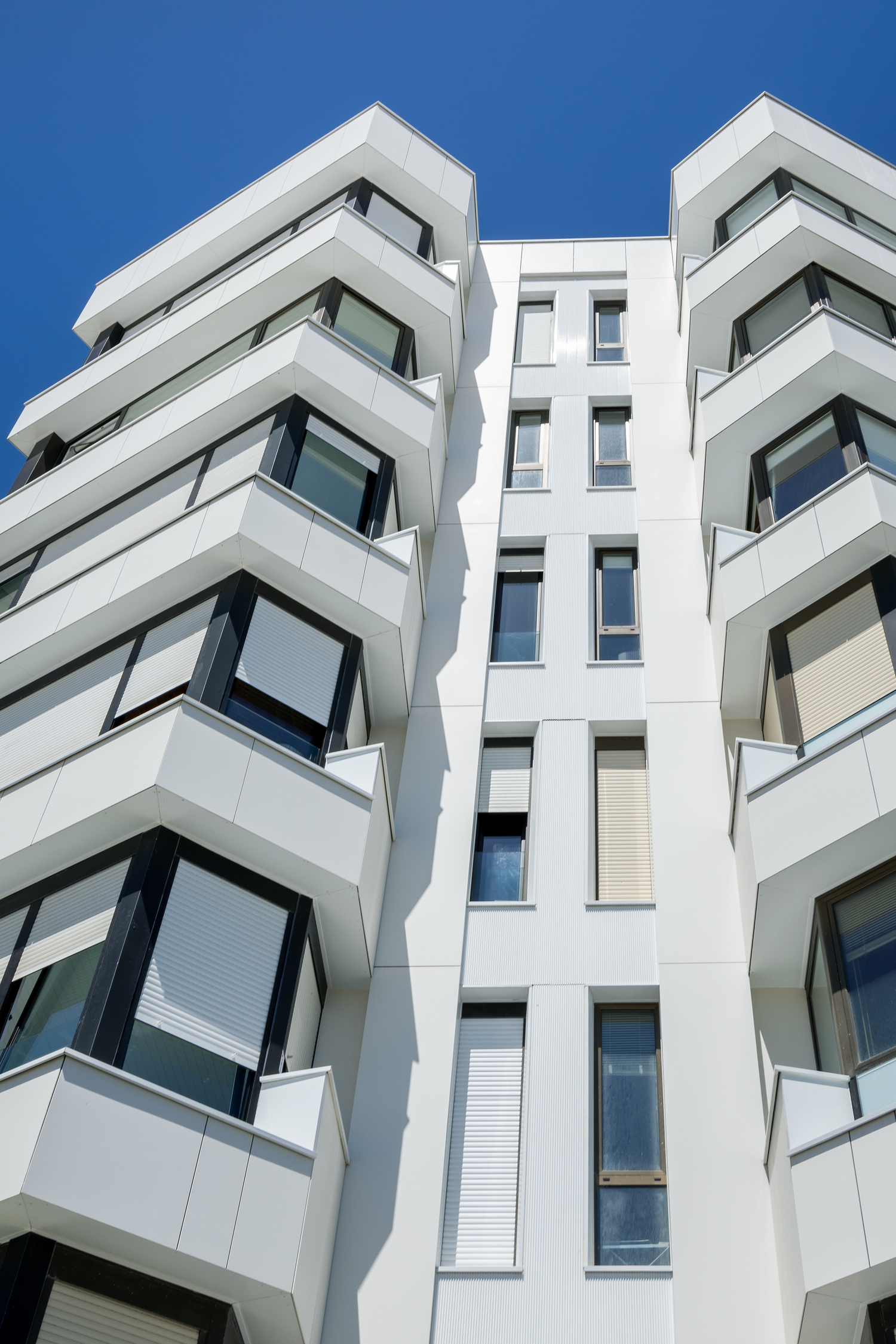
The solution is organized around a ventilated facade executed in Neolith Just White with a silk finish, reinforced with mesh on the back. The panels are installed on a HILTI aluminum substructure using a floor-to-floor system, enabling continuous facade runs with pieces measuring 3.05 meters in height and variable widths.
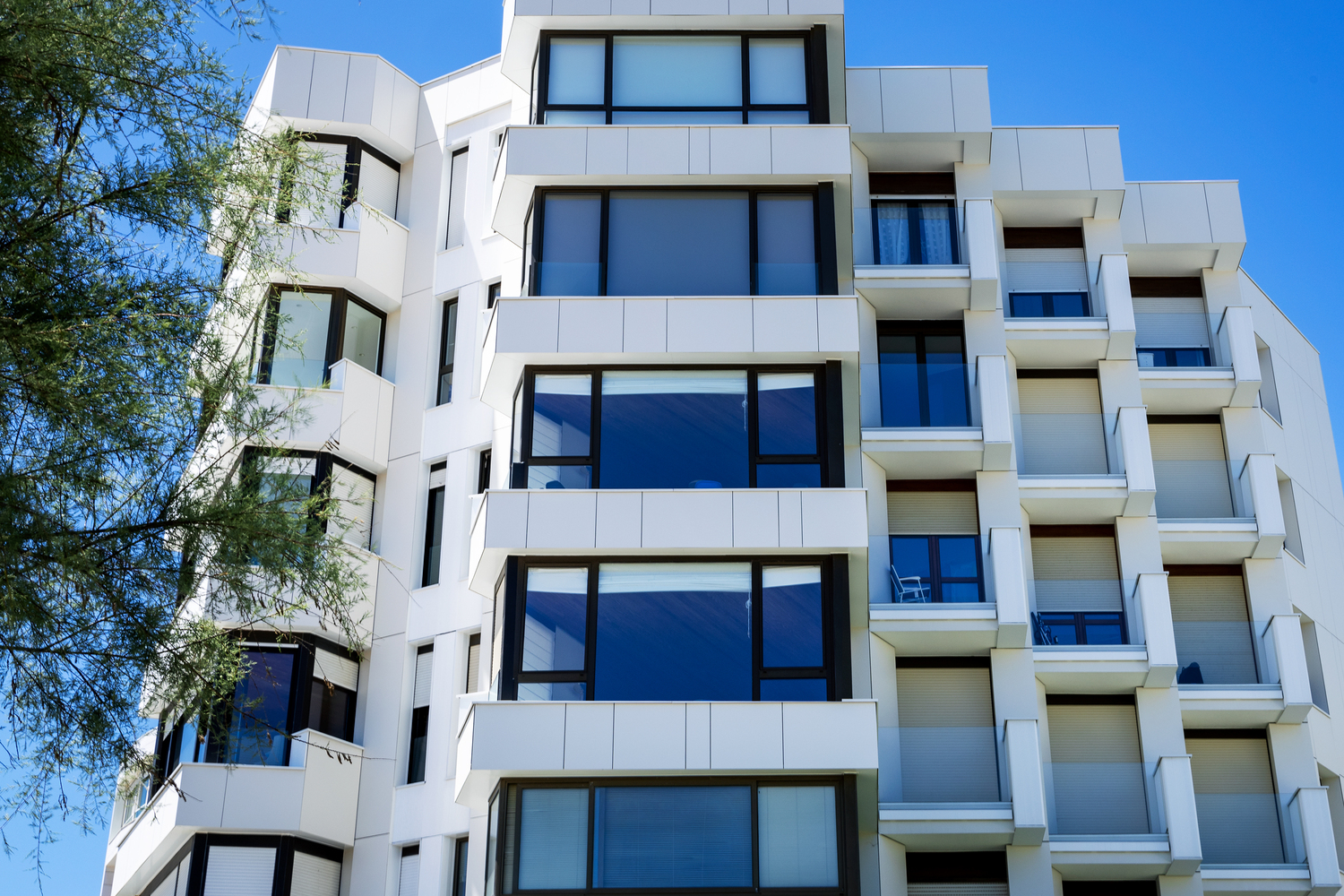
The use of Neolith’s large-format sintered stone surfaces reflects a clear strategy to control the panel layout, reduce visual fragmentation, and reinforce a more continuous, enveloping reading of the facade. This decision is especially important in a building with pronounced formal movement, where material continuity helps visually organize the whole and strengthen its architectural presence.
“We chose Neolith for the quality, texture, and elegance of its finishes. It was also a direct recommendation from the builder, Agüero Sandi, who knew its on-site performance well.”
– Javier Sáenz de Santa María
Architect
Technical facade installation using chemical bonding
 |
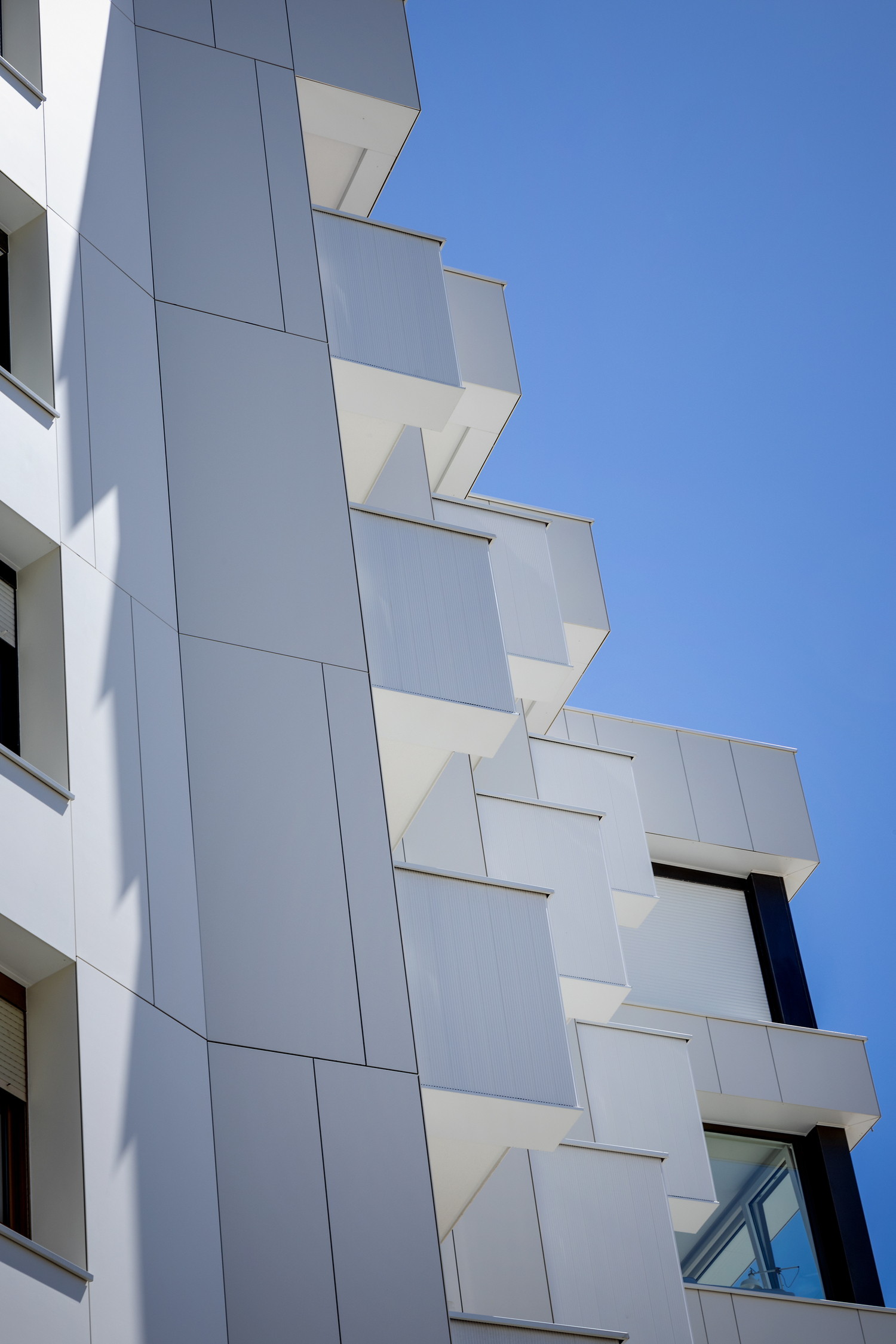 |
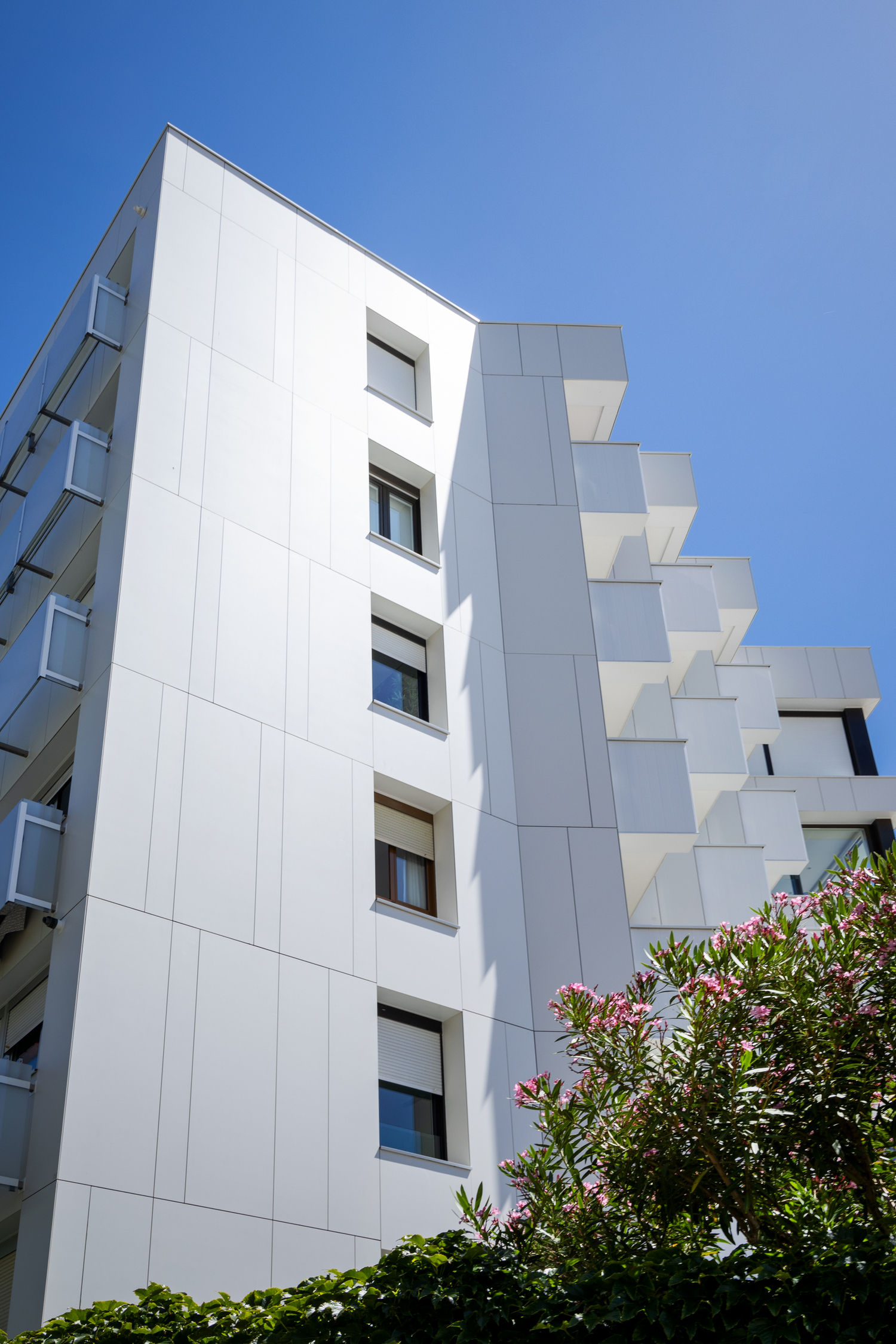
The ventilated facade was installed using a chemical bonding system on a vertical HILTI aluminum substructure, working much like Neolith’s HC system. This approach is particularly well suited to a rehabilitation like this one, where added weight must be carefully controlled, installation precision is critical, and a clean, uninterrupted facade surface is essential.
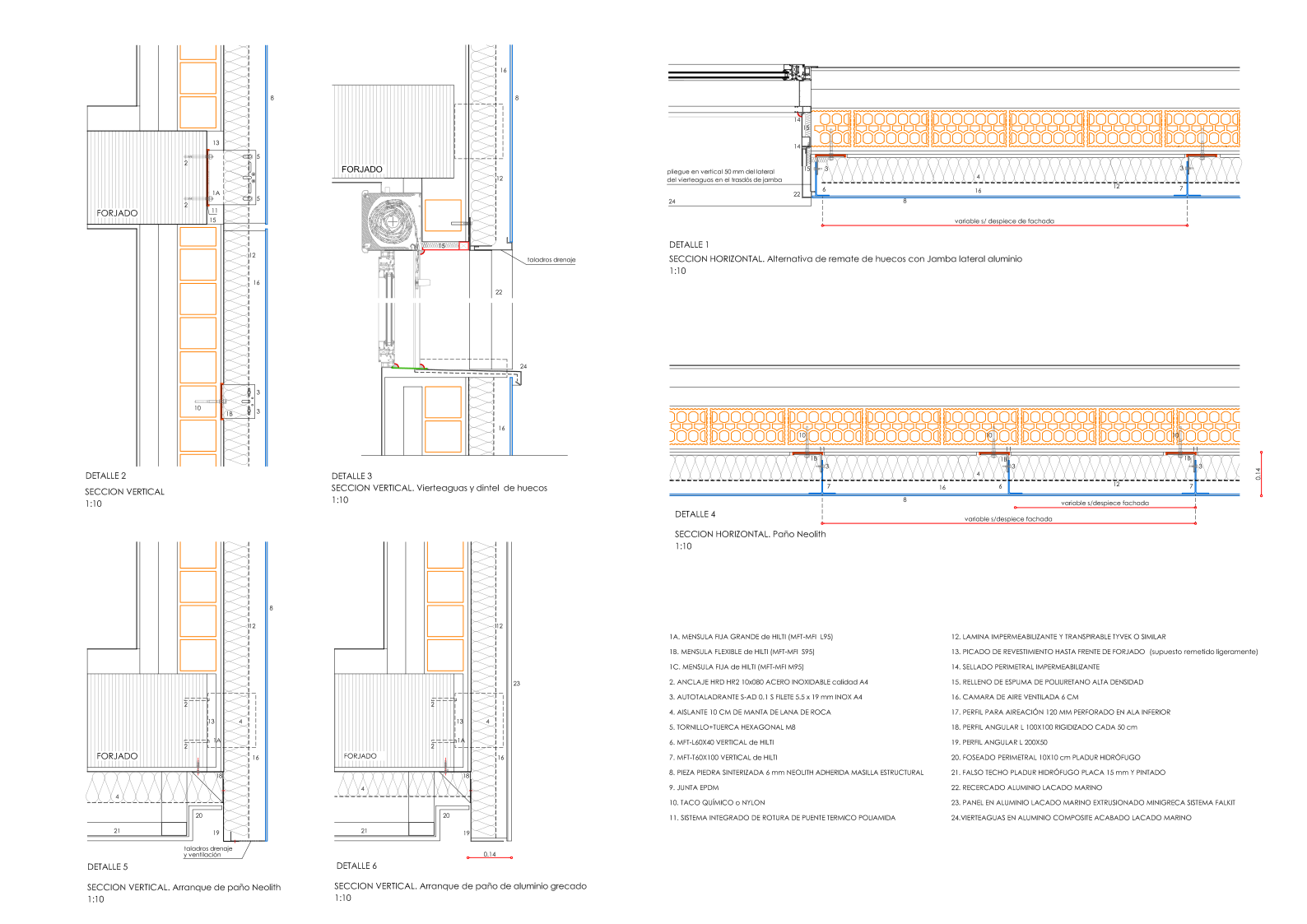
Ventilated facade section details. Image courtesy of the architect.
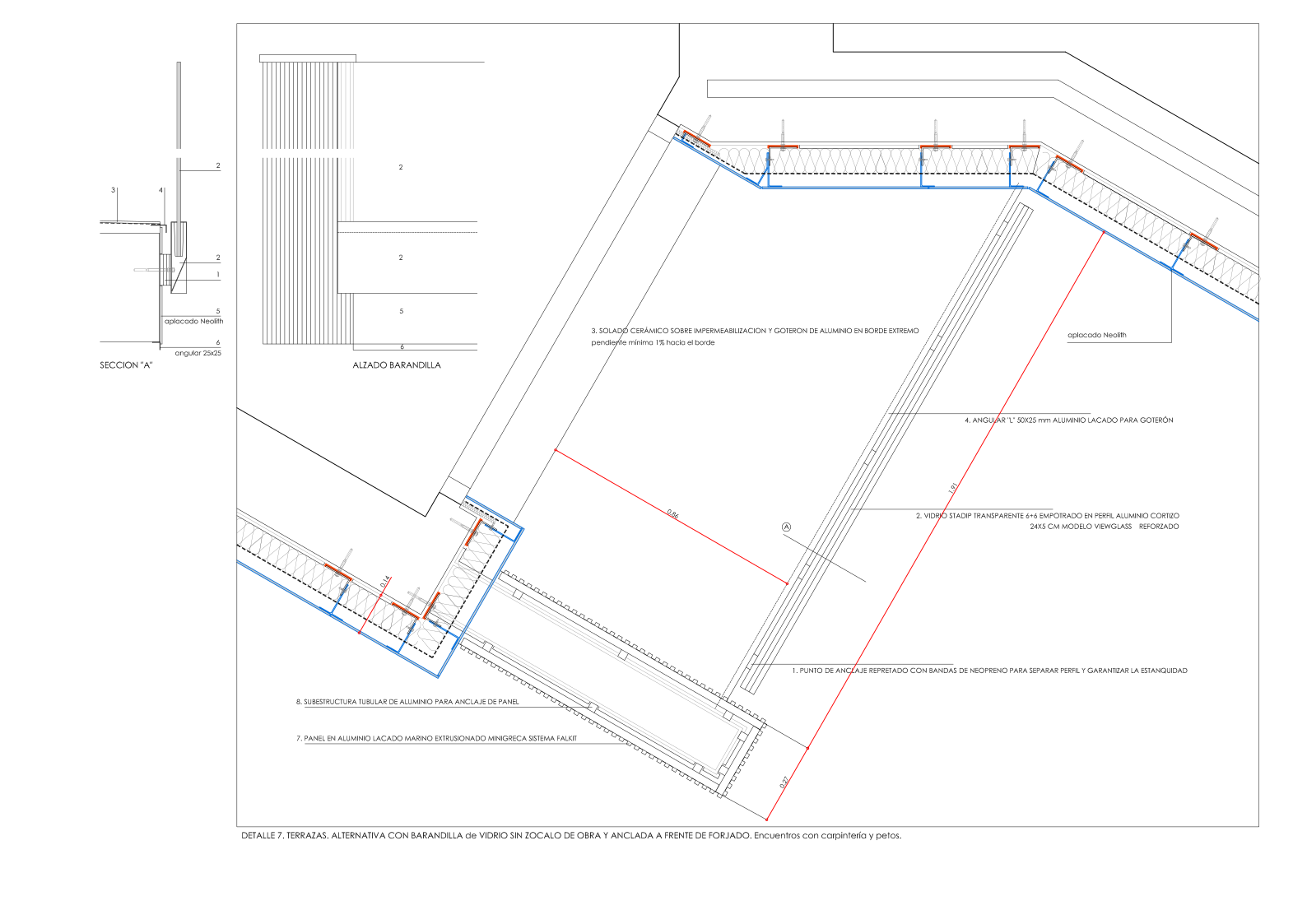
Details of key facade conditions. Image courtesy of the architect.
The system relies on structural adhesion between the sintered stone panels and the substructure, allowing continuous attachment with no visible mechanical fasteners. This configuration reinforces the facade’s visual continuity and supports the integration of large-format, reduced-thickness panels like those used in this project.
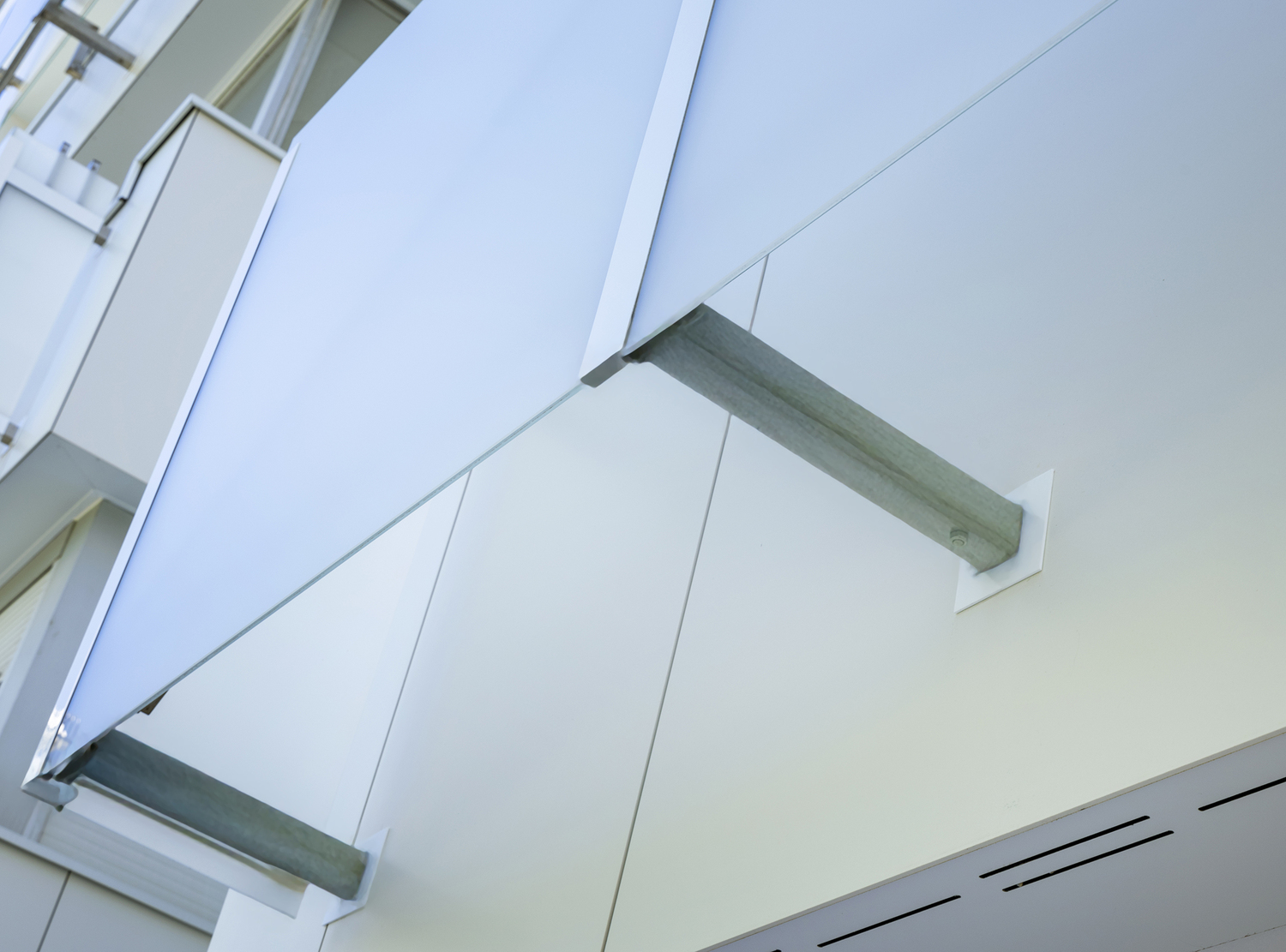
On a facade with cantilevers, setbacks, and changes in plane, chemical bonding provides a high degree of dimensional control during installation, helping achieve precise alignment and a rigorous resolution of junctions and terminations.
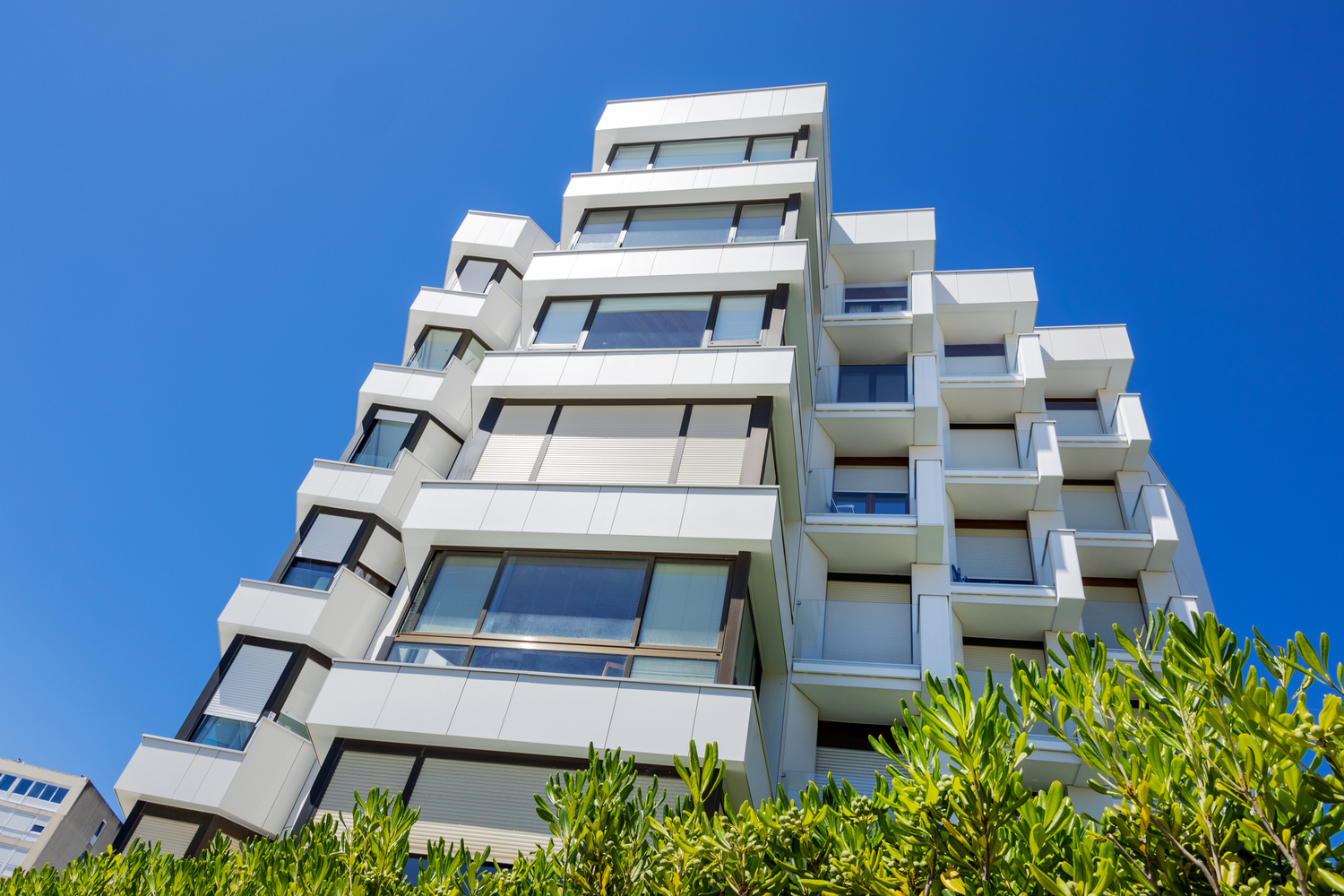
Integrated within a ventilated facade assembly with continuous insulation and an air cavity, the system also contributes to stable hygrothermal behavior and effective moisture management—particularly relevant in Santander’s coastal environment.
Hygrothermal performance, safety, and durability
From a construction standpoint, the facade is completed with 100 mm hydrophobic rock wool insulation, placed within the ventilated cavity and protected by a waterproof, breathable polyethylene membrane. This configuration optimizes thermal performance and supports controlled moisture evacuation.
 |
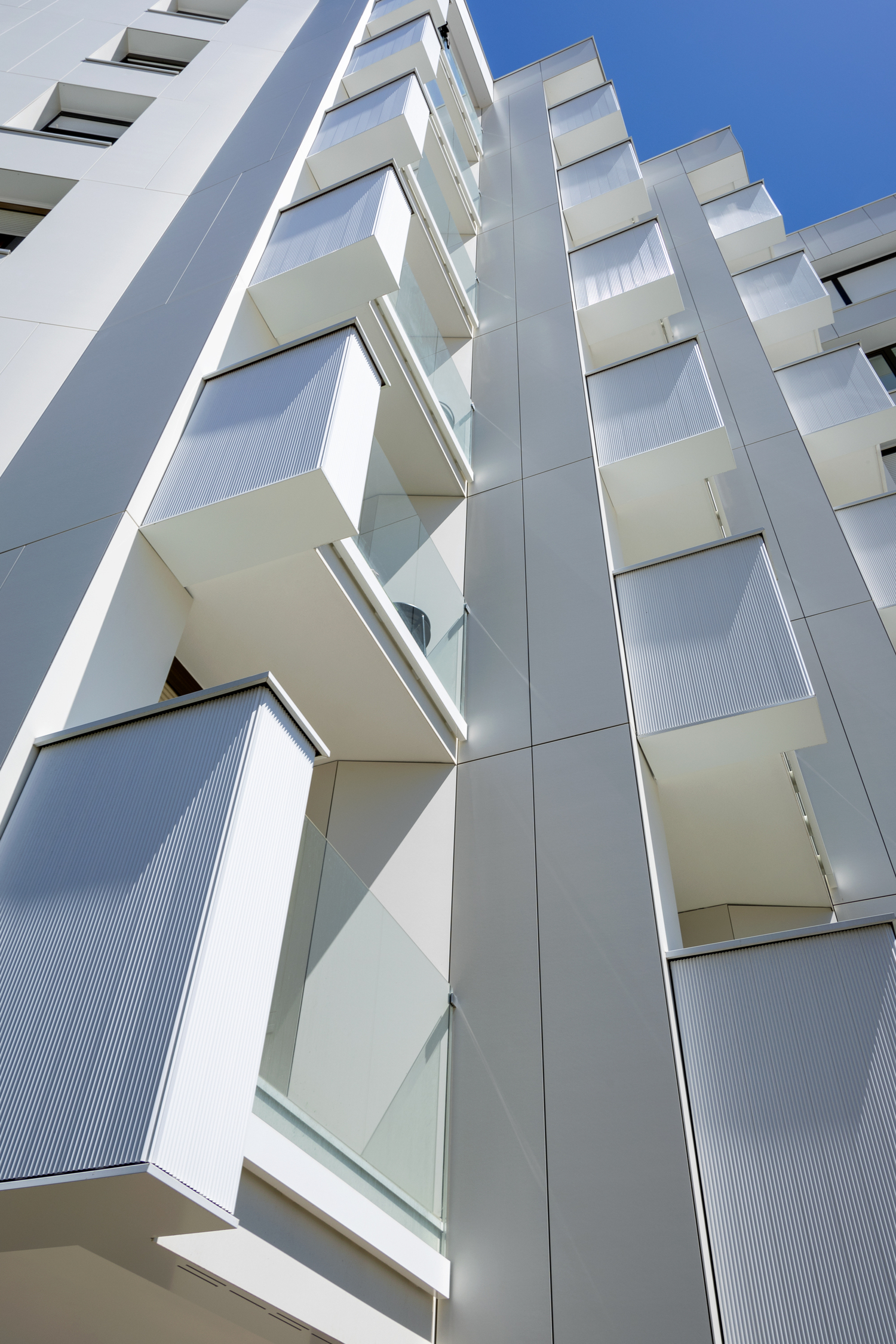 |
In accordance with current regulations, fire barriers were installed between floors 3 and 4, reinforcing system safety. The scope also includes new cantilevered glazed drying enclosures on the north facade, integrated within the new envelope.
“In a building with this geometry, reinforced sintered stone —thanks to its reduced thickness— helps minimize both structural and cost impacts, and greatly facilitates execution in a rehabilitation of this kind.”
– Javier Sáenz de Santa María
Architect
Material dialogue and resolution of secondary elements
 |
 |
The primary facade in Neolith Just White is complemented by secondary elements clad in white-lacquered, extruded aluminum micro-corrugated sheet, applied to the terrace parapets and to the reveal between the living-room bay window volumes. The FALKIT series 125 system, Sierra de Gata model, from ALU-STOCK, was used.
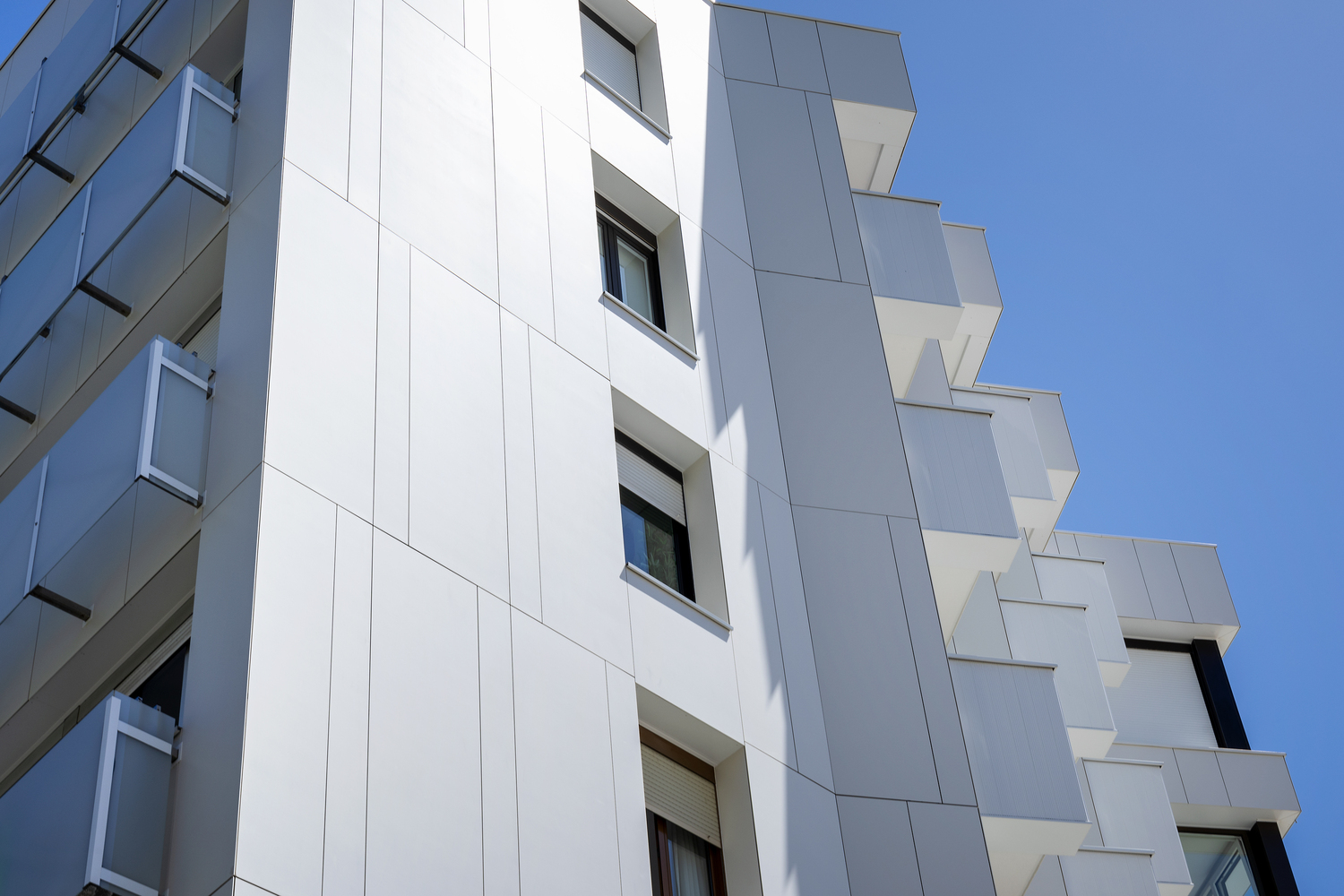
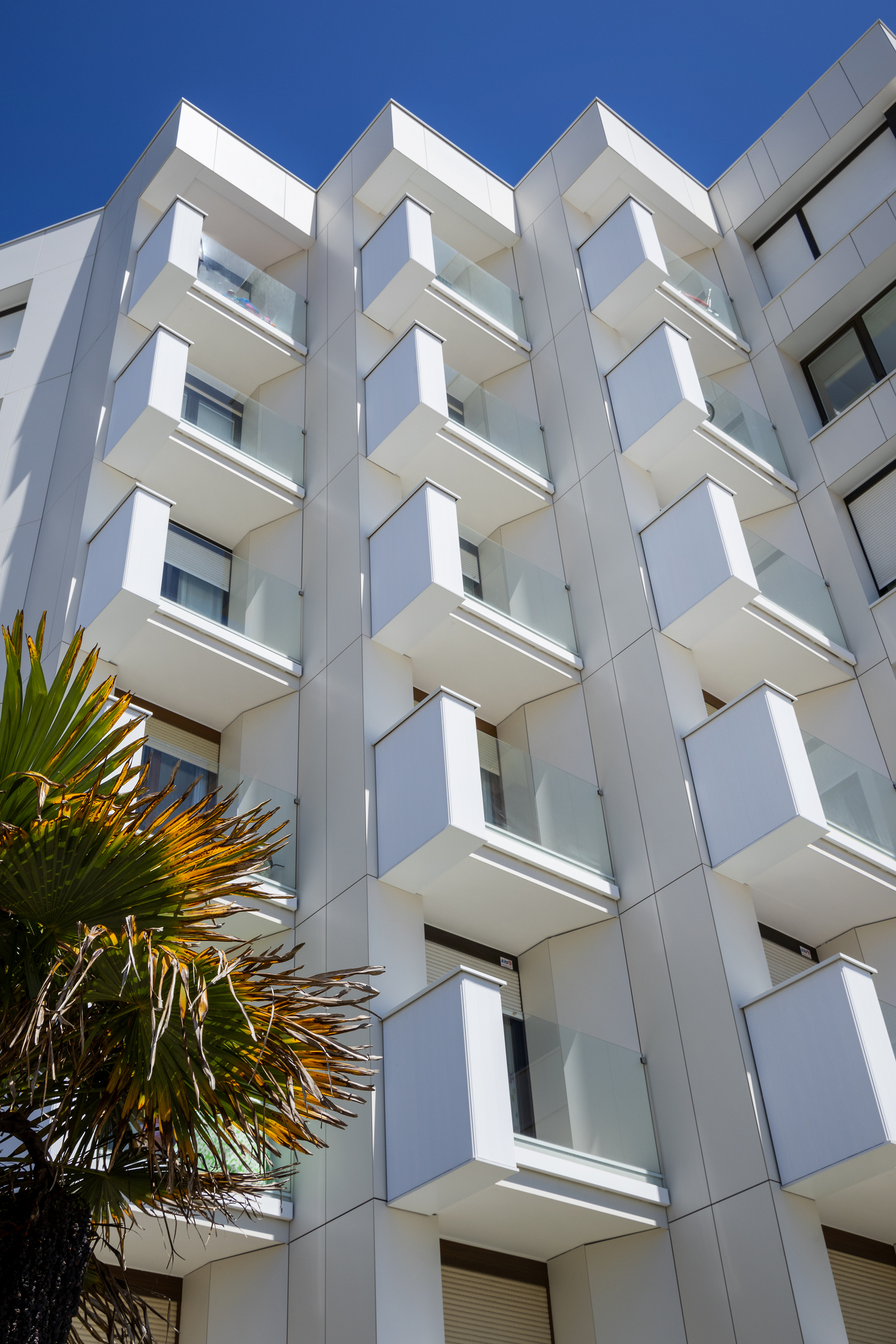
The terrace parapets were executed in laminated glass anchored to a white aluminum tube, reinforcing the overall visual lightness of the composition and maintaining a clear reading of the facade’s planes.
“Neolith integrates naturally with the rest of the materials: the smooth, silky, satin white plays off the white-lacquered aluminum—slightly glossier—adding contrast and enhancing the overall calmness of the composition.”
– Javier Sáenz de Santa María
Architect
Large format and architectural abstraction
The facade concept avoids the fragmented solutions common in rehabilitation projects, opting for large format as a tool to reinforce the building’s architectural abstraction. Panel continuity minimizes joints and allows the material to read as a unified plane, in dialogue with the rest of the facade elements.
“When you see the building completed, you understand the value of large format: details are easier to resolve, and it opens up many more possibilities for both design and installation.”
– Javier Sáenz de Santa María
Architect
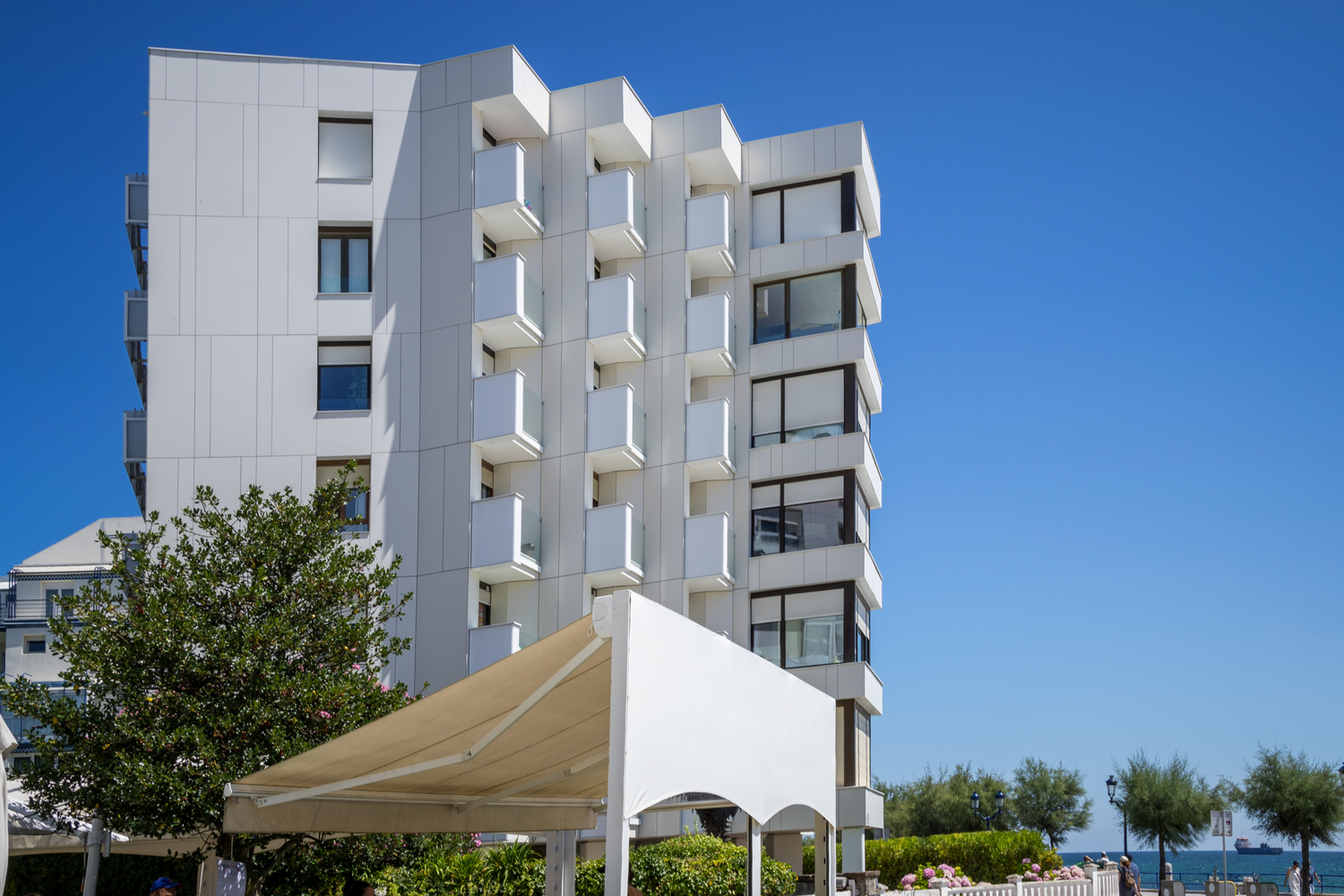
This strategy updates the building’s image through a contemporary lens, staying faithful to the original architecture while delivering a technically rigorous response to a complex rehabilitation—grounded in construction control, material precision, and long-term performance.
“I wanted a large-format system to avoid repetitive panel layouts that aren’t well suited to ventilated facades. Large format allows the material itself—together with the other elements—to bring a greater level of architectural abstraction to the building.”
– Javier Sáenz de Santa María
Architect
Ventilated facades as a response to new sustainability regulations
The evolving regulatory framework around energy efficiency and sustainability positions the rehabilitation of existing building stock as a key lever for reducing the environmental impact of buildings. In this context, ventilated facade systems play an essential role thanks to their ability to improve thermal performance and extend the service life of buildings.
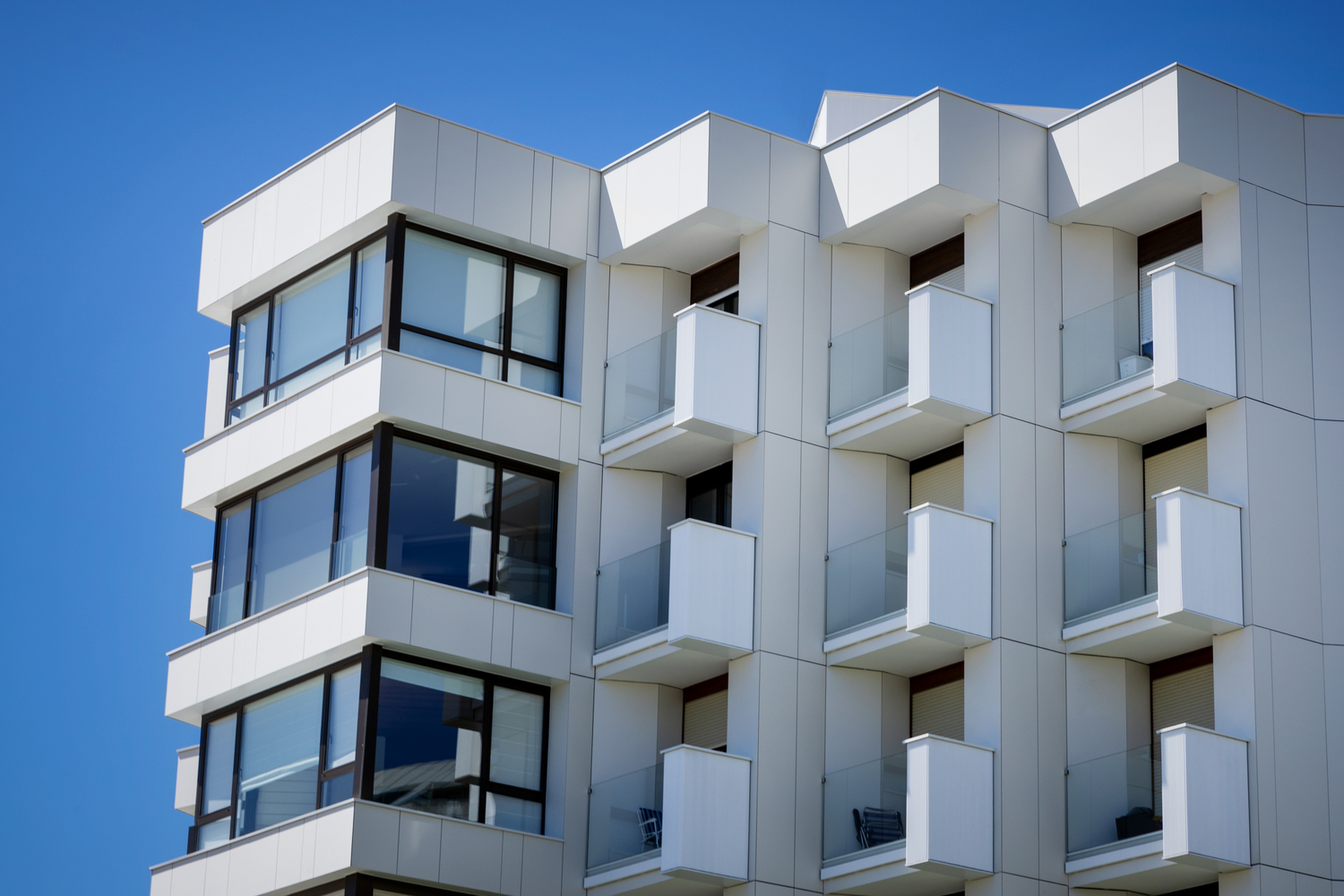
Implementing ventilated facade systems with high-performance materials such as Neolith provides a strong technical foundation for meeting upcoming requirements related to energy efficiency and carbon footprint reduction. Both the construction solution and the intrinsic properties of sintered stone—durability, stability, and low maintenance—offer long-term assurances and expand the options for adapting rehabilitated buildings to future regulatory demands.
From this perspective, Neolith stands out as a particularly suitable material for rehabilitation projects that aim to combine technical performance, architectural continuity, and a long-term vision aligned with the gradual transformation of the built environment.
Technical sheet
Location: Santander, España
Typology: Facade and roof rehabilitation of a residential building
Area: 1,026 m²
Architect: Javier Sáenz de Santa María
General contractor and installer: Construcciones Agüero Sandi S.L.
Neolith material: Neolith Just White
Fixing system: HILTI ventilated facade system + chemical anchoring
Completion year: 2023
Neolith products
in this project

