A building designed for a dense urban environment
Seoul, South Korea
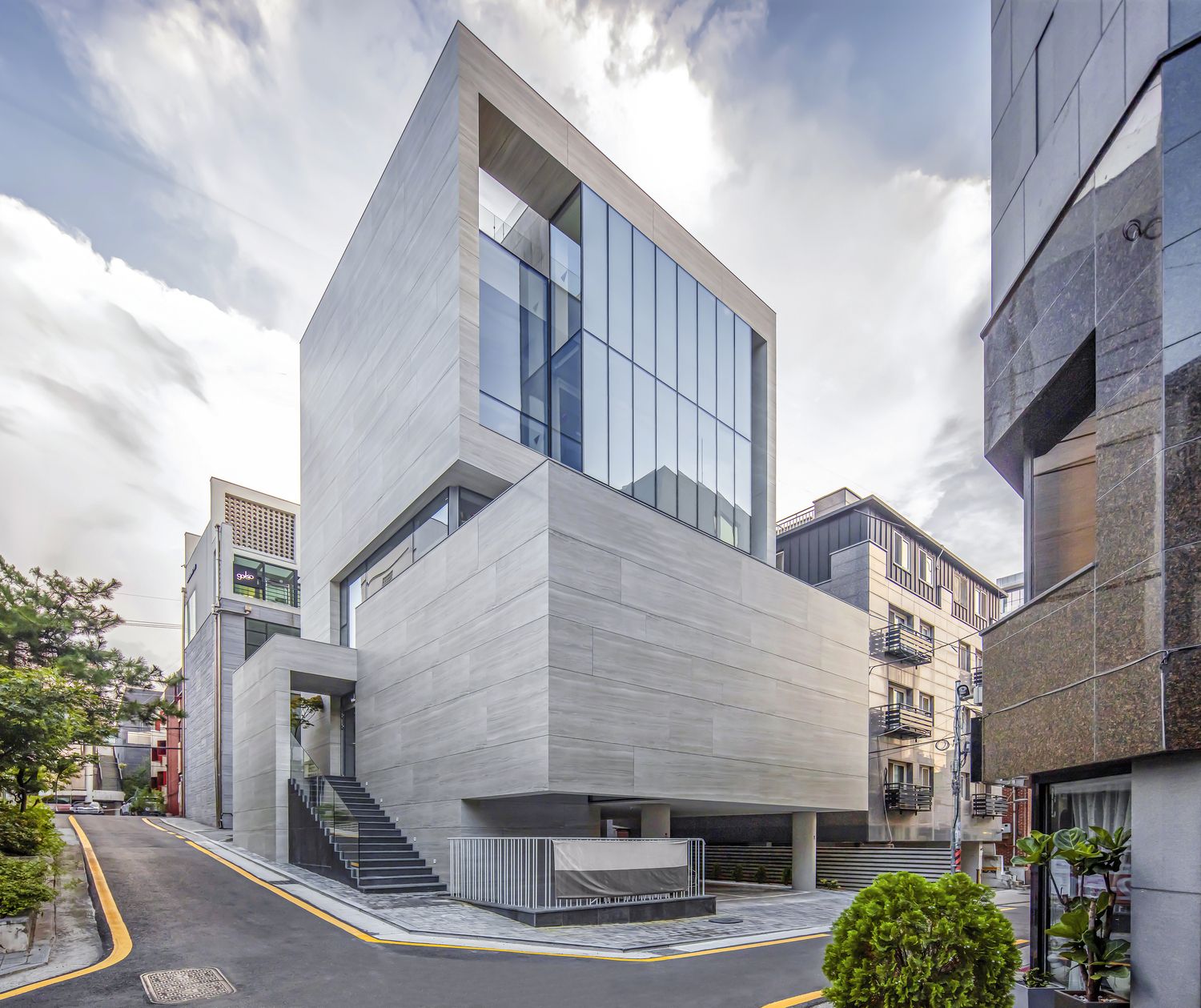
Architecture that responds to urban complexity
|
Project location: |
Seoul, South Korea |
|
Project type: |
Mixed-use building |
|
Design: |
L’EAU Design Studio |
|
Partner: |
GAI International |
Nonhyeon Periscope is a public building for everyday use located in the Gangnam district, one of the most densely developed and consolidated urban areas in Seoul. Designed by L’EAU Design Studio and developed in collaboration with GAI International, it stands on a 195 m² plot in a narrow alley in Nonhyeon-dong, with a gentle slope and surrounded by buildings of similar height.
These conditions significantly limit the entry of natural light and the possibility of medium- and long-distance views. In response, the project uses architecture as an active mechanism to organize light, control views, and mediate the relationship with the surrounding urban context.
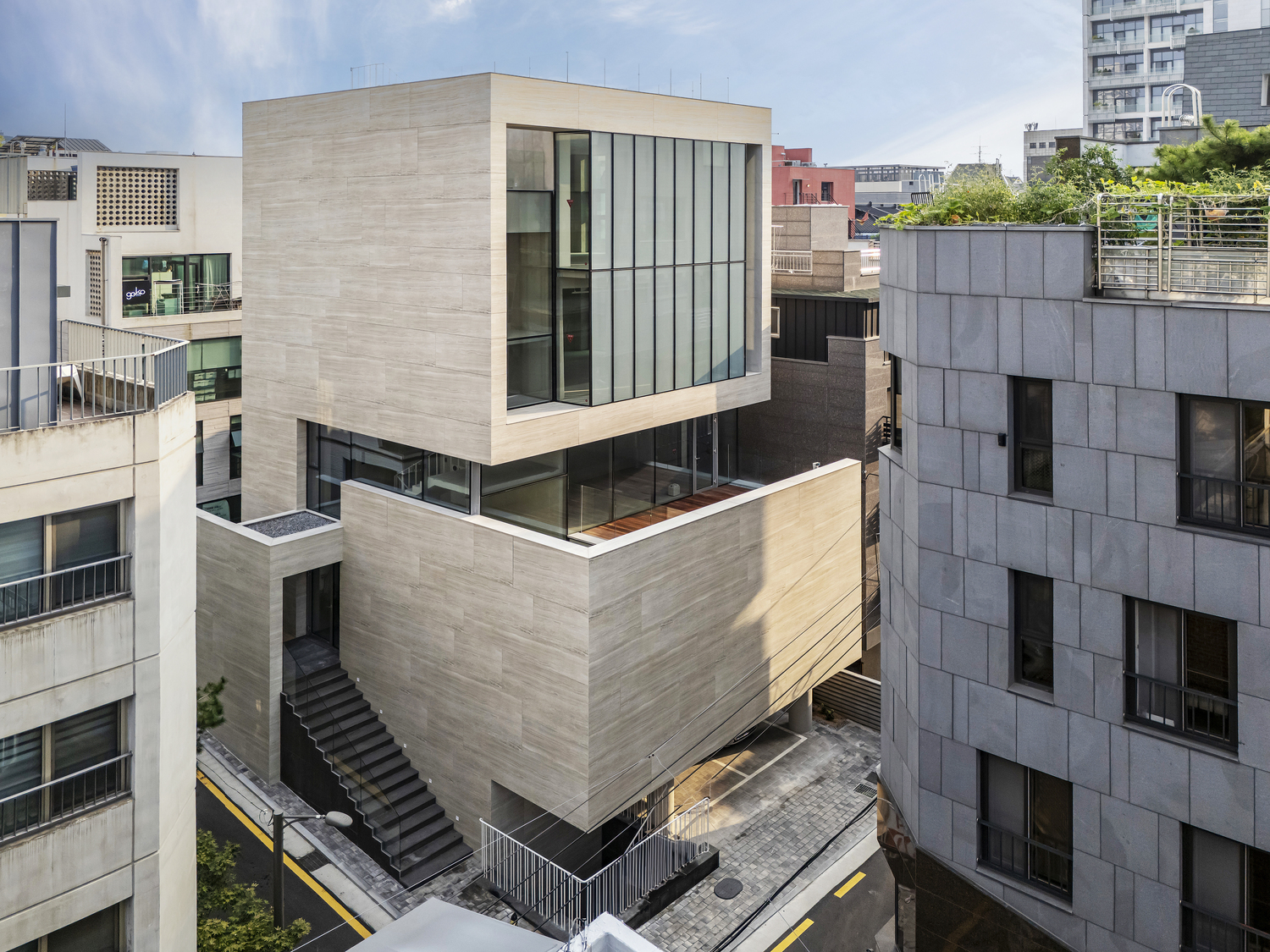
With a total built area of 600 m², the building is organized across five above-ground floors and two basement levels, housing everyday uses such as offices and a fitness center. From its initial conception, the project proposes a precise strategy to align interior and exterior, transforming site constraints into an opportunity to define space, atmosphere, and experience.
“We applied the periscope principle as an architectural device to draw light and views into the building, even within an extremely constrained urban environment.”
– L’EAU Design Studio
The periscope principle as a spatial concept
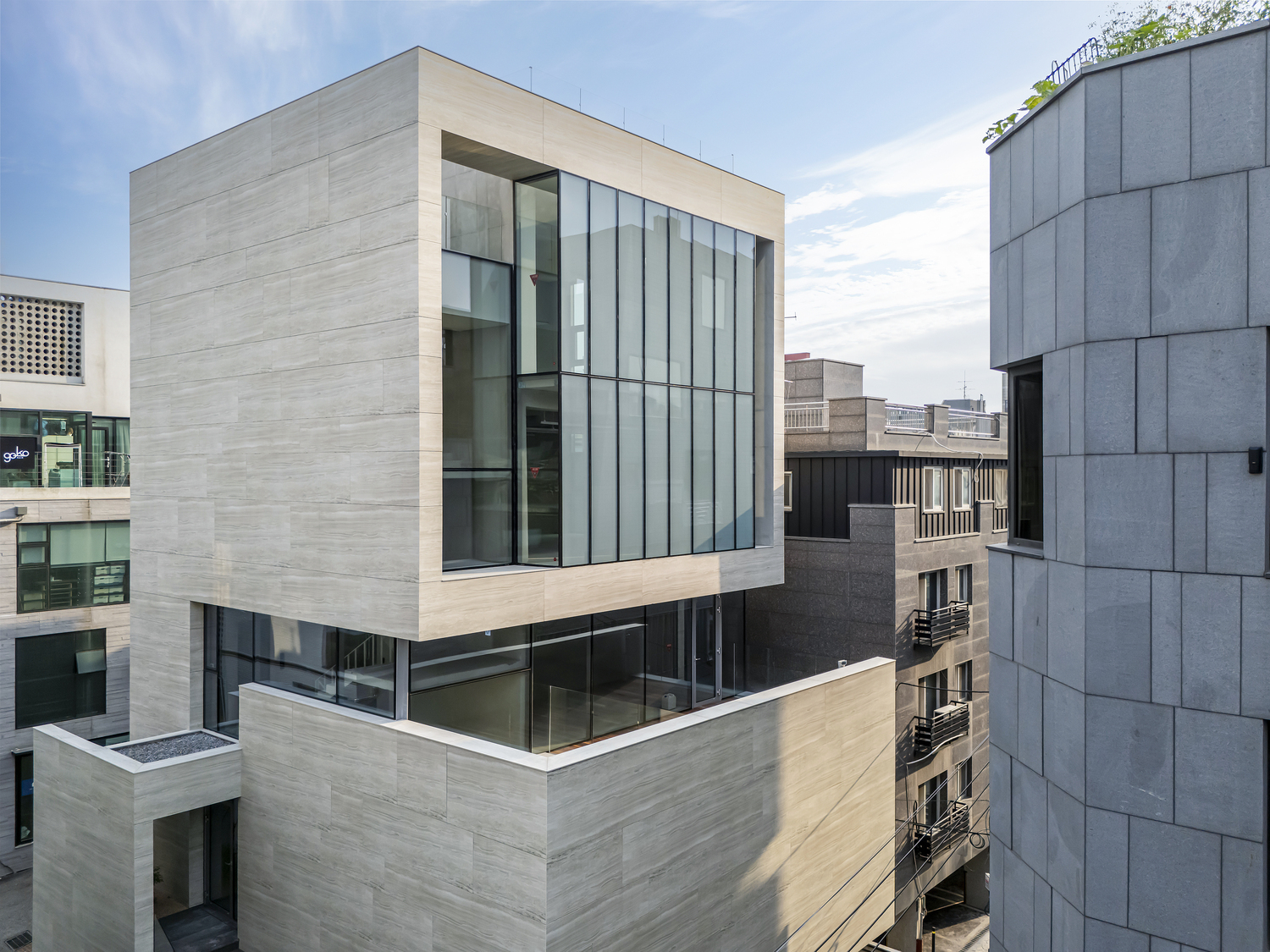
The project’s concept is inspired by the periscope, a device that makes it possible to see beyond obstacles through the strategic arrangement of reflectors and lenses. This logic is translated into architecture as a spatial system that organizes paths of light and sightlines, allowing natural elements to penetrate deep into the building despite the restrictive conditions of the surroundings.
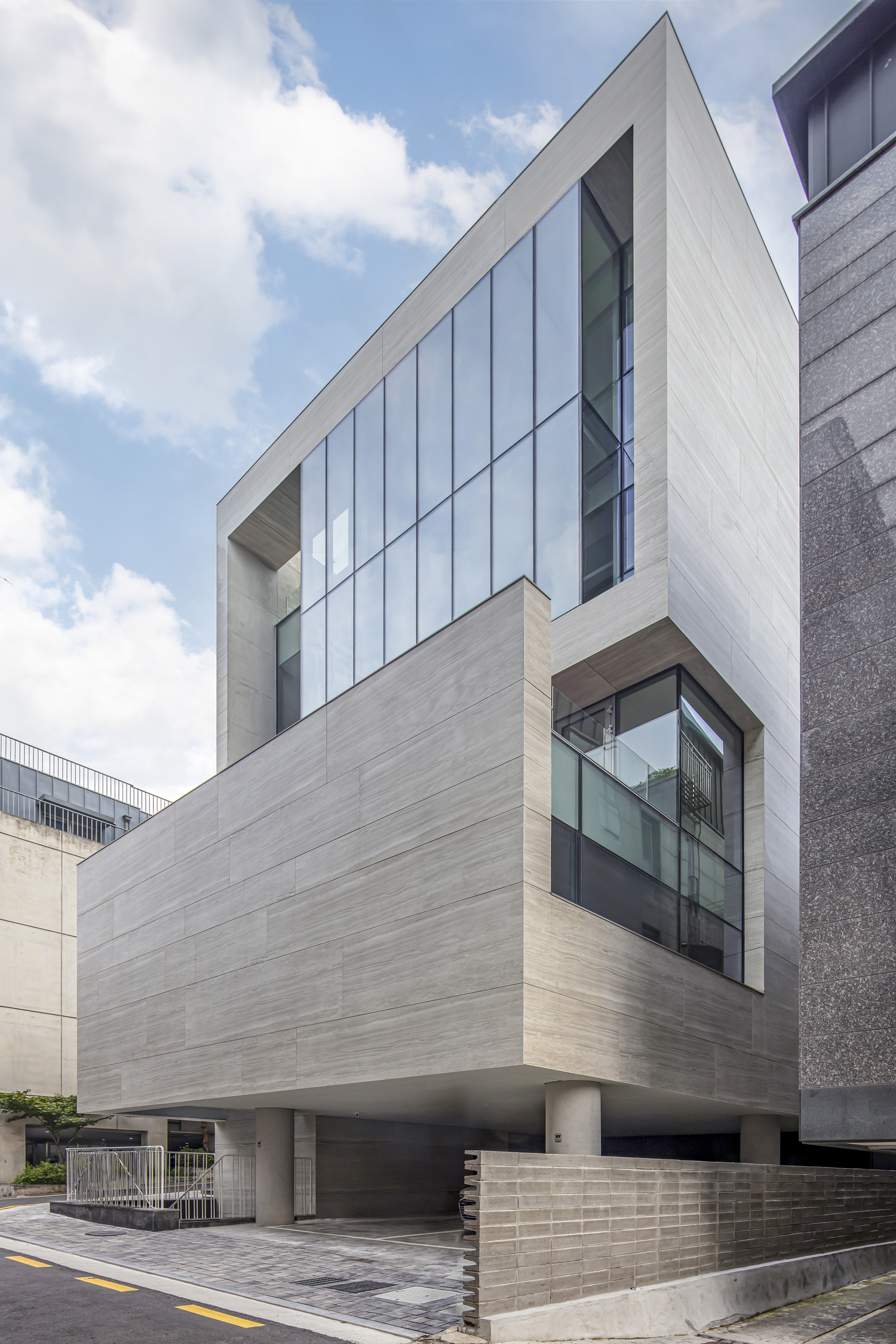
The ground floor is conceived as an open level elevated on columns, resolving parking requirements while reserving the interior exclusively for vertical circulation cores—stairs and elevator. Above this plinth, the first and second floors form a more enclosed base facing the alley, designed to protect privacy and carefully regulate the relationship with the exterior.
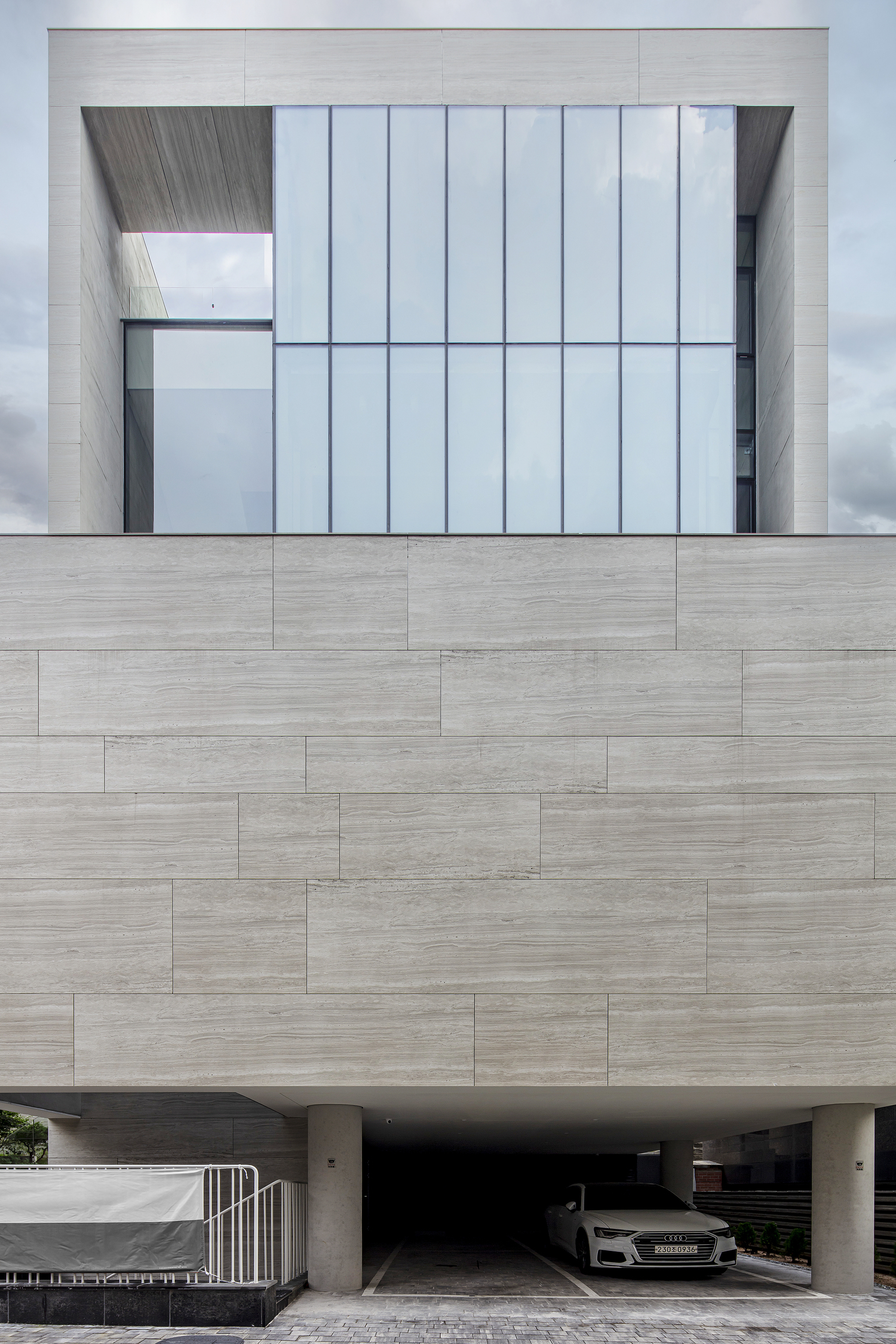
Specifically, the second floor extends to the maximum volume and surface area permitted by urban regulations at that level and avoids openings toward the street, wrapping the building in opaque planes that reinforce a restrained and serene exterior image. Likewise, the dwelling on the second floor incorporates large, glazed surfaces to draw natural light into the interior.
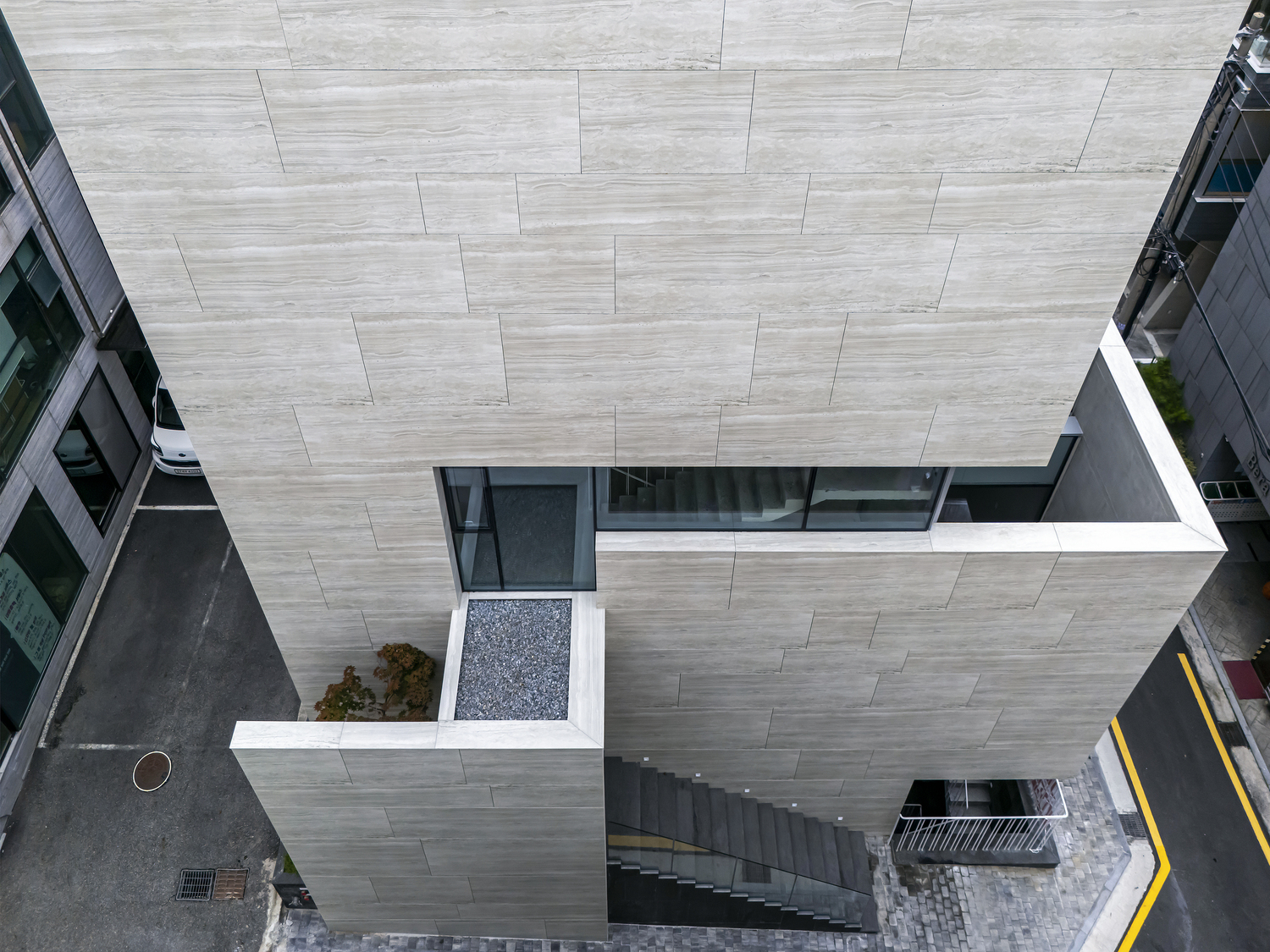
To introduce natural light into the basement levels, the project opens the sunken space to the exterior and creates a vertical courtyard open to the sky that functions as a light well. This solution allows daylight to reach the lower floors and establishes visual continuity between the different levels of the building.
“The project explores how architecture can draw light and nature into interior spaces, carefully regulating the balance between natural illumination and visual control.”
– L’EAU Design Studio
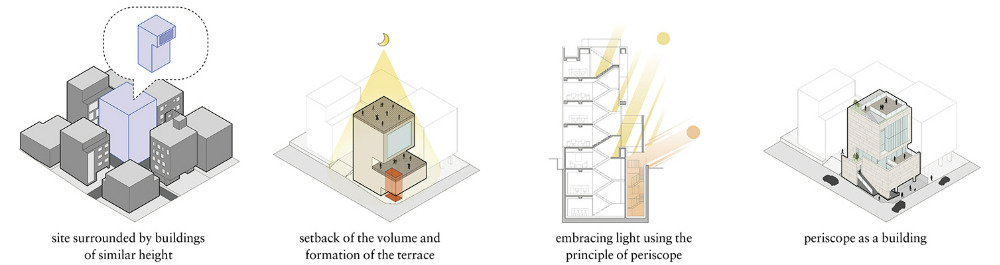
Esquemas conceptuales del proyecto
From the third level upward, the volume steps back progressively, reducing the occupied floor area to comply with sunlight regulations. This approach consolidates a more compact base on the lower levels and, by contrast, naturally generates an elevated exterior surface—conceived as a terrace—at the transition to the upper floors. This outdoor space is designed as a contemporary reinterpretation of the woldae, a traditional element of Korean architecture historically associated with contemplation, ritual, and a close relationship with nature.
Specifically, the space functions as a sky garden, connected to the interior through a glazed facade and intended to host events and a variety of activities. The concept of the woldae finds parallels in other Asian cultures, such as Chinese ceremonial terraces or Japanese elevated platforms, reinforcing its symbolic value as a place of transition between the built environment and nature.
“Even an artificial platform of modest dimensions can become an intimate garden that allows users to escape the urban bustle and reconnect with the sky.”
– L’EAU Design Studio
A technical envelope that reinforces the building’s identity
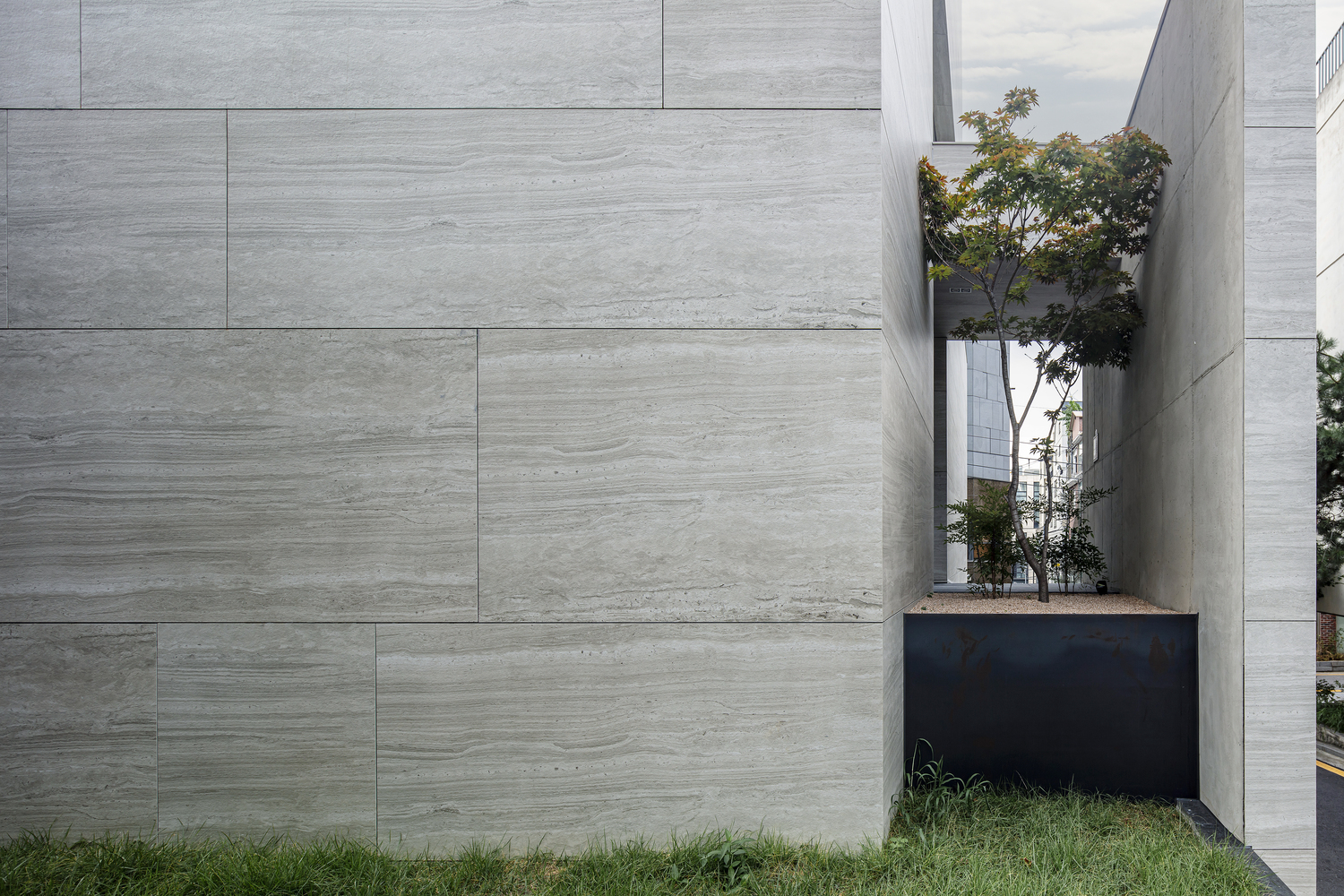
The building’s facade plays a key role in establishing a unified architectural expression. It is clad with Neolith Strata Argentum panels in a Riverwashed finish, installed using a ventilated facade system developed by GAI International.
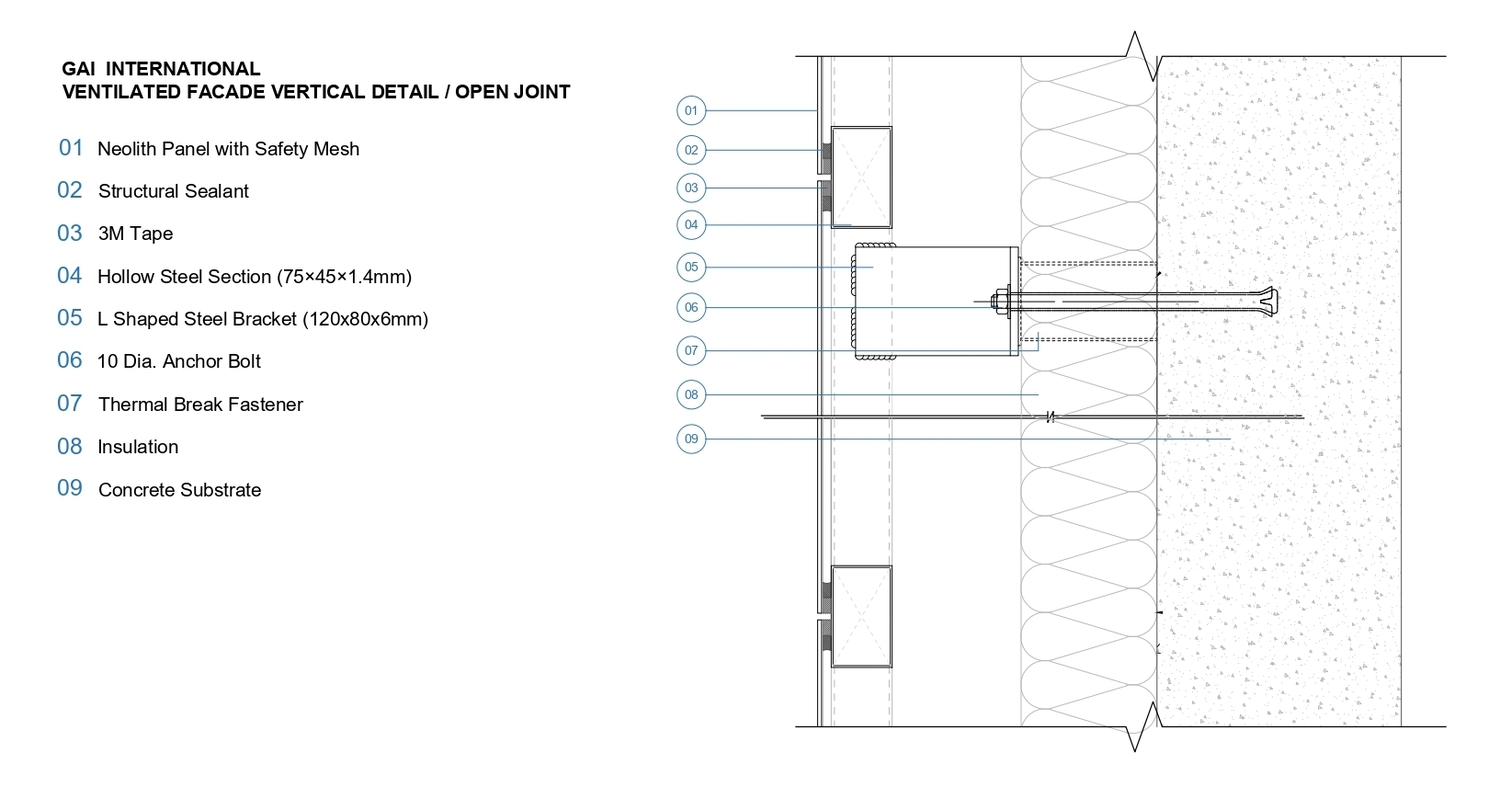
Building facade detail
This solution provides lightness, continuity, and high technical performance, particularly well-suited to a public building in a demanding urban environment.
The Neolith ventilated facade shields the building from Korea’s urban conditions—high air pollution and sharp temperature swings—while reducing condensation. The result is steadier thermal behavior and a Neolith-clad exterior that keeps its finish and appearance for the long term.
“We chose Neolith for its technical performance, contemporary design, and reduced thickness, which is especially suitable for facade applications.”
– GAI International
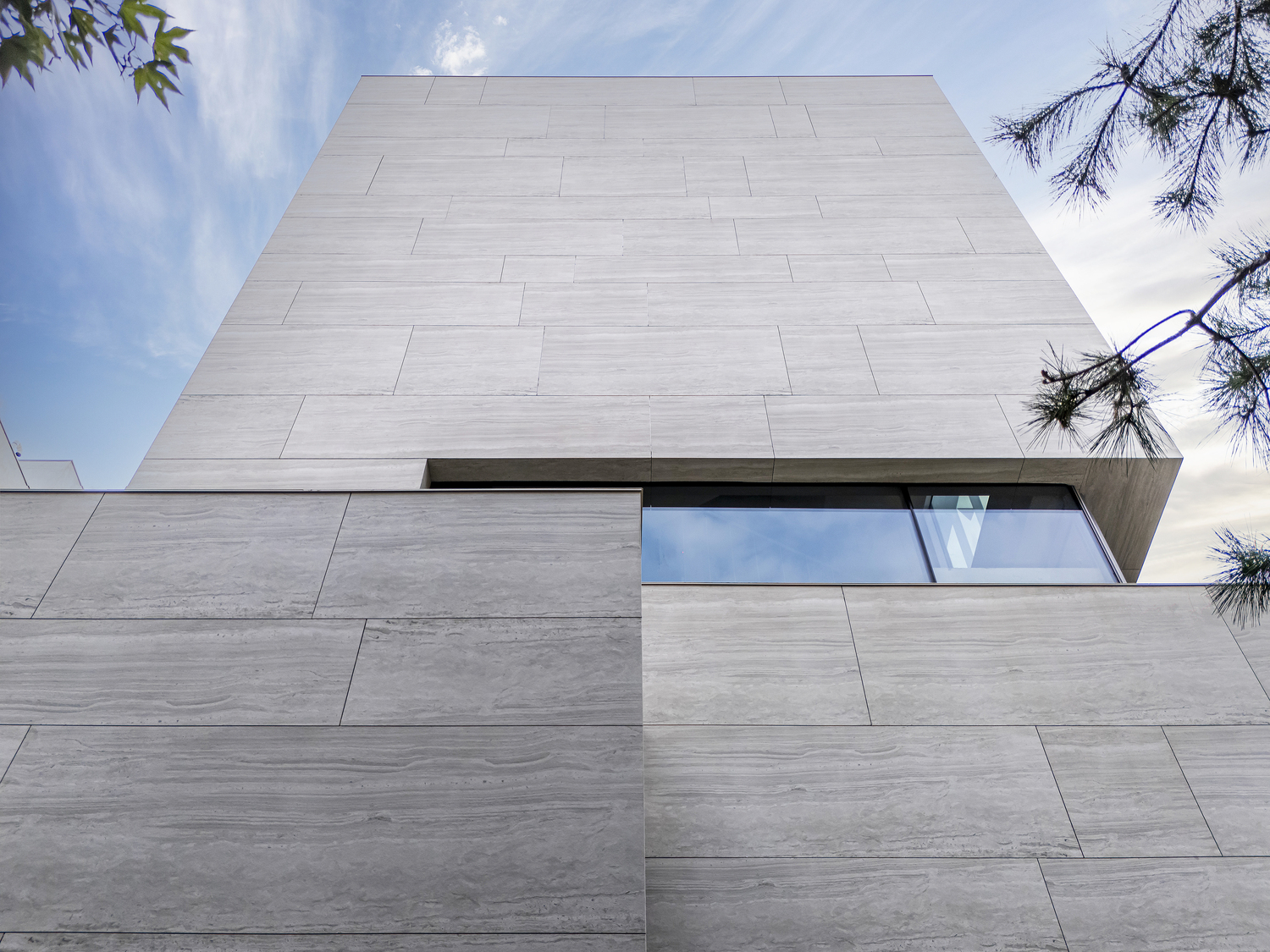
The selection of Neolith also aligns with sustainability and low-maintenance goals, supporting efficient operation and simplifying upkeep over the building’s lifecycle.
“Sustainability is the most important aspect of contemporary construction, and Neolith offers real guarantees in terms of durability and reduced maintenance.”
– GAI International
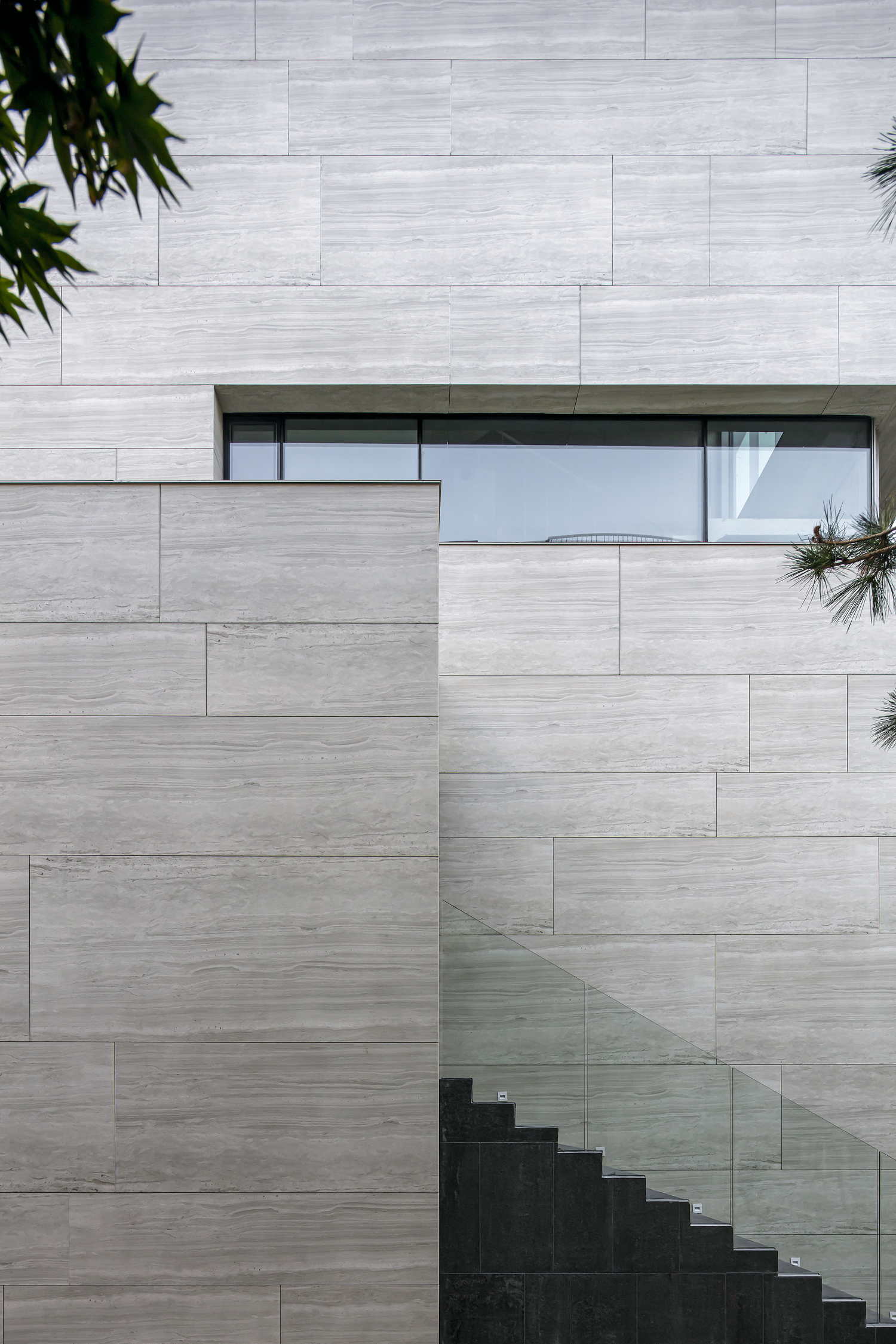
From an aesthetic standpoint, Neolith Strata Argentum reinterprets the texture of travertine through a sober, contemporary color palette, contributing to a balanced integration with the surrounding buildings.
The deliberate use of a single material to clad the facade reinforces the project’s architectural concept, allowing geometry and light to become the primary protagonists, while the material remains continuous and stable.
“It is a classic pattern, yet the color delivers a distinctly modern reading and creates a visual impact that remains in harmony with the surrounding context.”
– GAI International
Architecture as a mediator in a contemporary city
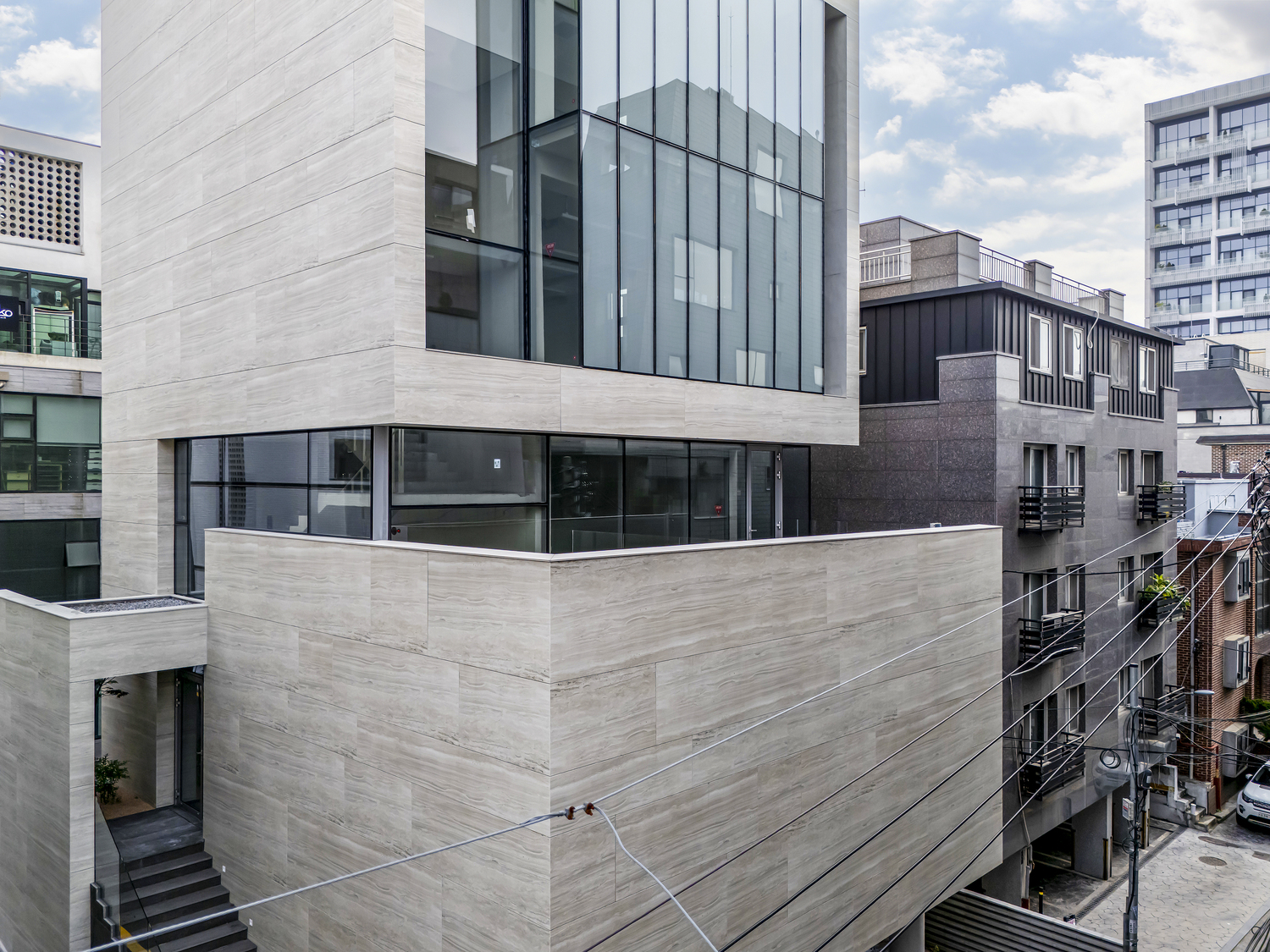
Just as a submarine keeps its hull submerged and exposes only the upper part of the periscope to maintain awareness of its surroundings, Nonhyeon Periscope elevates its exterior space above a solid base to offer a moment of relief amid urban density. Architecture acts as a mediator between light, views, and privacy, demonstrating how a small-scale intervention can provide precise responses to the challenges of a contemporary city.
“This project proposes an architecture in which the everyday and the exceptional, privacy and openness, can coexist in a balanced way within a complex urban context.”
– GAI International
Technical sheet
Project name: Nonhyeon Periscope
Location: Seol, South Korea
Typology: Mixed-use building
Architecture firm: L’EAU Design Studio
Distributor: GAI International
Built area: 600 m²
Neolith materials: Neolith Strata Argentum
Fixing system: GAI International
Completion year: 2024
Neolith products
in this project

