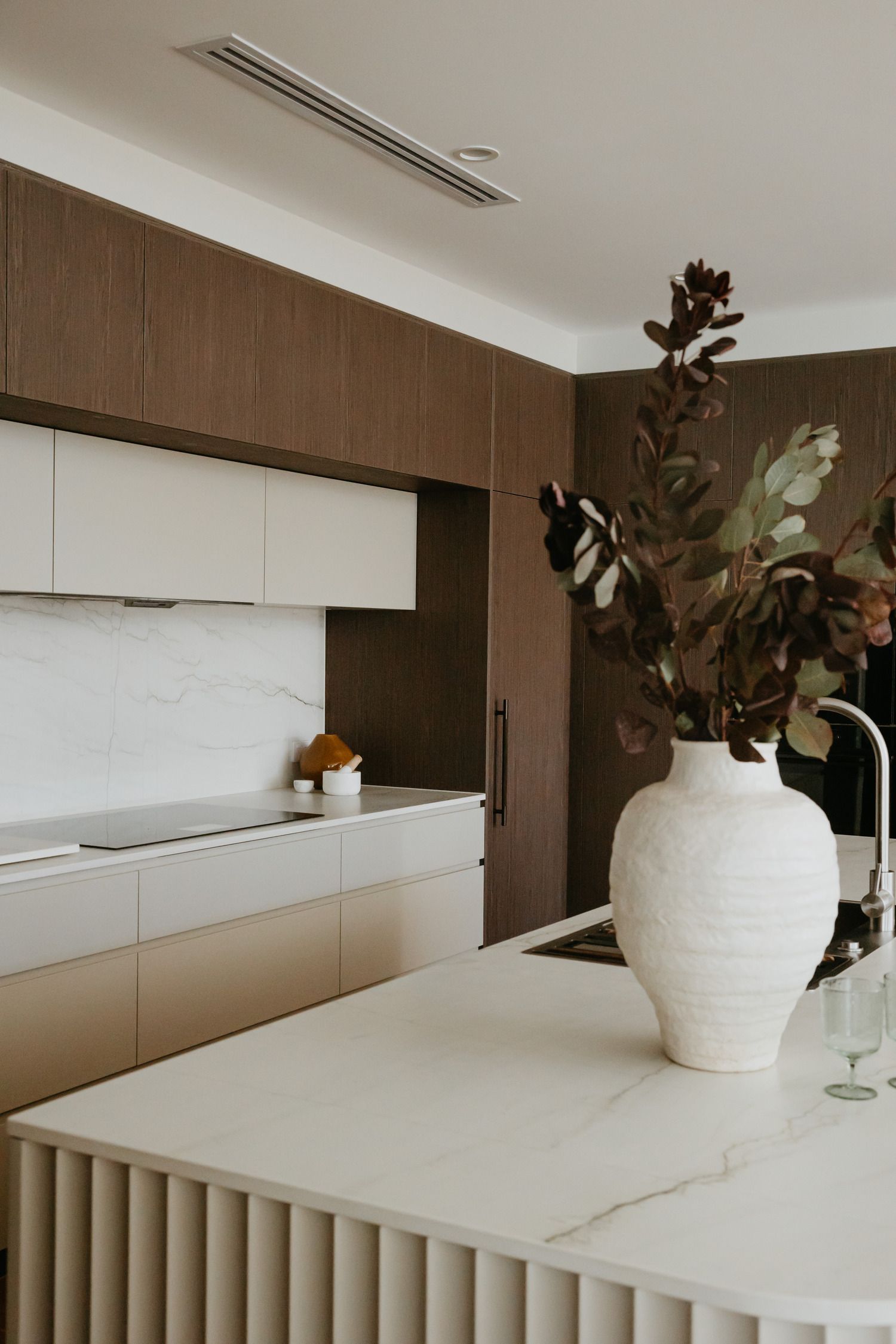
A warm, sculptural kitchen with timeless appeal
New South Wales, Australia
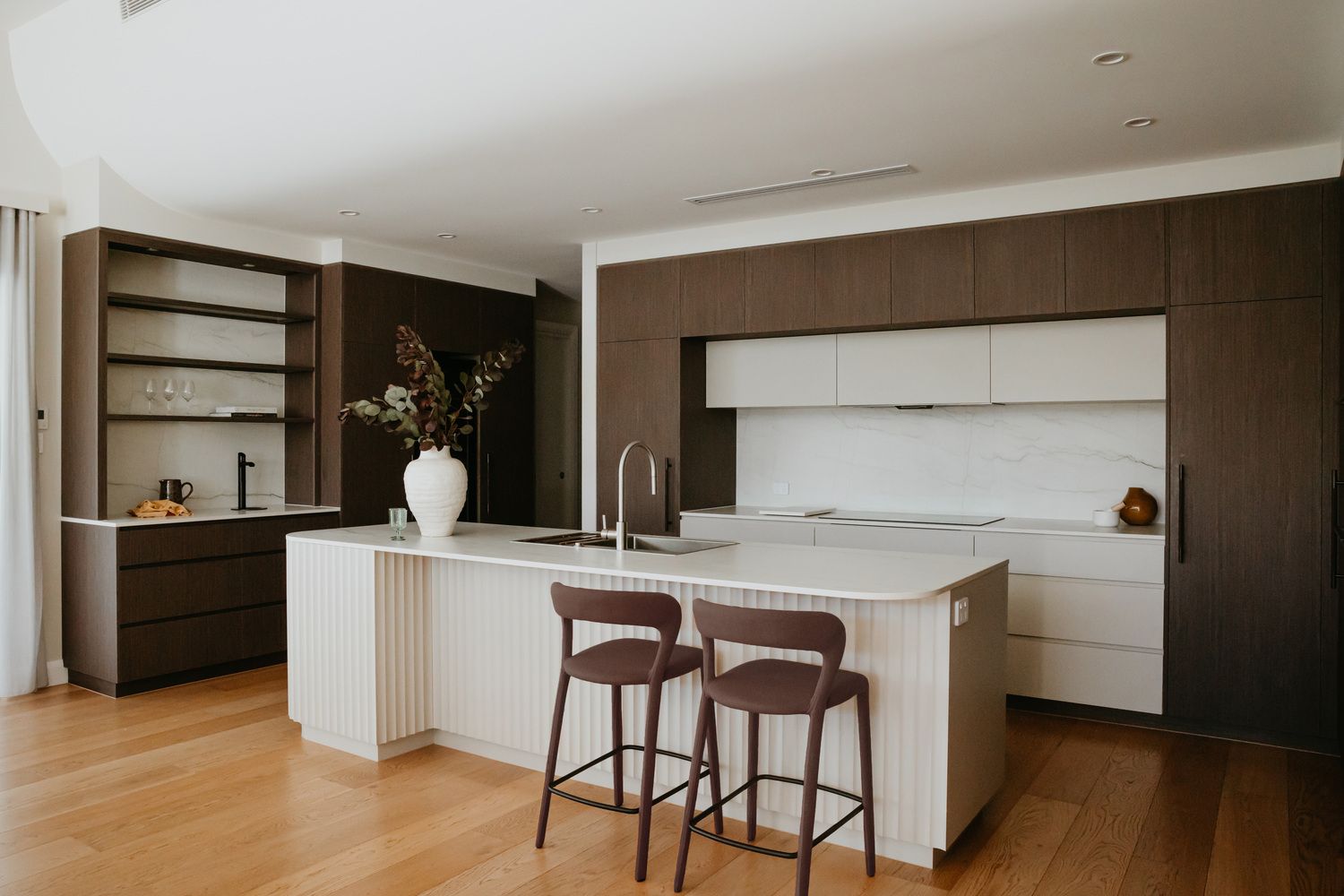
A kitchen designed for beauty, functionality, and everyday enjoyment
|
Project location: |
Dural, New South Wales, Australia |
|
Project type: |
Private residence |
|
Design: |
Kastell Kitchens |
|
Photography: |
Elisa Romeo Photography |
|
Neolith materials: |
Neolith Mont Blanc |
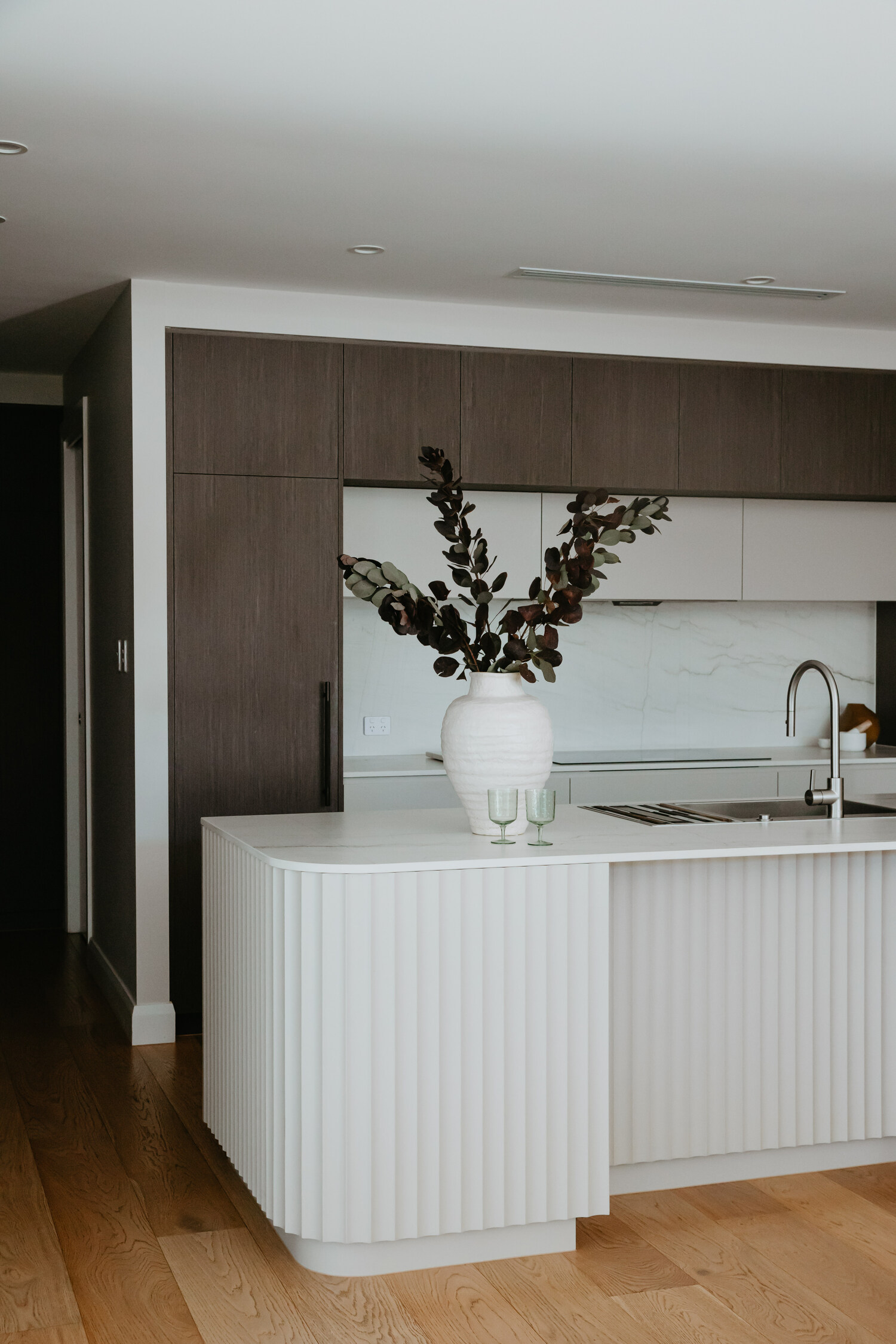
At The Dural Home, the kitchen is shaped by contrast. Dark timber cabinetry gives the interior depth and warmth, while pale surfaces introduce a lighter counterpoint throughout the room. At the center, a generous island with curved corners and fluted detailing creates a strong architectural presence without making the space feel rigid.
Designed by Kastell Kitchens, the project responds to homeowners who wanted their kitchen to feel sophisticated and luxurious, yet welcoming and highly functional. Rather than following a short-lived aesthetic, the design was developed around natural-looking materials, rich timber tones, clean lines, and subtle curves, creating an interior intended to remain relevant over time.
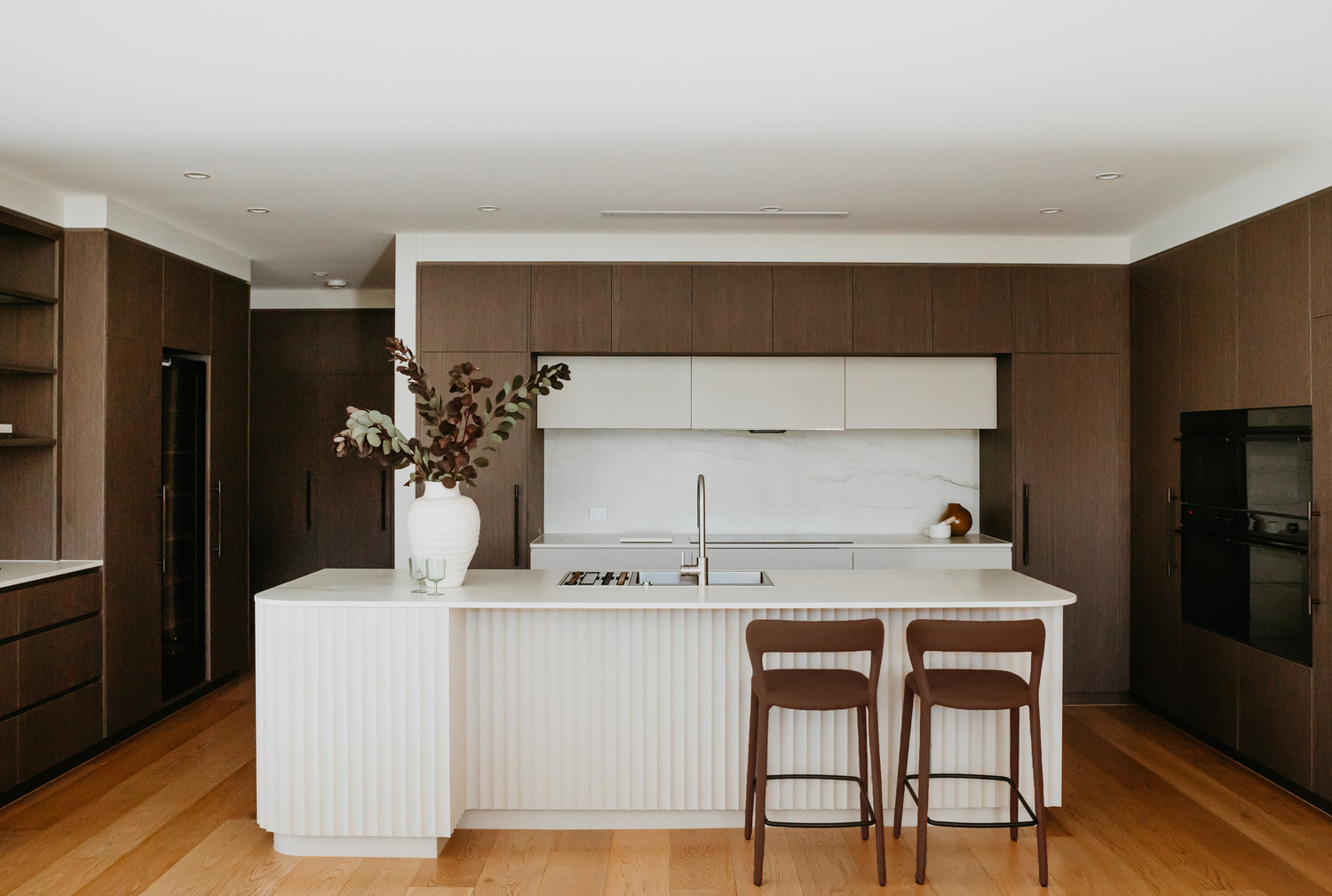
A surface chosen from the starting point
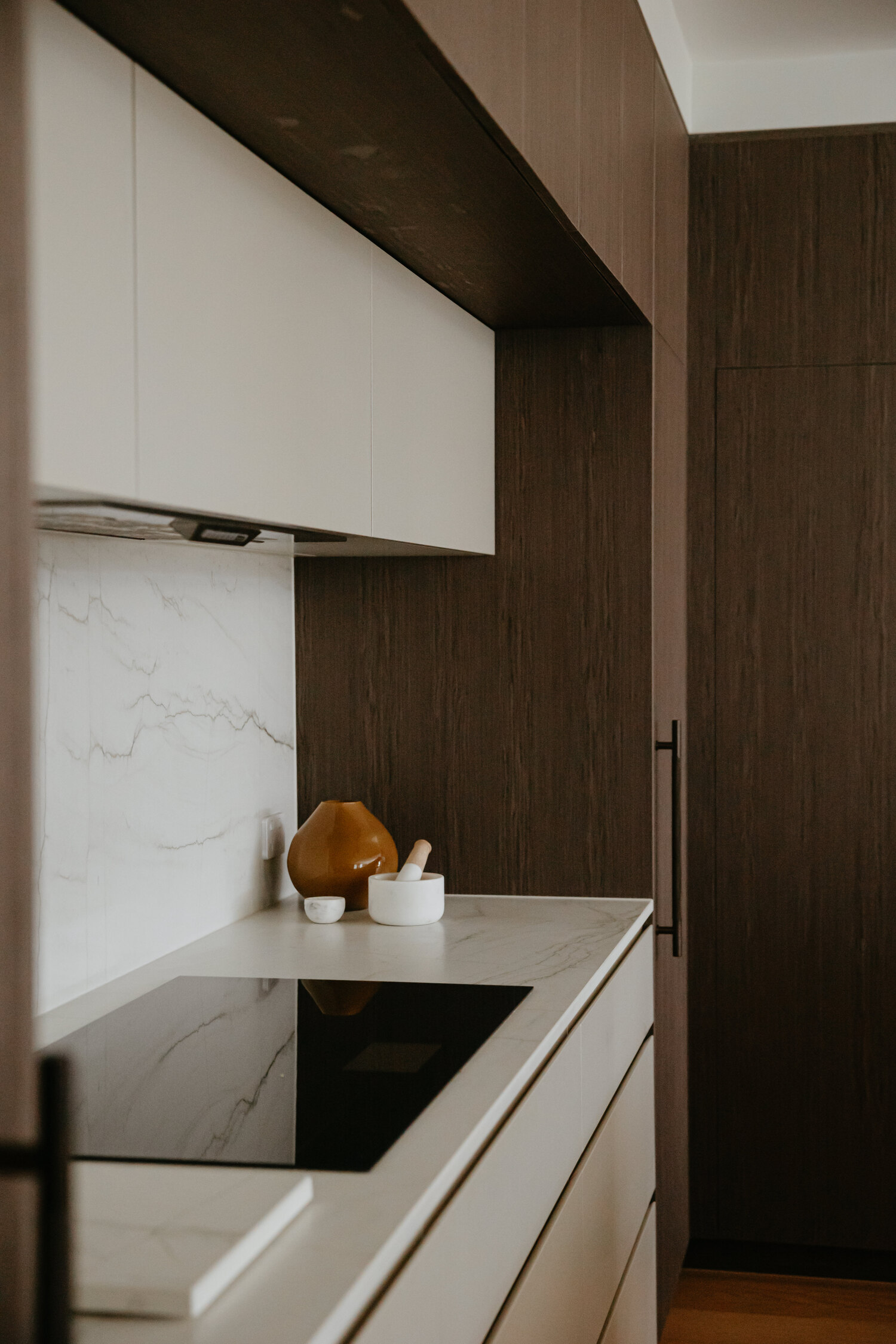
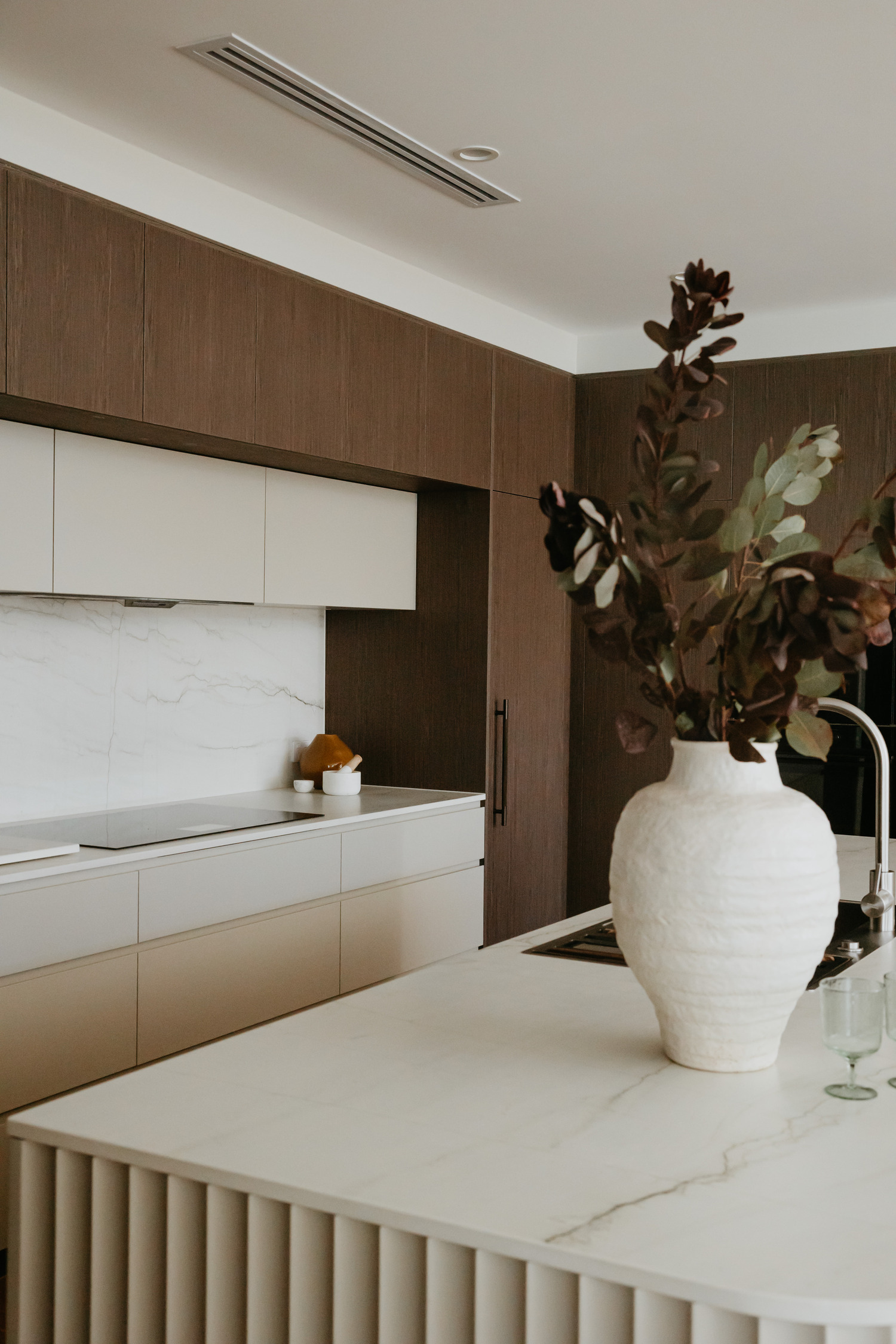
The countertops were always going to play a defining role in the kitchen. Neolith Mont Blanc in Silk finish was selected for the island, cooktop area, and bar nook, establishing a common material thread across the different functional zones.
 |
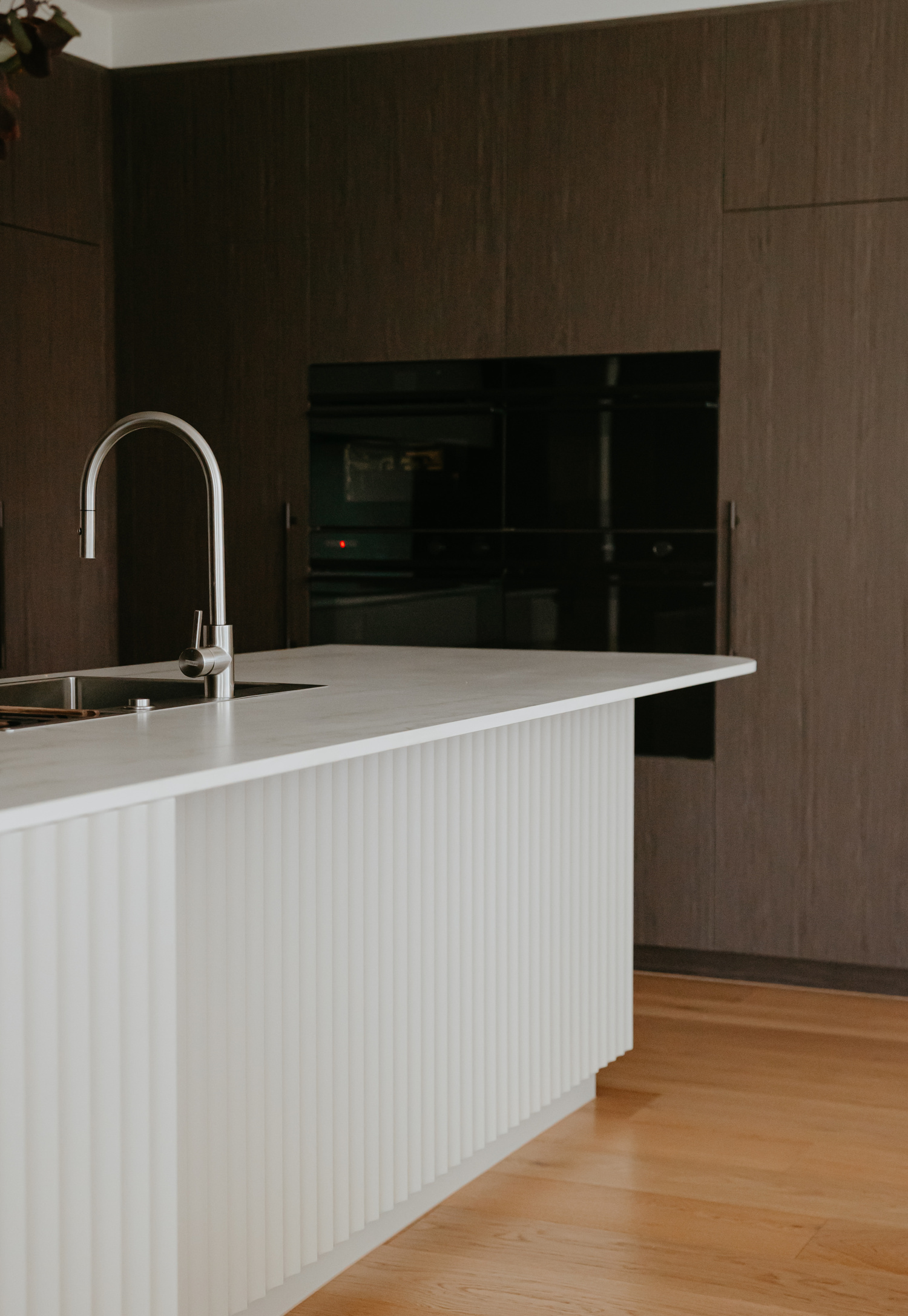 |
Its light background and delicate veining introduce the natural stone appearance the homeowners were looking for, while creating a clear visual contrast with the surrounding dark joinery. On the large central island, this becomes particularly evident: the pale horizontal surface sits above the sculptural fluted base, giving definition to one of the kitchen's most prominent elements.
 |
 |
For Kastell Kitchens, finding the right surface was an essential part of translating the clients' vision into the finished space:
“The clients wanted a kitchen that felt timeless and luxurious, while still being warm and practical. Because the countertops would have such a strong presence, it was important to find a surface they genuinely connected with. Neolith Mont Blanc gave us the soft, natural stone aesthetic they were drawn to, together with the performance required for a high-use kitchen.”
— Kastell Kitchens
Contrast without excess
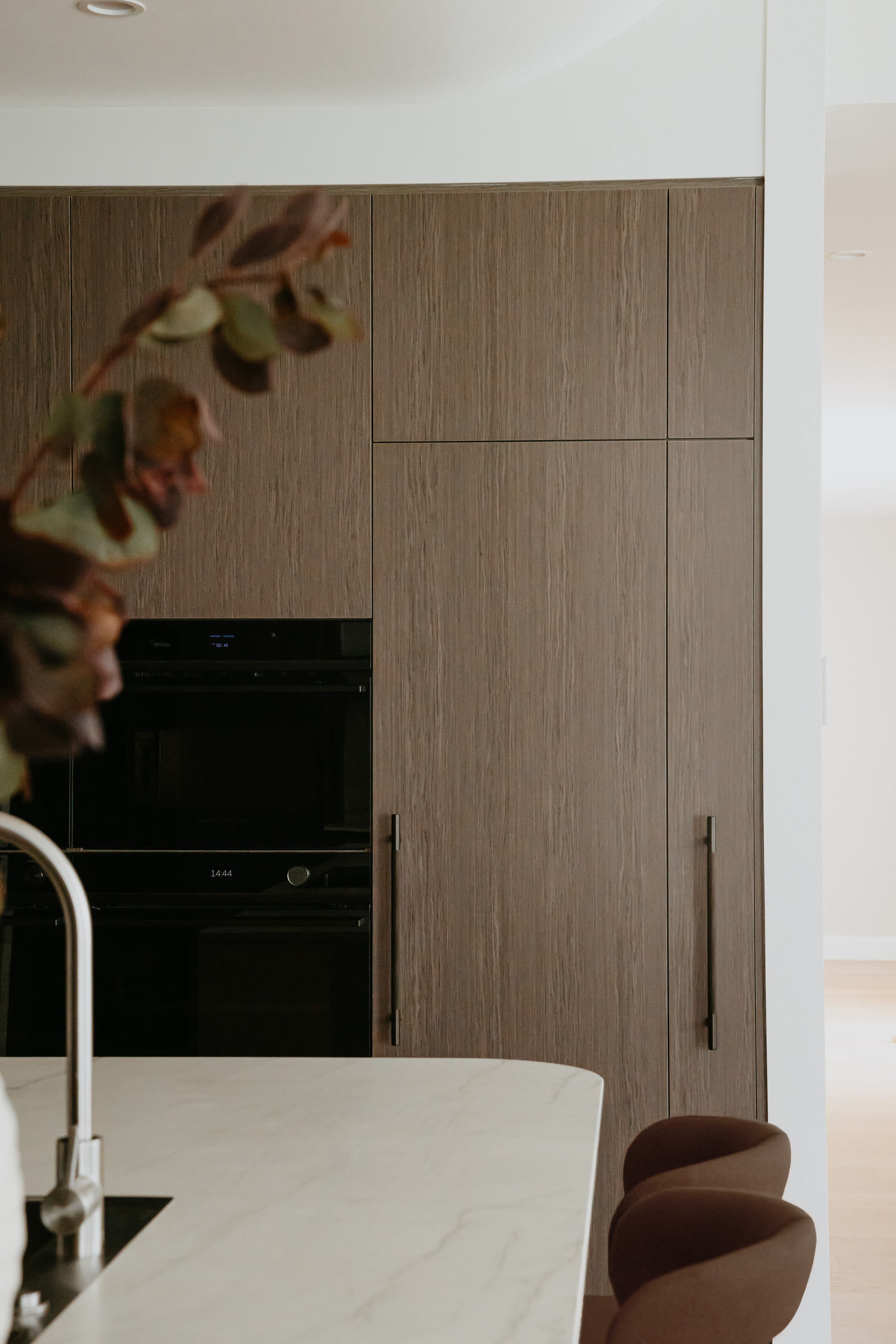
The strength of the interior comes from the relationship between its materials rather than from any single element. The lighter Neolith surfaces balance the visual weight of the dark cabinetry, while timber and warm-toned flooring soften the crisp character of the countertops.
 |
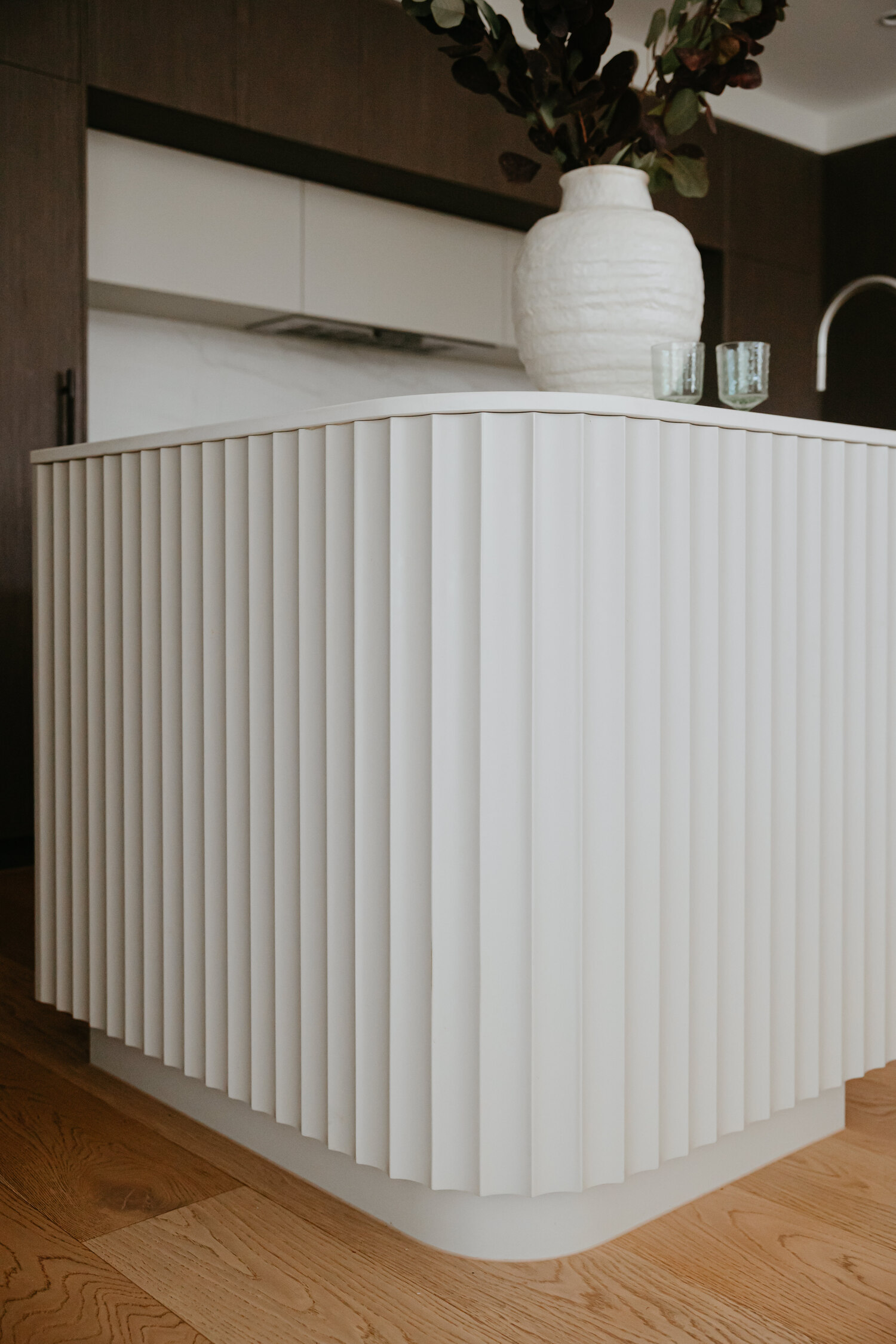 |
Curved detailing on the island further changes the character of the composition. Its rounded edges and vertical relief bring a more sculptural quality to the central volume, offsetting the stronger architectural lines of the full-height cabinetry behind it.
 |
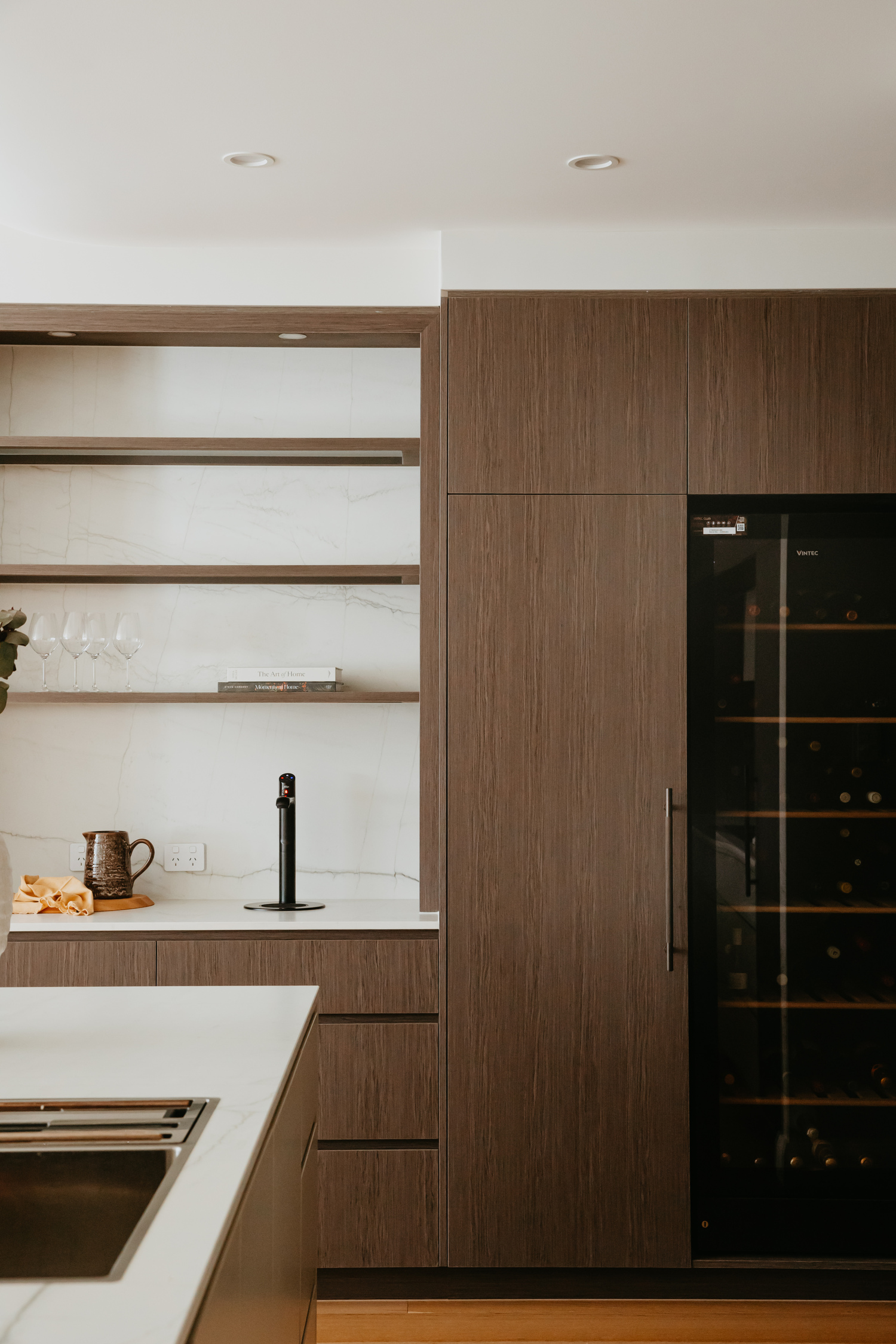 |
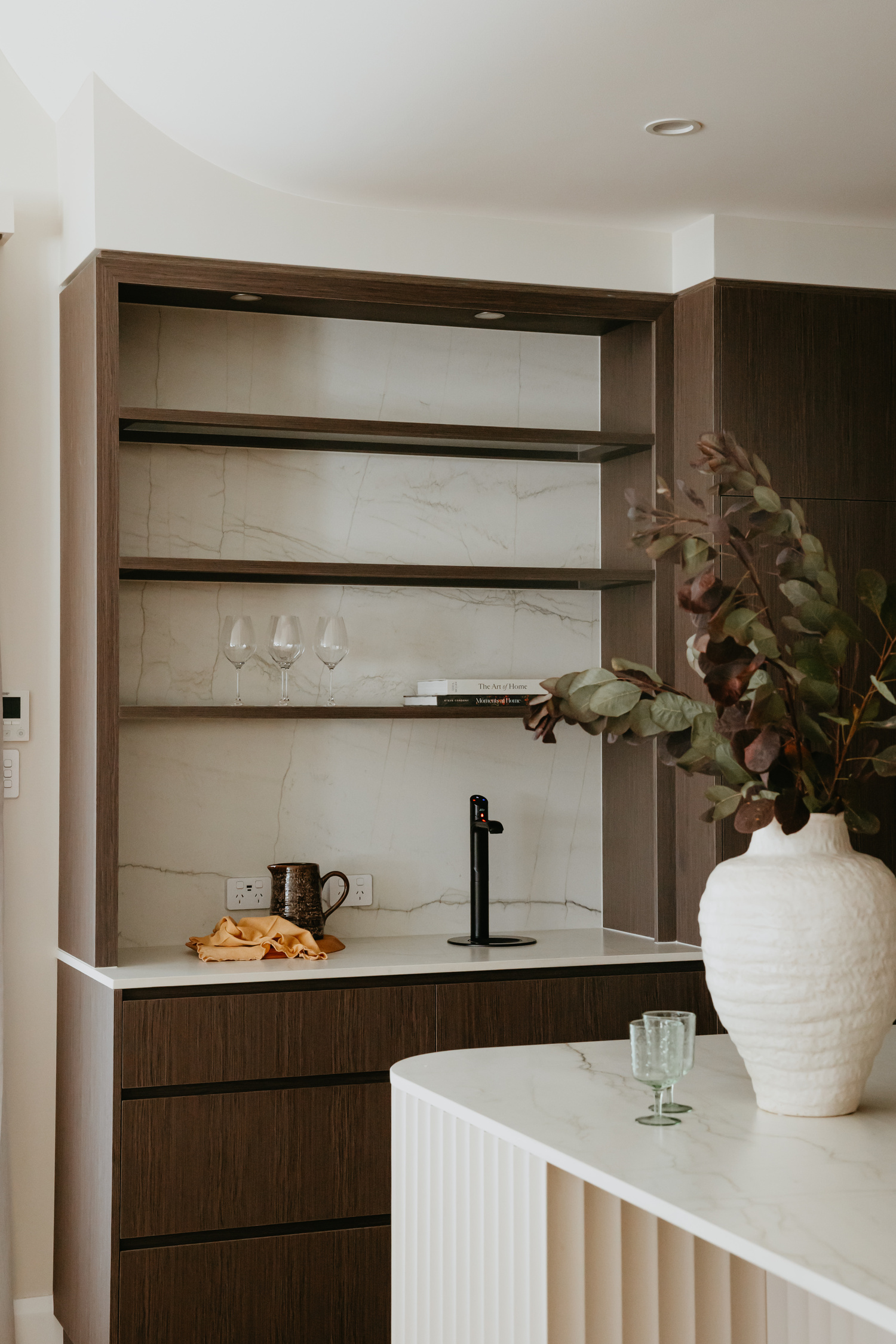
The same approach continues into the bar nook, where Neolith Mont Blanc appears both horizontally and across the wall behind the shelving. Framed by timber, the surface introduces subtle pattern and visual interest into a more intimate part of the kitchen, while connecting it materially with the main preparation areas.
“The material palette was very intentional. The lighter surface prevents the darker joinery from feeling too heavy, while the timber brings warmth to the white countertops. For us, the success of the scheme came from making sure every material worked as part of the whole rather than allowing one element to dominate.”
— Kastell Kitchens
A kitchen designed to be lived in
The visual role of Neolith was only one part of the decision. The homeowners wanted a premium kitchen they could cook, entertain and spend time in without having to treat its surfaces with excessive care.
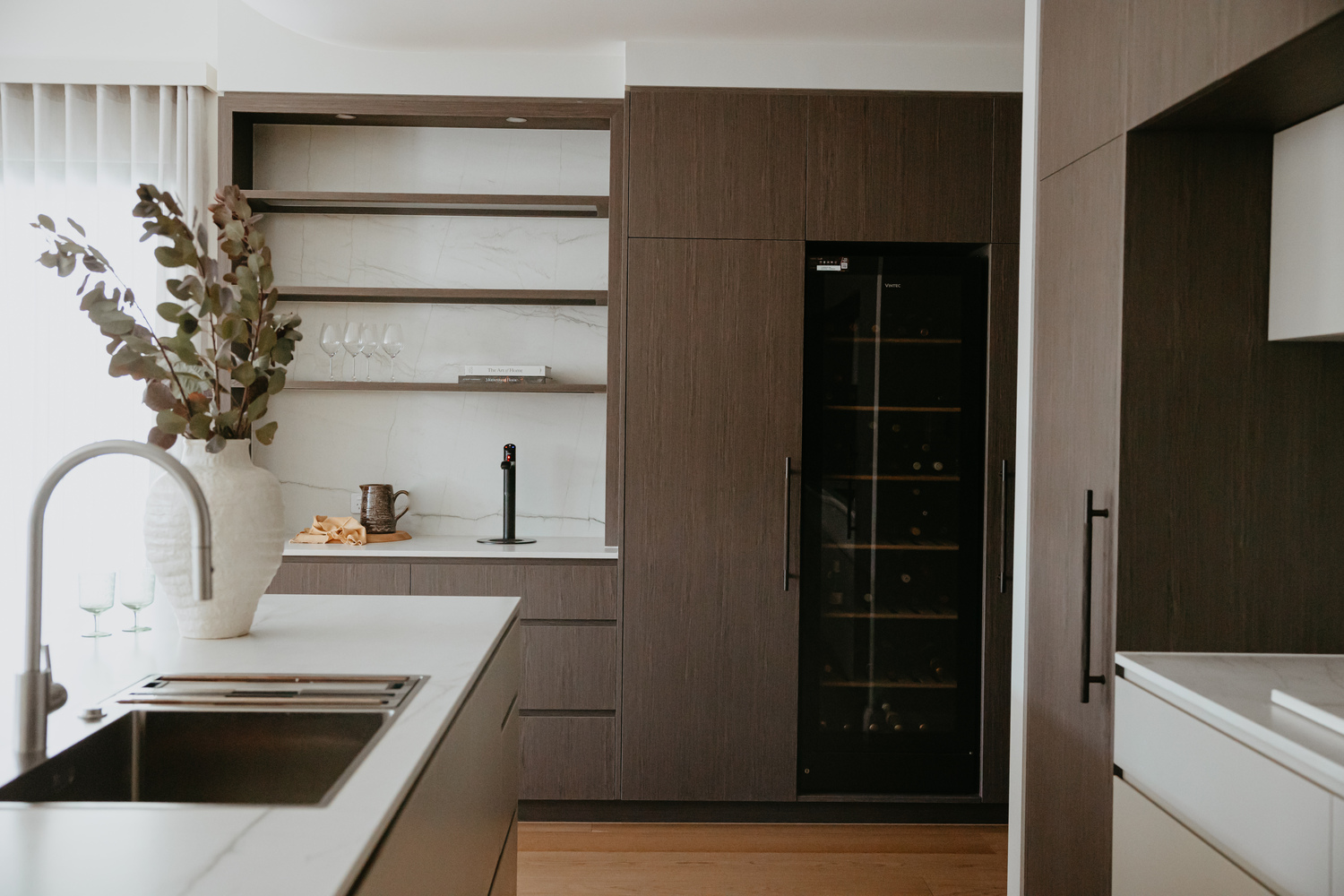
With extensive countertop areas and a large island at the center of daily activity, durability and ease of maintenance therefore became important considerations. Neolith's resistance to heat, scratches, stains and moisture, together with its low porosity, responded to those practical requirements. Its large-format characteristics also supported the generous scale of the countertops and the clean appearance sought by Kastell Kitchens.
“The clients wanted a beautiful kitchen, but just as importantly, one they could live in and enjoy without constant maintenance. Neolith gave us confidence that these heavily used surfaces could handle everyday cooking and entertaining while maintaining the appearance we wanted for the project.”
— Kastell Kitchens
A more considered approach to longevity
That focus on long-term use also influenced the broader material selection. Kastell Kitchens considers durability alongside aesthetics, quality and sustainability, with the belief that specifying materials designed to last contributes to creating a more considered home.
For The Dural Home, Neolith's manufacturing approach and the incorporation of natural and recycled raw materials complemented the clients' expectations regarding quality and longevity without requiring a compromise in either visual character or performance.
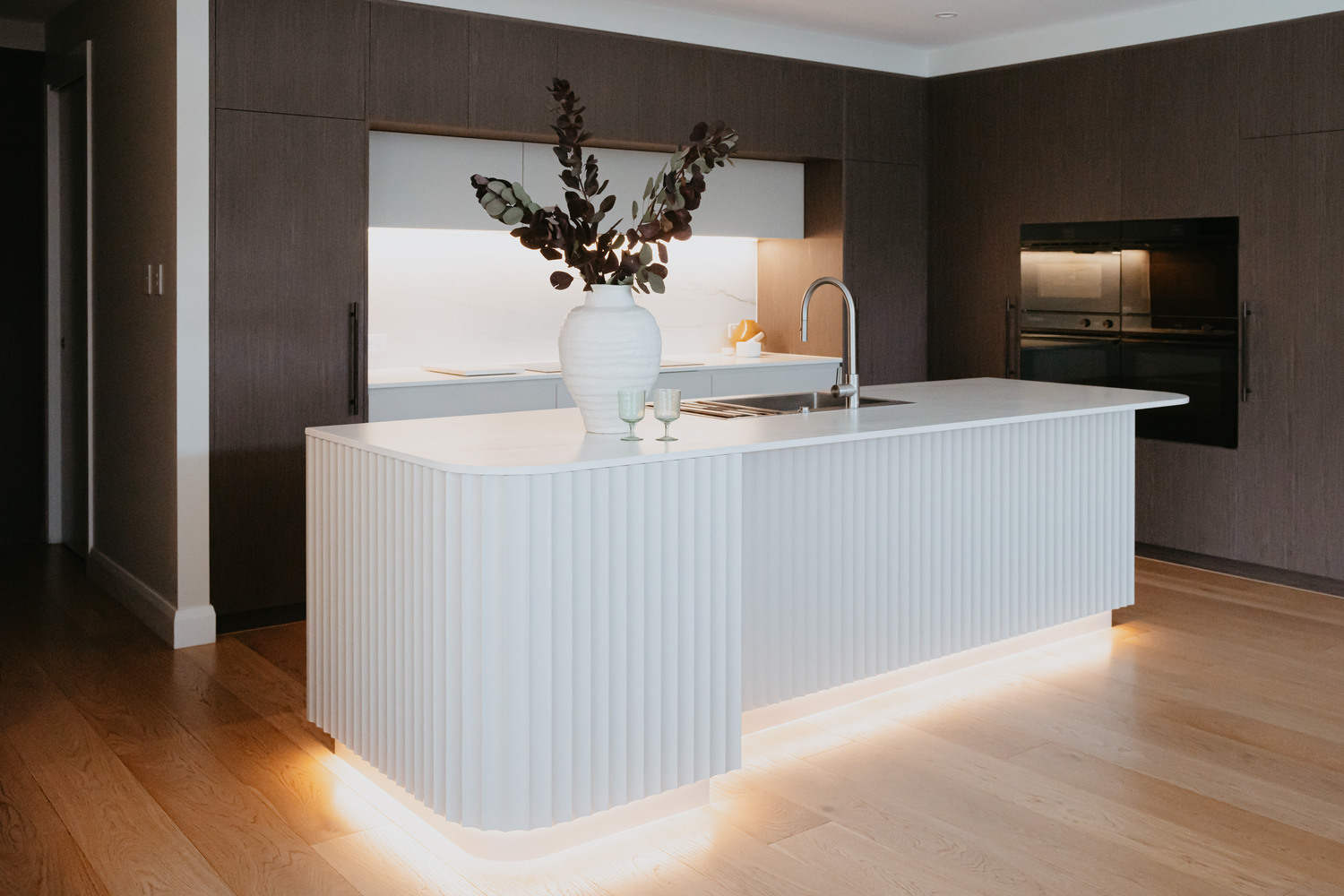
The resulting kitchen is contemporary without being dependent on a particular trend. Light stone-inspired surfaces, dark timber, warm flooring and curved forms each play a distinct role, creating a space with depth and character that remains practical at its core.
Neolith Mont Blanc is integral to that balance: a surface selected not simply as a finishing element, but as part of the material language that defines how the kitchen looks, feels and functions.
Neolith products
in this project