Design that challenges perception
Some ideas seem particularly well suited to the digital world. Shapes that change, materials that can be swapped with a click, and objects that can be transformed again until they become something entirely different. But what happens when that same creative freedom moves beyond the screen and into the physical world?
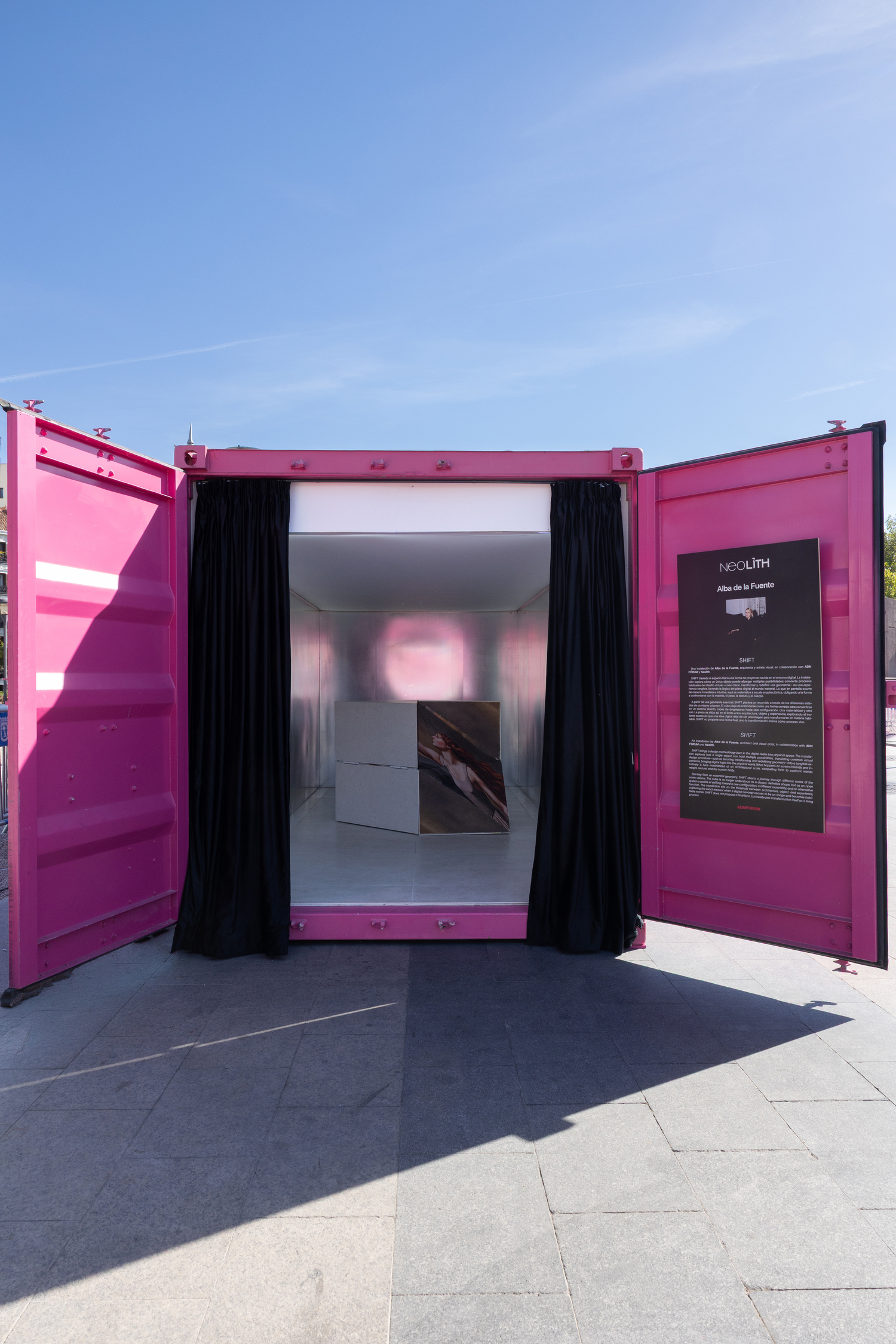
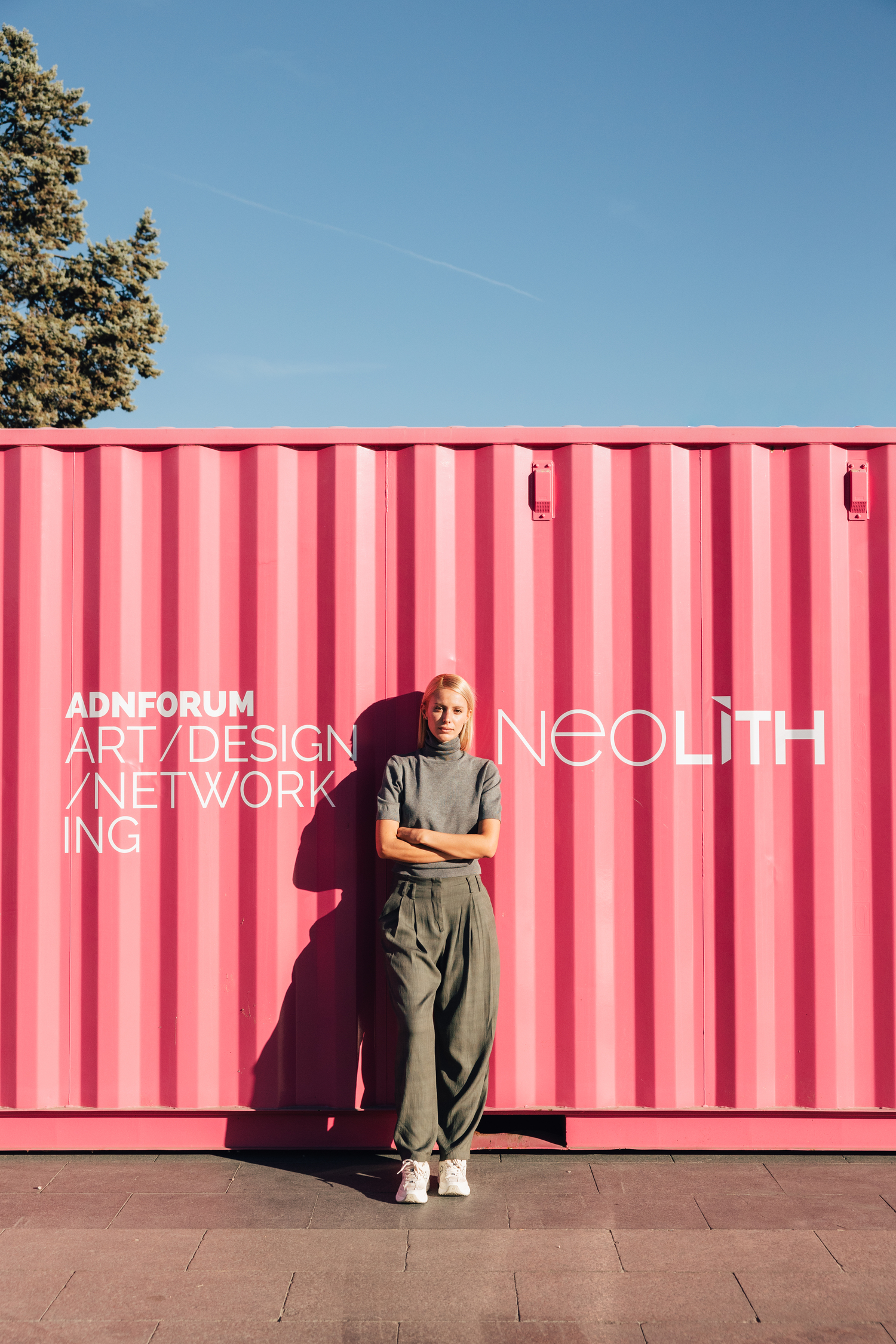
That question lies at the heart of “SHIFT,” an installation created by architect and visual artist Alba de la Fuente for Neolith at ADN Fórum 2026. Blurring the boundaries between architecture, art, and design, the installation invites us to take a second look and, above all, question what we see.
From the digital world to physical reality
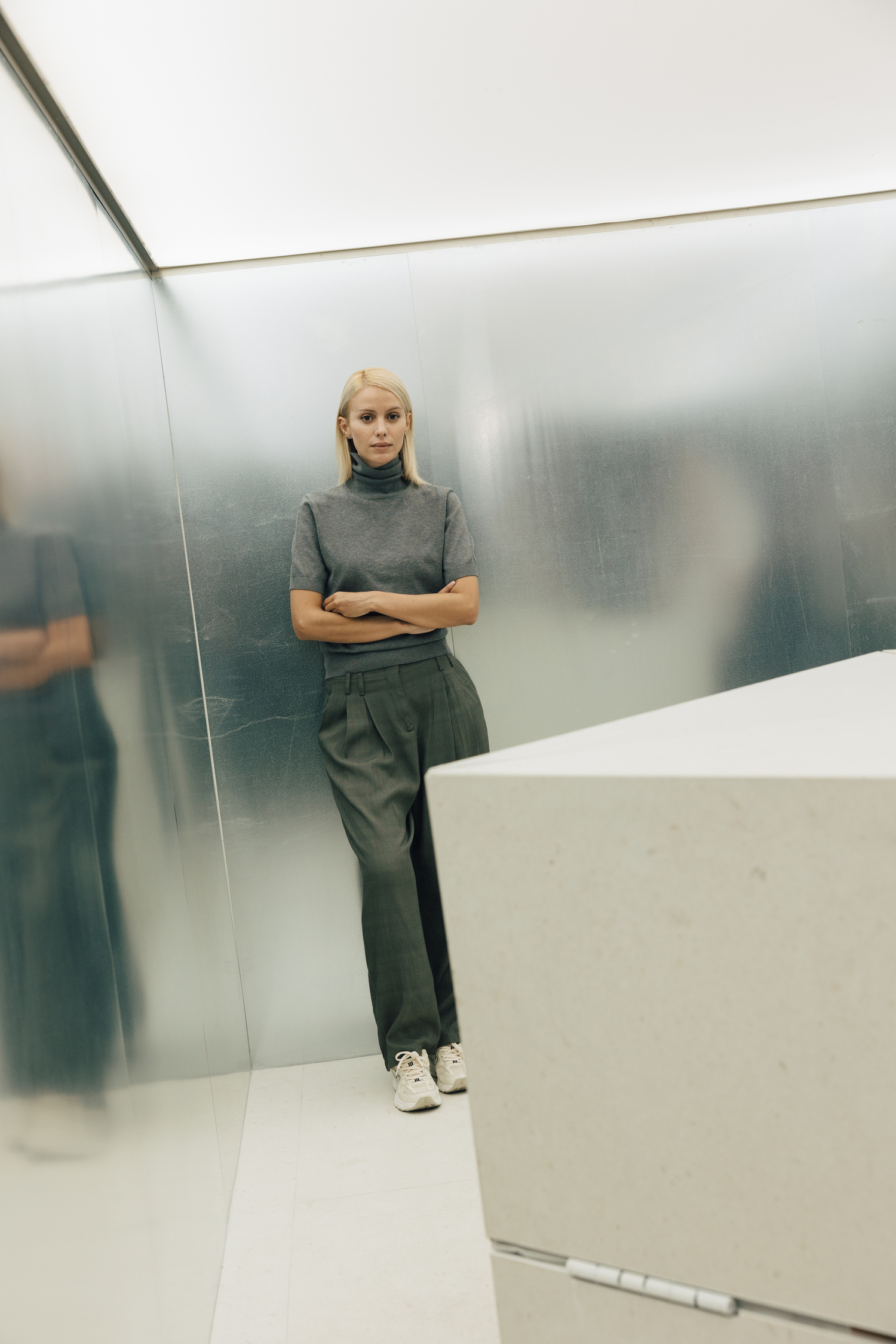
Alba de la Fuente works at the intersection of the physical and digital worlds. Her creative process incorporates digital tools, 3D modeling, and artificial intelligence to experiment with imagery, geometry, and materials before bringing those possibilities into real-world objects and spaces.
 |
 |
“SHIFT” emerged from this approach. Even its name references the Shift key on a keyboard, a constant presence in a creative process built around iteration, modification, and experimentation.
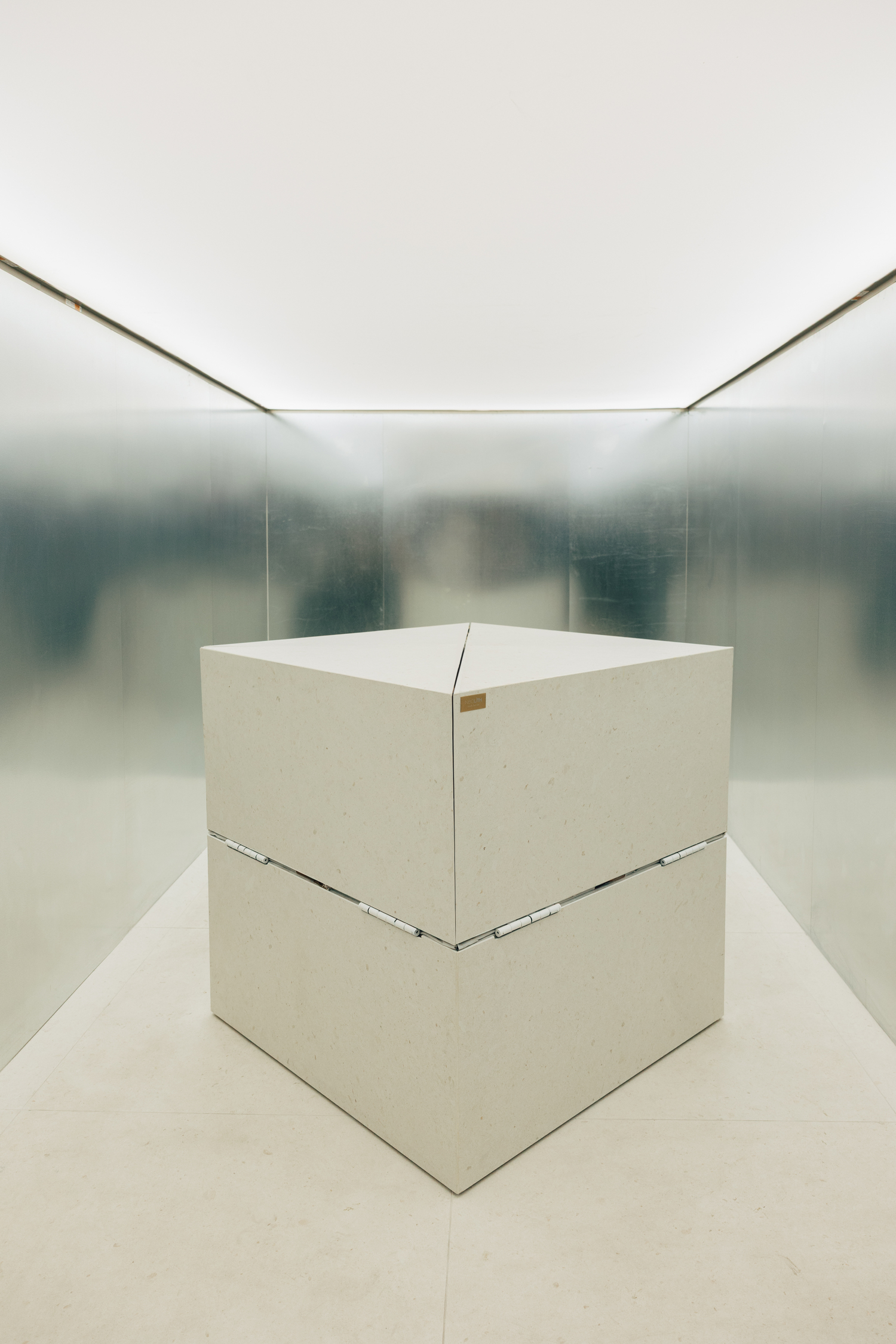
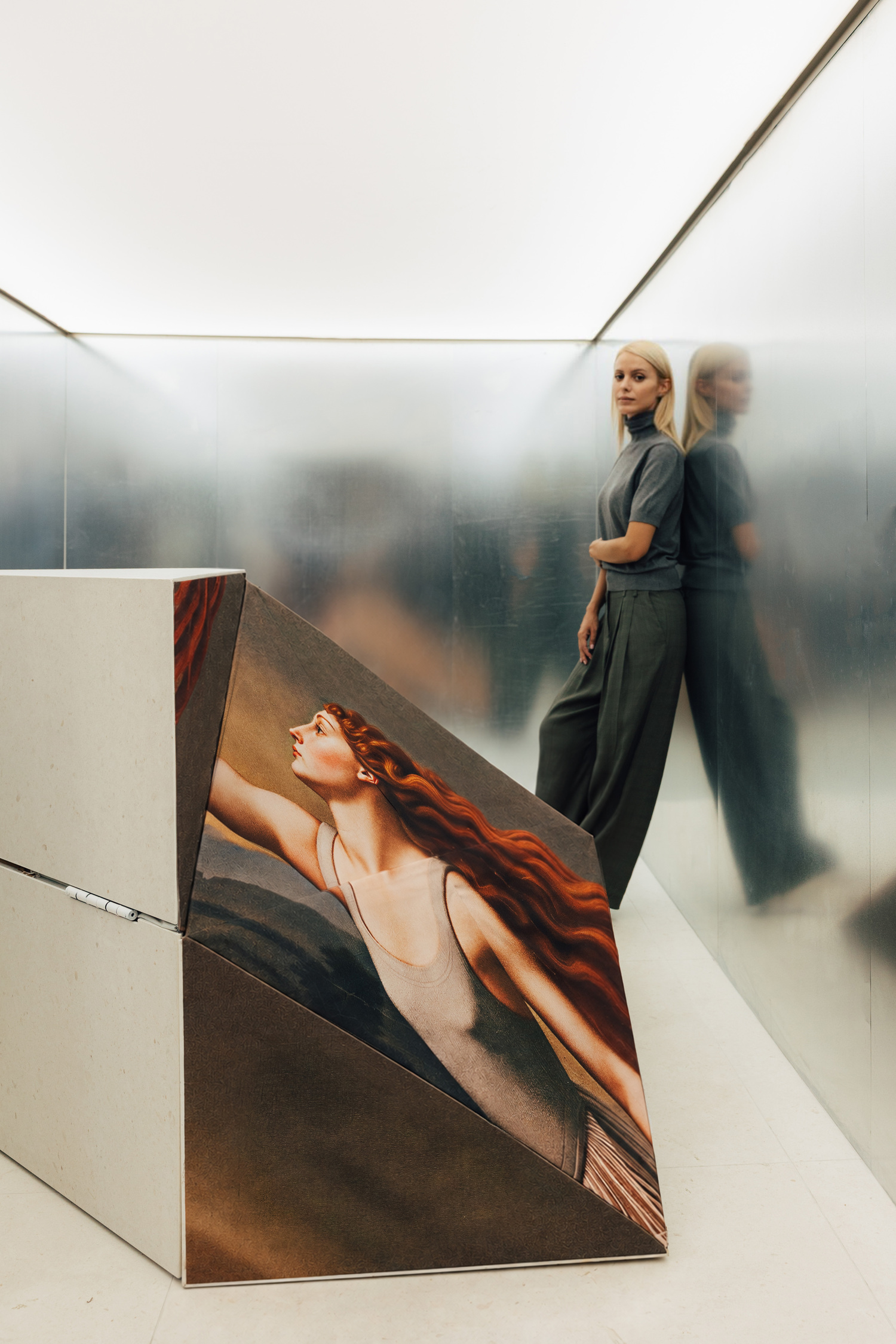
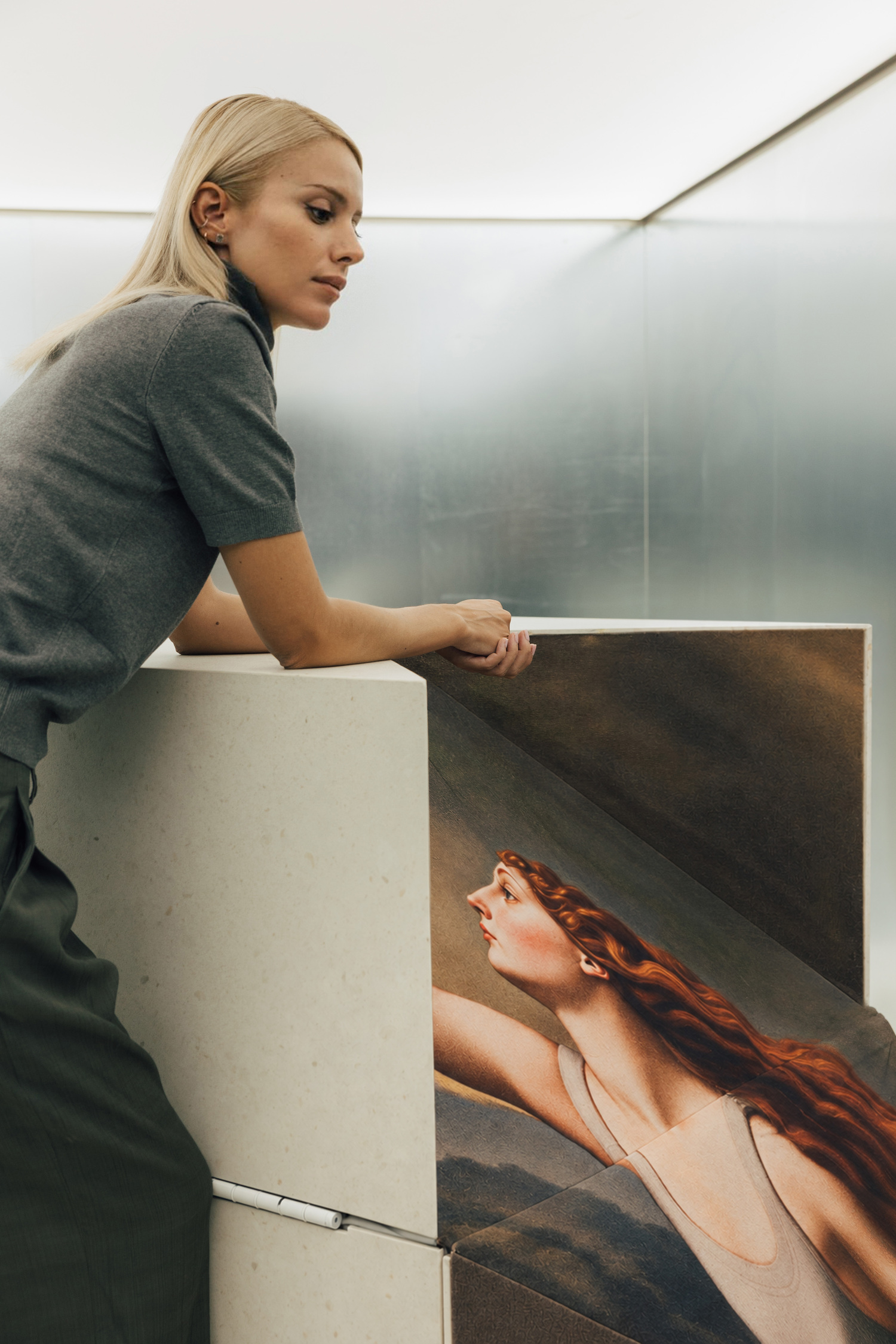
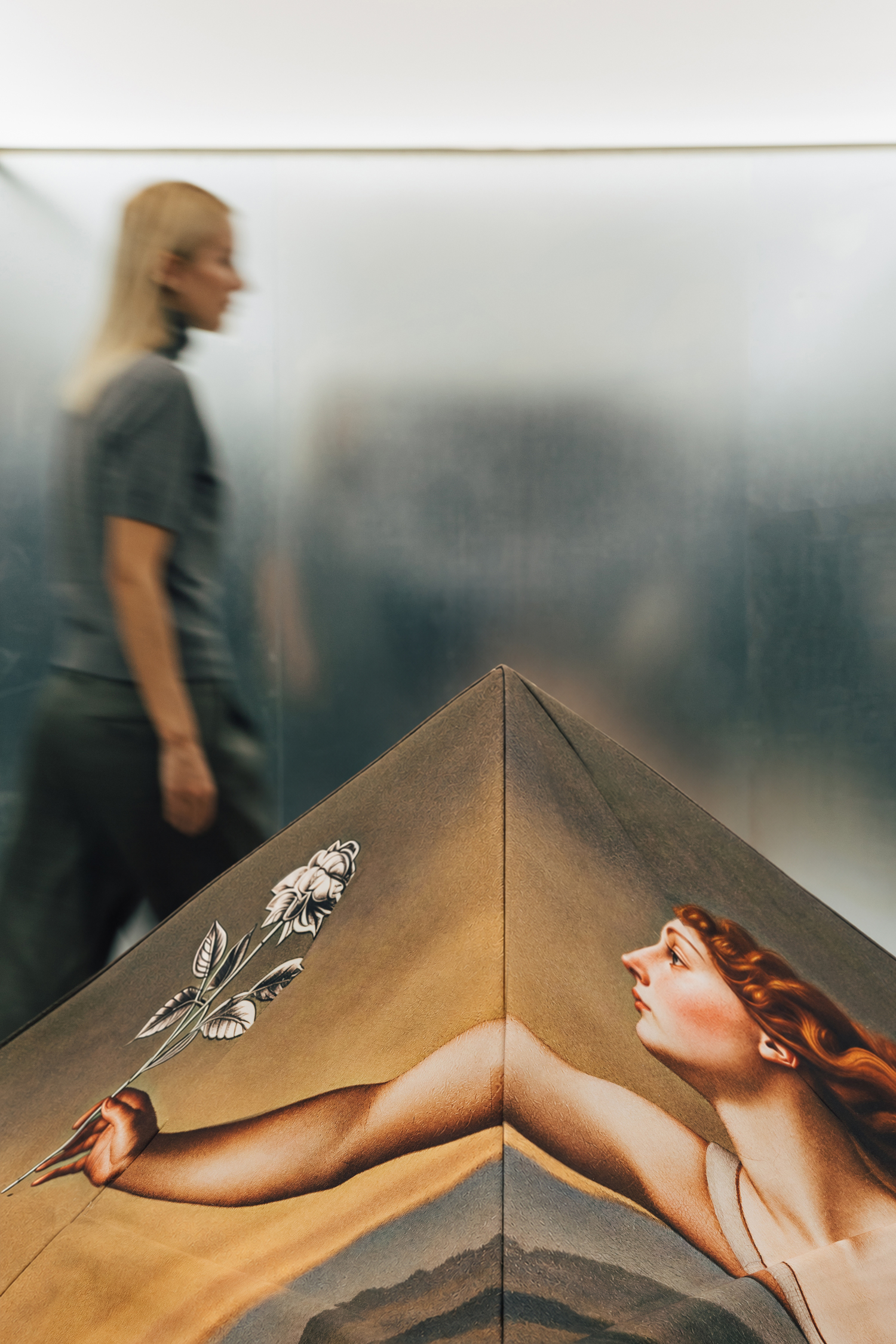
The installation begins with a seemingly simple object: a stone-like cube that, with a single movement, unfolds into an upholstered pyramid. As it moves, more than just its shape changes. Our perception of its materiality and purpose shifts entirely.
“I wanted to bring that digital logic into the physical world and explore how a single object could transform, changing its shape, materiality, and function.”
— Alba de la Fuente
Architect, visual artist, and designer of “SHIFT”
 |
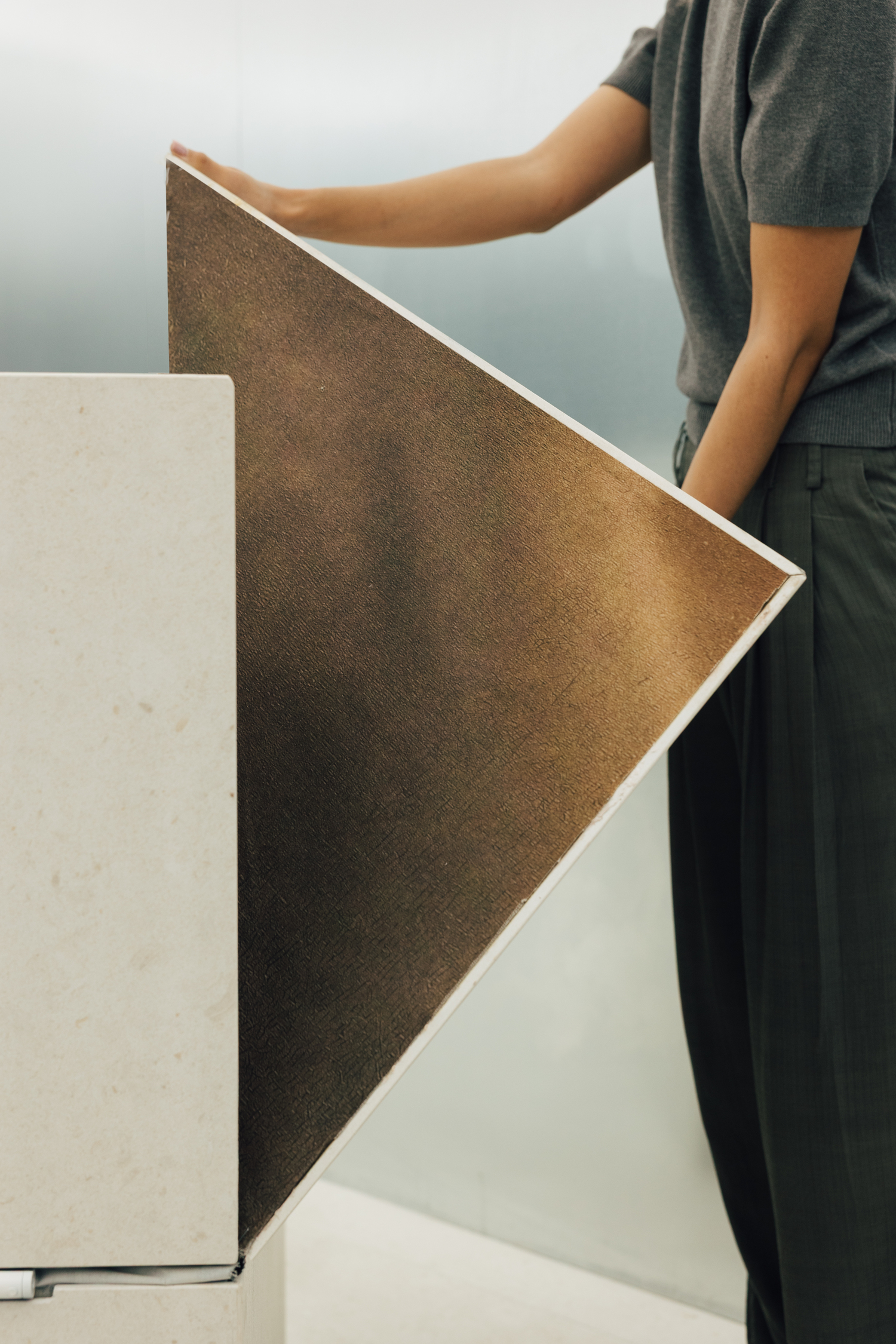 |
Through this transformation, Alba challenges a simple assumption: why does an object have to be just one thing? In “SHIFT,” two seemingly incompatible realities exist within the same piece. Hard becomes soft. A sculptural form becomes a place to sit. What once seemed to be static transforms before our eyes.
Neolith as part of the transformation
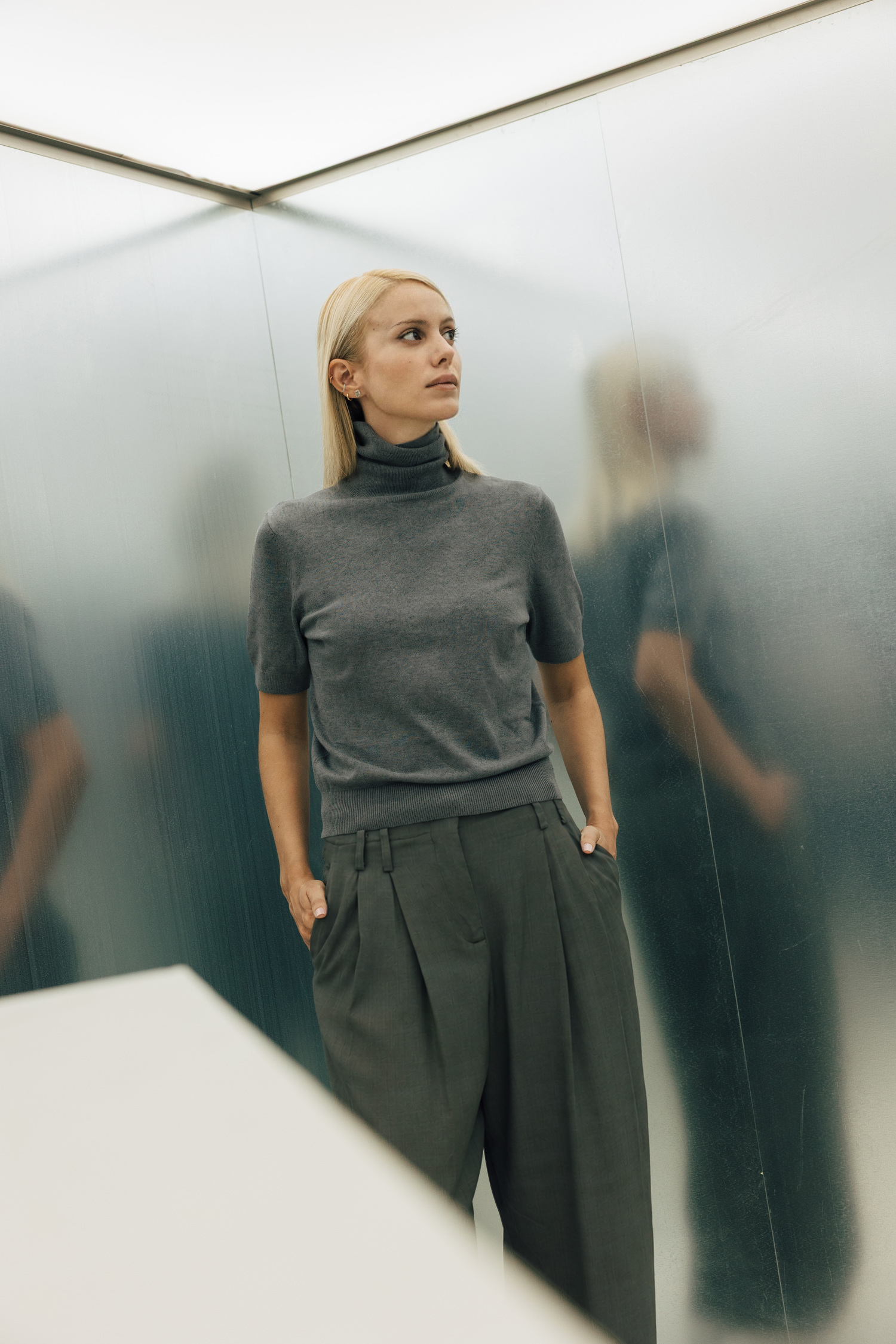
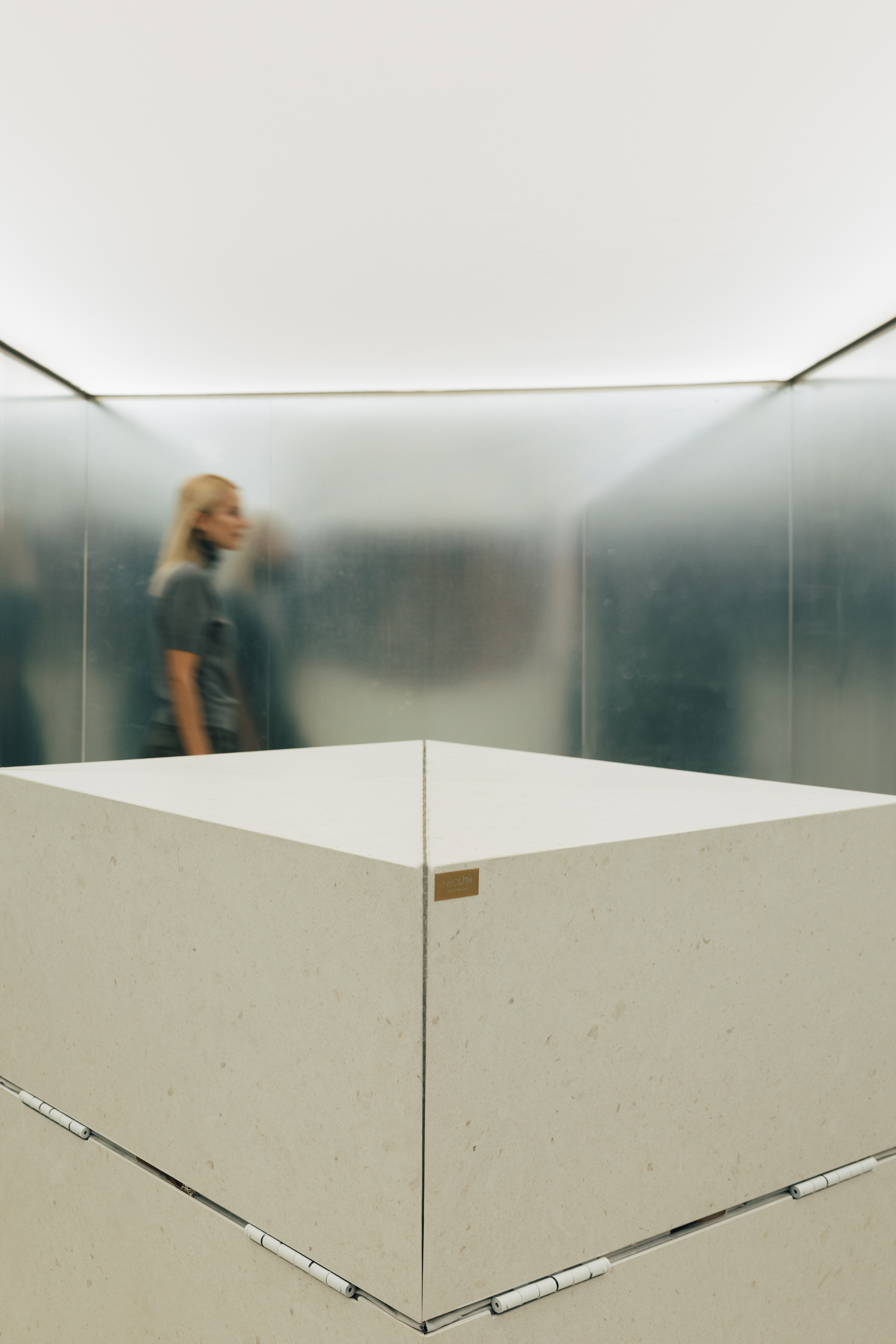
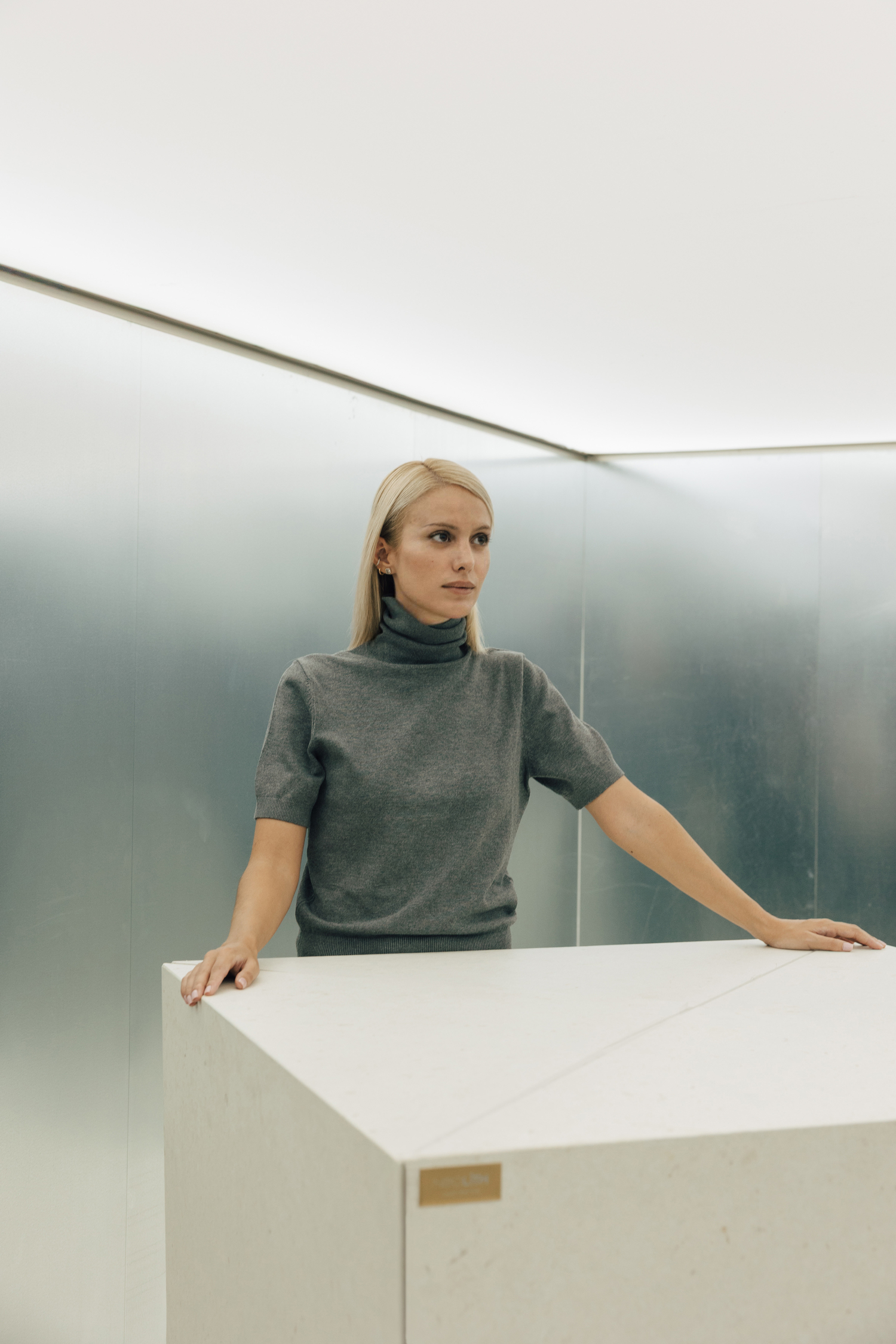
In its initial form, Neolith Pale Fossil plays a central role in defining the installation. The surface clads the cube and extends across the flooring, creating a visual connection between the object and its surroundings. Its stone-like appearance deliberately reinforces the initial impression of solidity, making the subsequent transformation unexpected.
 |
 |
For Alba, this was one of the most compelling aspects of working with Neolith: taking a material traditionally associated with architecture beyond its conventional applications and using it to create an artistic, movable, and unconventional piece.
“Neolith is essential to establishing the initial identity of ‘SHIFT.’ Its stone-like appearance conveys solidity and permanence, creating a contrast with the softness of the sofa that emerges after the transformation”.
— Alba de la Fuente
Architect, visual artist, and designer of “SHIFT”
 |
 |
Neolith Pale Fossil, one of the new designs introduced in THE EDIT. A new material language, becomes much more than the object's exterior finishes. Its material qualities help create the element of surprise that drives the entire experience.
 |
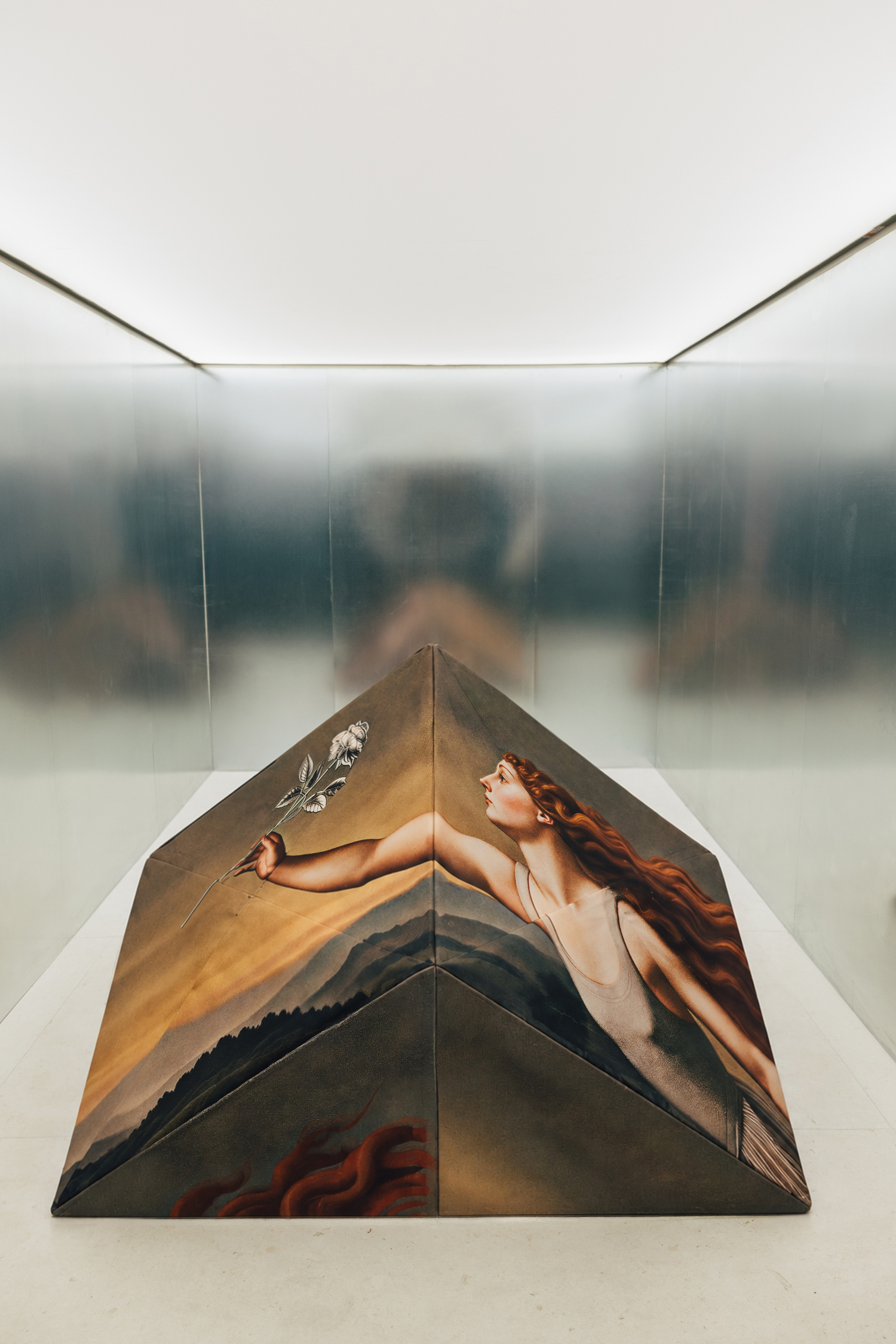 |
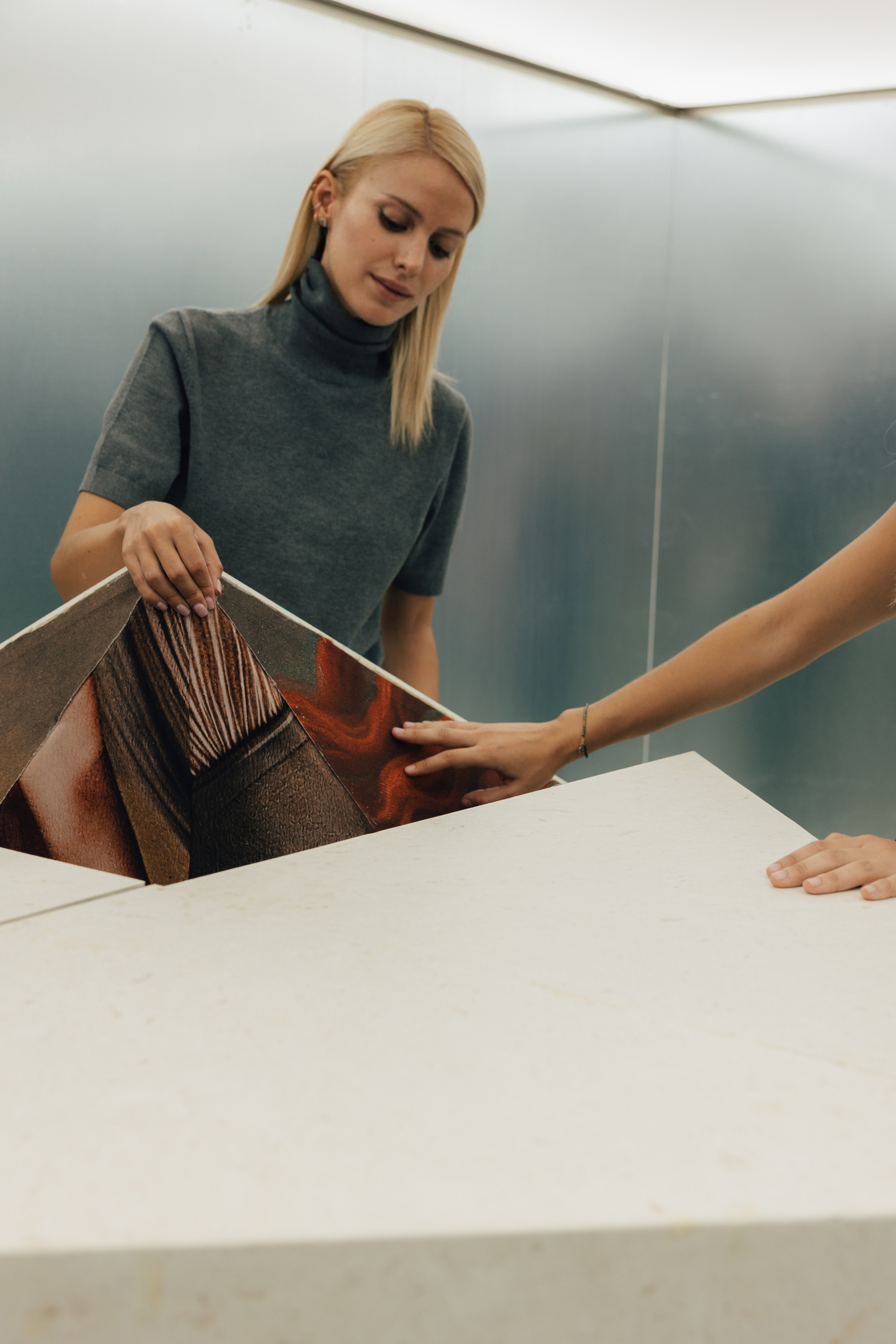
As the cube begins to transform, its original appearance gives way to something entirely different. The geometry shifts, revealing Baroque-inspired upholstery, also digitally designed by Alba. What initially conveyed weight and permanence becomes a soft, functional piece with a completely different identity.
“I wanted to explore how a material we perceive as solid and permanent could become part of an unexpected transformation, expanding the expressive possibilities of the piece”.
— Alba de la Fuente
Architect, visual artist, and designer of “SHIFT”
Designing to surprise
Beyond its transformation mechanism, “SHIFT” is ultimately about experimentation. About discovering what happens when architecture, sculpture, furniture, technology, and materials are no longer treated as separate disciplines.
This approach is closely connected to Alba's creative process. Her projects often begin with an image, an intuition, or a concept she wants to explore. From there, digital tools allow her to pursue different directions, test combinations, and visualize possibilities that can eventually take shape in the physical world.
 |
 |
And that is precisely what “SHIFT” set out to achieve at ADN Fórum: bringing an exploration that began in the digital realm into direct contact with people.
“I would like visitors' first reaction to be one of surprise. For something that initially seems clear and recognizable to suddenly become something else.”
— Alba de la Fuente
Architect, visual artist, and designer of “SHIFT”
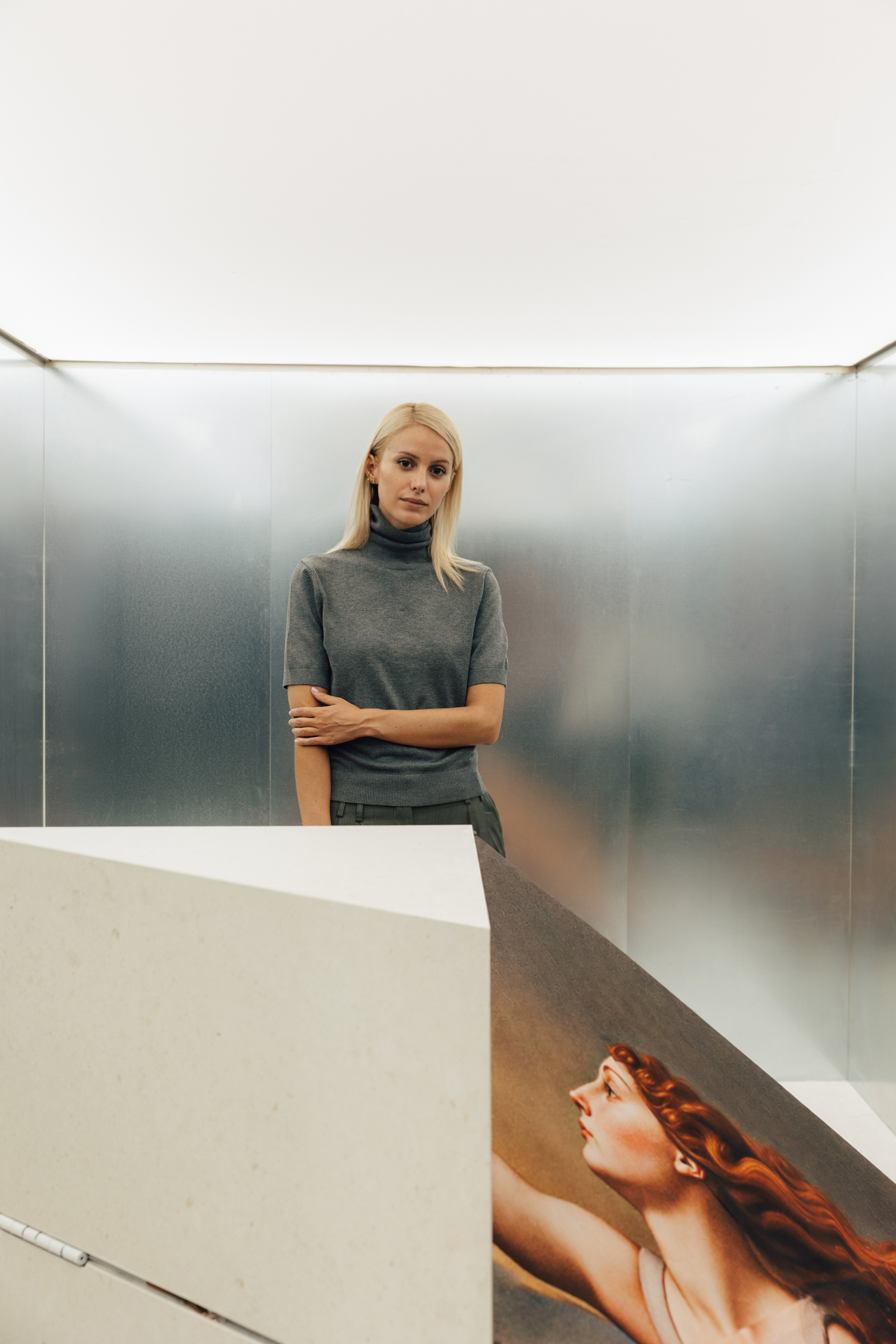
Visitors approach the installation believing they understand what they are looking at: a solid, recognizable form. Then they discover that the same object can unfold, change its geometry, reveal an entirely different material, and even become a place to rest.
This is one of the most fascinating ideas behind “SHIFT”: design doesn't always have to provide an immediate answer. It can also raise questions, challenge our expectations, and encourage us to imagine new possibilities.
 |
 |
For Alba, digital tools offer a way to uncover those unexpected outcomes and push ideas further. With “SHIFT,” that experimentation moves beyond the screen and takes shape through material, movement, and space. Neolith Pale Fossil is an integral part of that journey, showing how an architectural material can take on entirely new meanings when viewed in a different context.