A work that returns to the sea to speak about the present
Relinga takes over the Neolith Living Gallery in Madrid with an approach deeply connected to the sea, craft, and material memory. Sergio Femar’s work introduces a reflection on what is inherited, what is transformed, and what deserves to endure.
In this intervention, Femar brings into the heart of the space a memory linked to Galicia and the sea. Relinga captures that connection through materials that have already lived a life of their own: mussel raft wood, fishing nets, and the traces left by use and time. The work does not stem from a decorative idea of nature, but from a specific experience of place. Here, the material does not illustrate a story; it holds it.
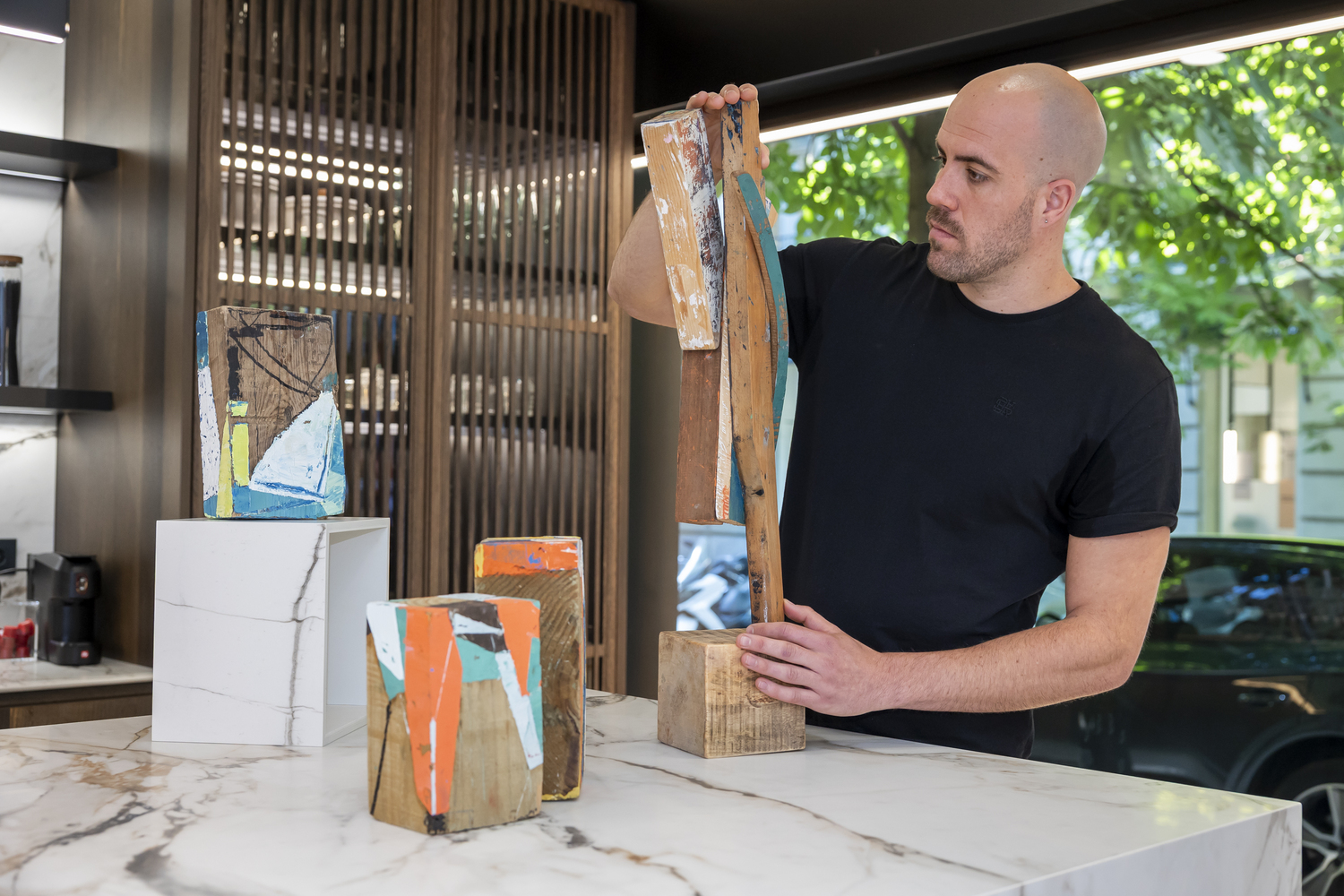
“Relinga represents Galicia’s cultural heritage around the sea, its ancestral boats, and mussel rafts, creating an encounter between deep roots and enduring traditions,” the artist explains. From there, the piece becomes a bridge between past and present, between the artisanal and the contemporary, between what remains and what can be transformed.
A language shaped by making
In Sergio Femar’s work, the piece begins with research deeply connected to process. His practice does not belong to a single discipline, but to a space of intersection where painting, sculpture, and installation come together through material, form, and space. Rather than seeking a fixed image, his work proposes a way of looking and building from the physical, from what happens when materials enter into dialogue.
 |
 |
 |
“I seek to create from a logic that understands painting and sculpture not as an image, but as a device for thinking about space and its relationship with matter”, he notes. In Relinga, that idea takes shape in a piece where each element preserves its own autonomy while also forming part of a composition that extends beyond the purely visual.
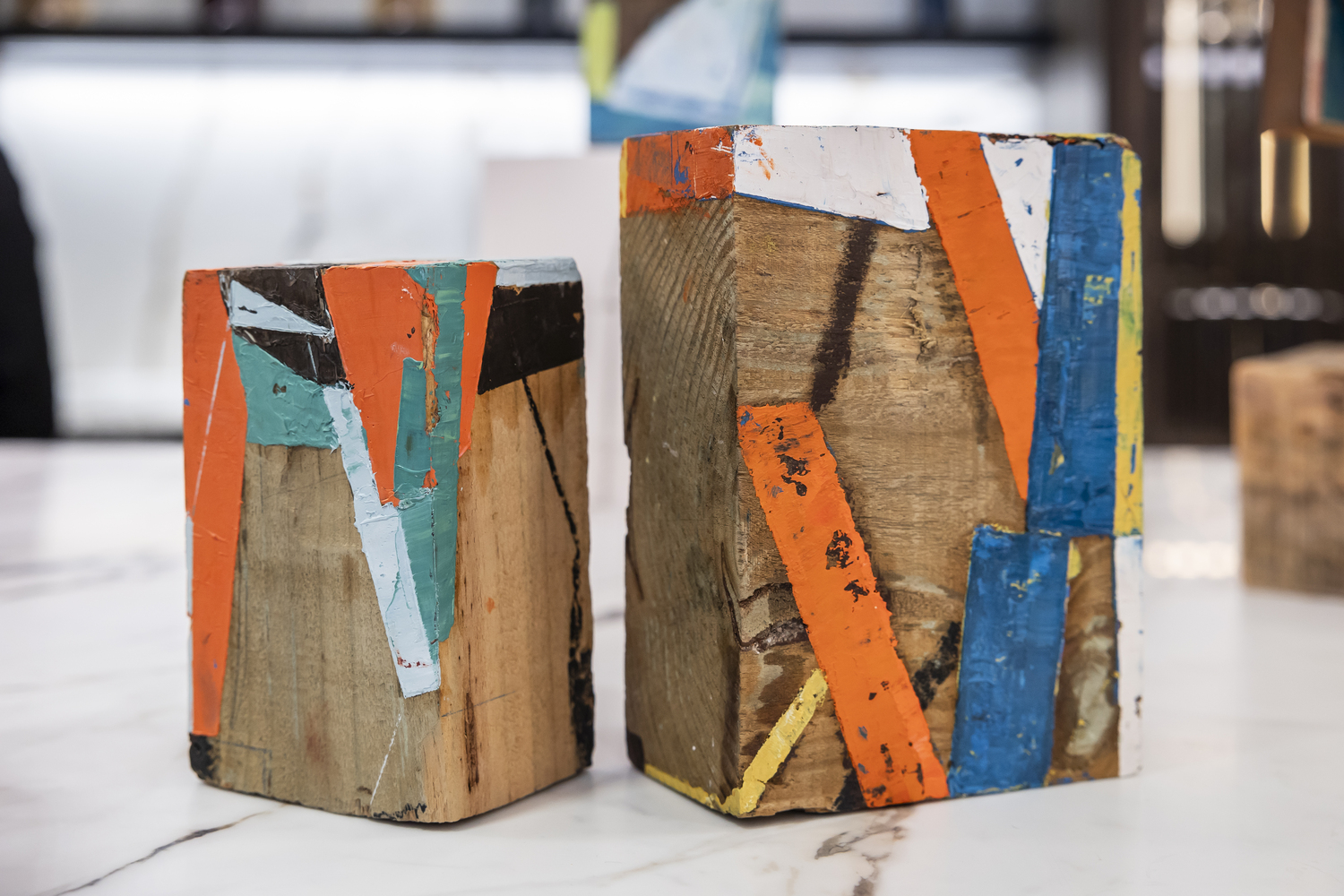
There is also a clear desire in his work to keep the piece connected to the environment it comes from. The reference to the landscape does not appear as representation, but as the real incorporation of its traces and tensions. “I do not represent the landscape; I incorporate it. I do not look for images, but for encounters”. From this perspective, Relinga does not allude to the sea. It brings it with it.
Materials with memory, crafts with continuity
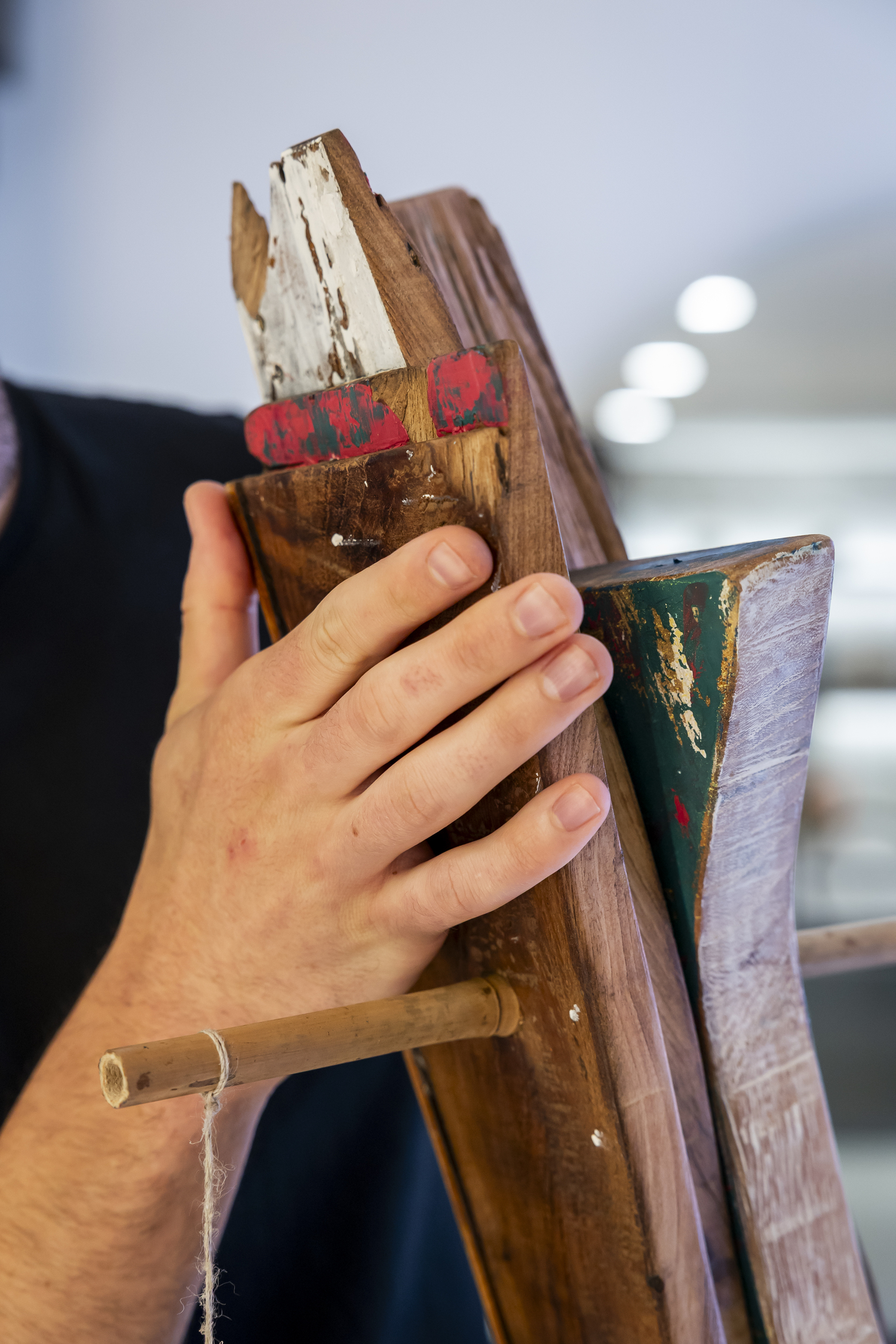
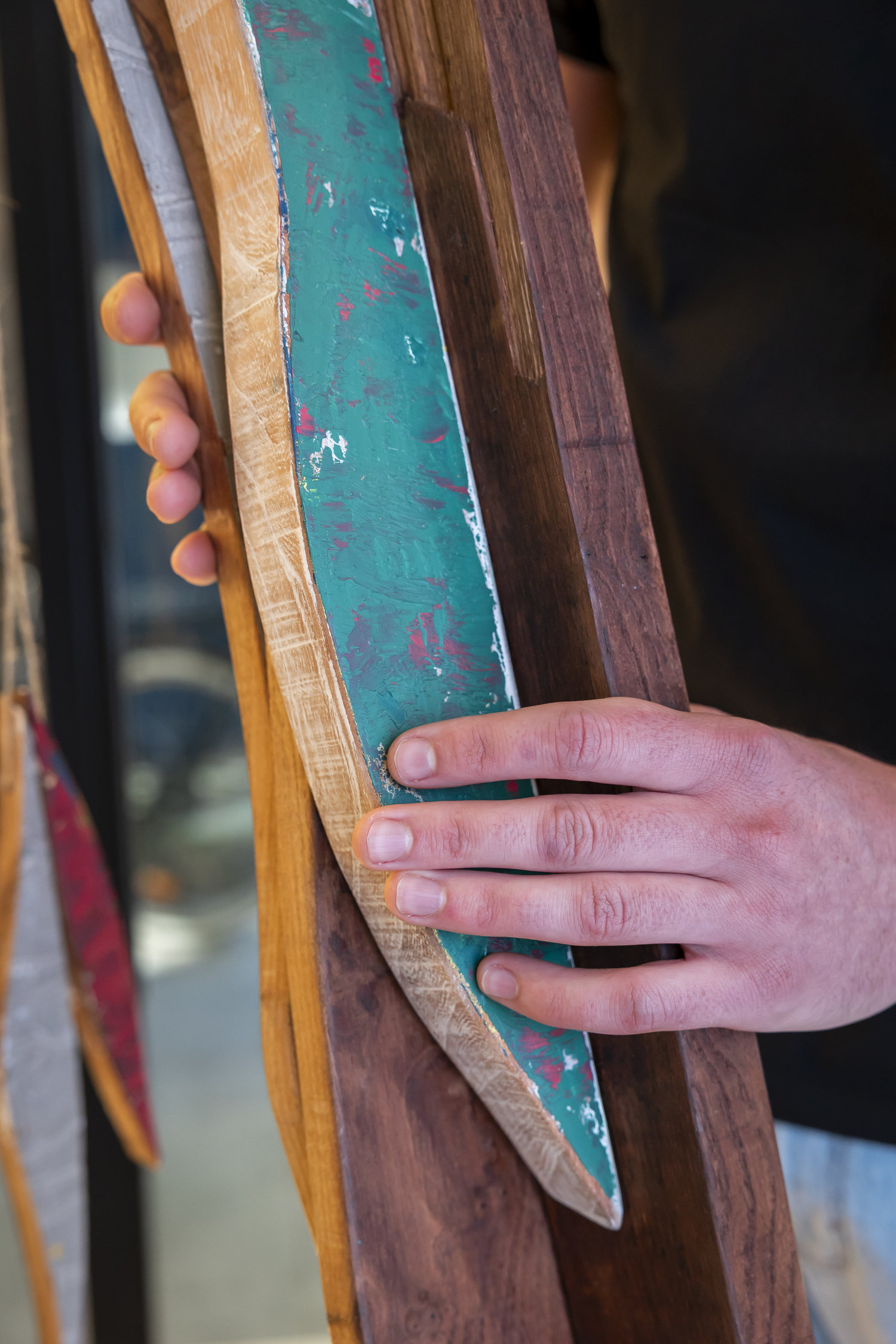
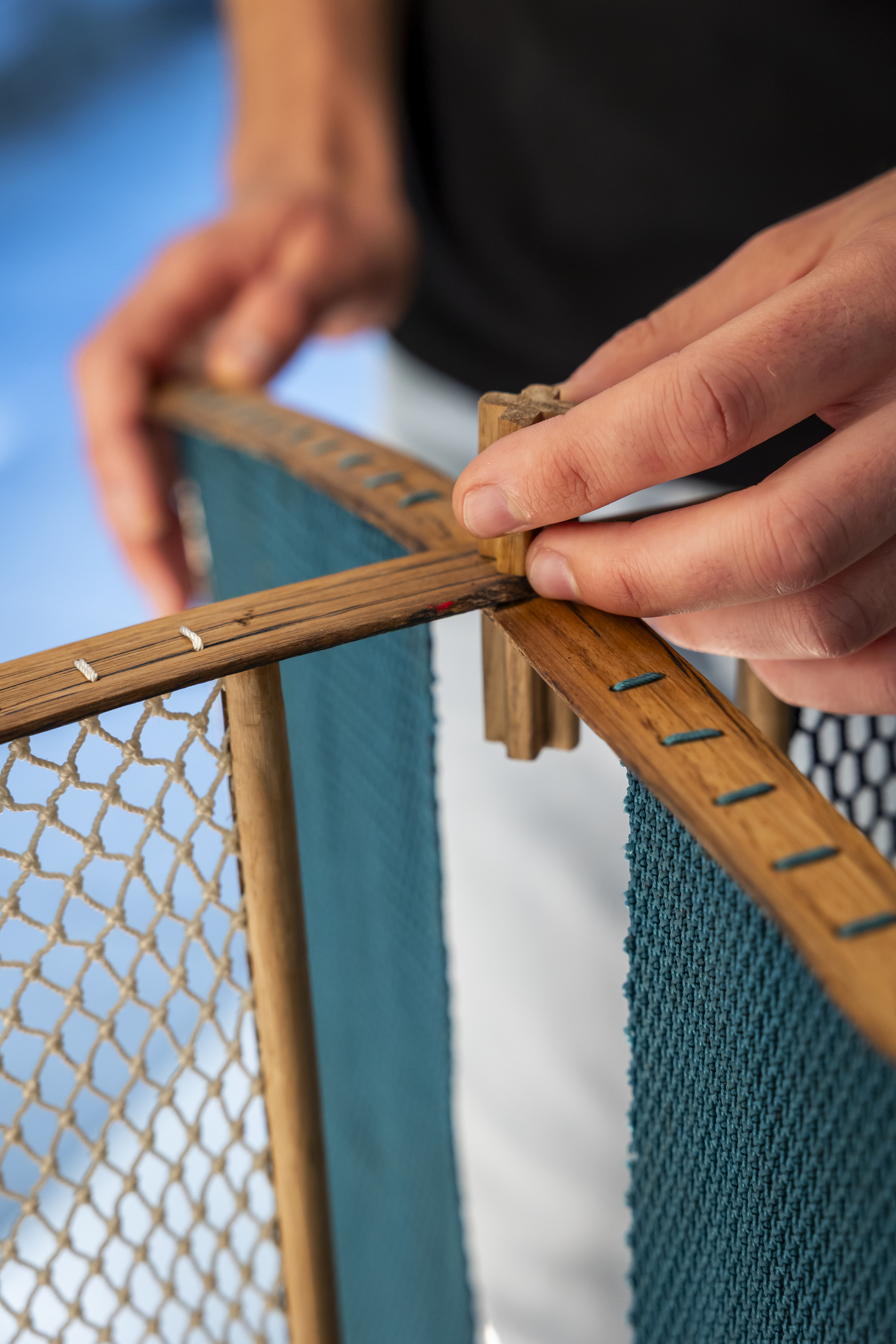
The piece is composed of reclaimed mussel raft wood and recovered fishing nets, materials that refer directly to Galicia’s maritime context and to a material culture deeply rooted in the territory. They carry a physical weight, as well as a history of use and wear.
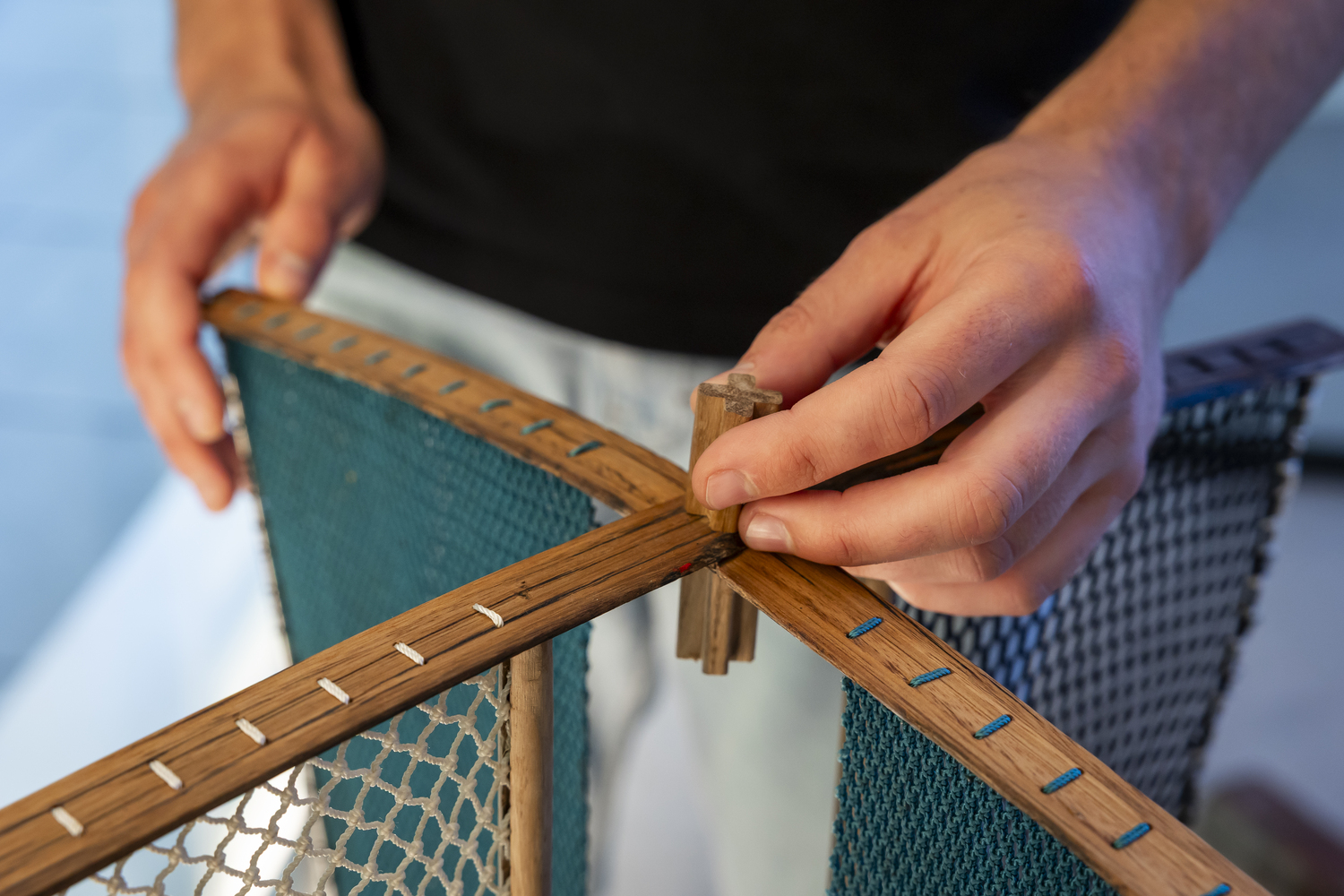
In Relinga, that origin is neither erased nor concealed. On the contrary, the working process highlights the unique qualities of each element and allows the piece to preserve the character accumulated over time. The artisanal restoration of the wood, through techniques such as roughing and oiling, forms part of a way of working that does not impose a new appearance, but guides a material that has already lived toward another form of presence.
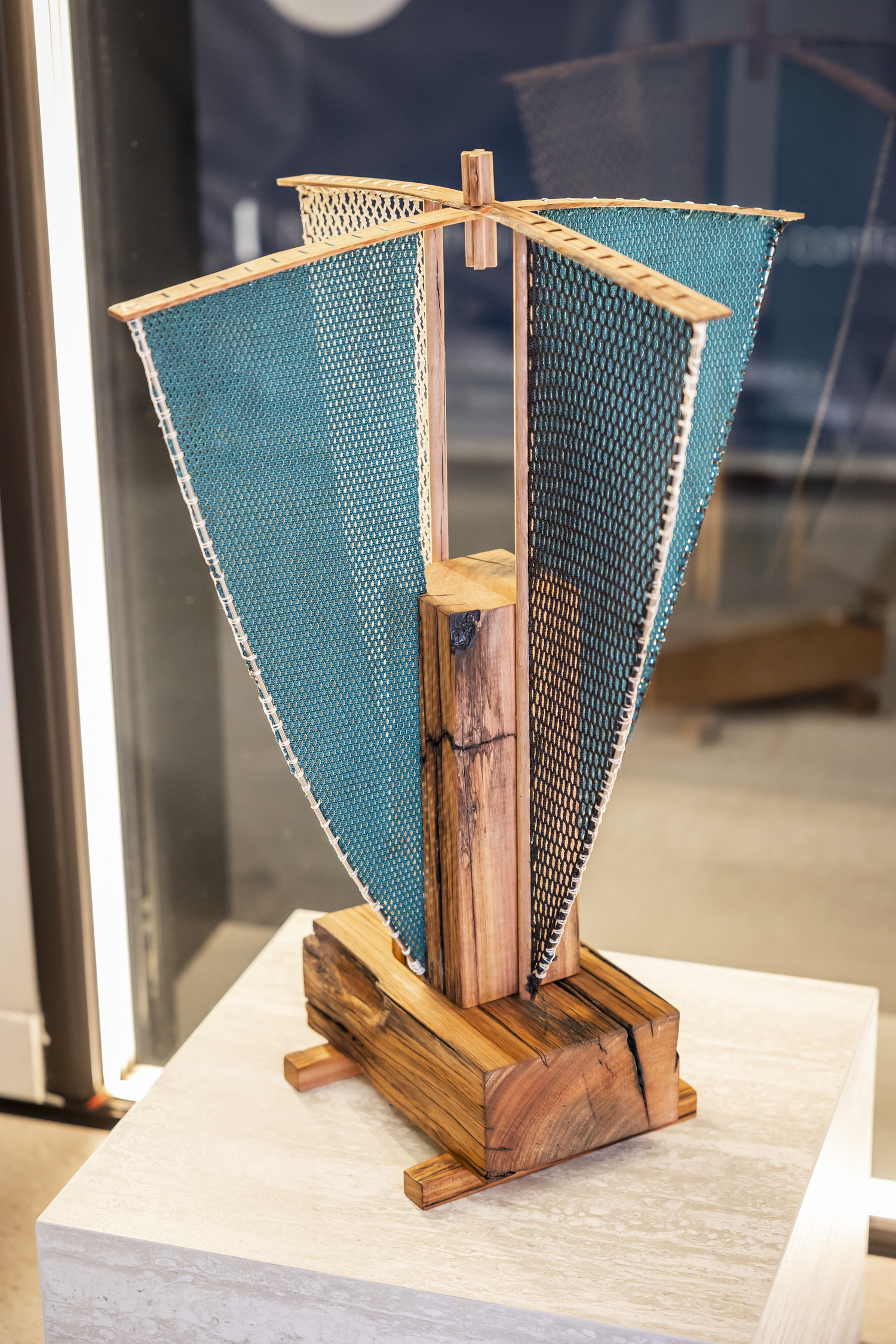
In this work, return is not about repetition, but about recovering connections. “The sea in this work is not only a landscape, but an identity bond and also a migratory route. The Atlantic appears as a setting of transit, labor, and exile.” From that point, Relinga opens itself to a memory that is personal and local, as well as historical and collective.
A presence activated by space
Presented at the Neolith Living Gallery in Madrid, the work takes on a particular resonance. The architectural setting of the showroom reinforces the spatial dimension of the piece and allows it to be understood through new perspectives, not only as an artistic object, but as an intervention that changes the perception of the environment and establishes a direct dialogue with it.
“The presentation of Relinga at the Neolith Living Gallery introduces an architectural and spatial dimension that amplifies its interpretation,” Femar says. “The work dialogues naturally with the environment, becoming part of a space where materiality, design, and contemporaneity converge.”
Under this premise, Relinga finds an especially coherent setting. The piece shares with the space a precise attention to materiality and to the relationship between design, permanence, and use. Its presence introduces a different texture within the space.
Sustainability as practice
In Sergio Femar’s proposal, sustainability is not presented as an added layer to the discourse, but as a principle that guides his work. It is present in the choice of materials, in reuse, in the continuity of certain artisanal processes, and in a way of producing that starts from what already exists to open up new possibilities.
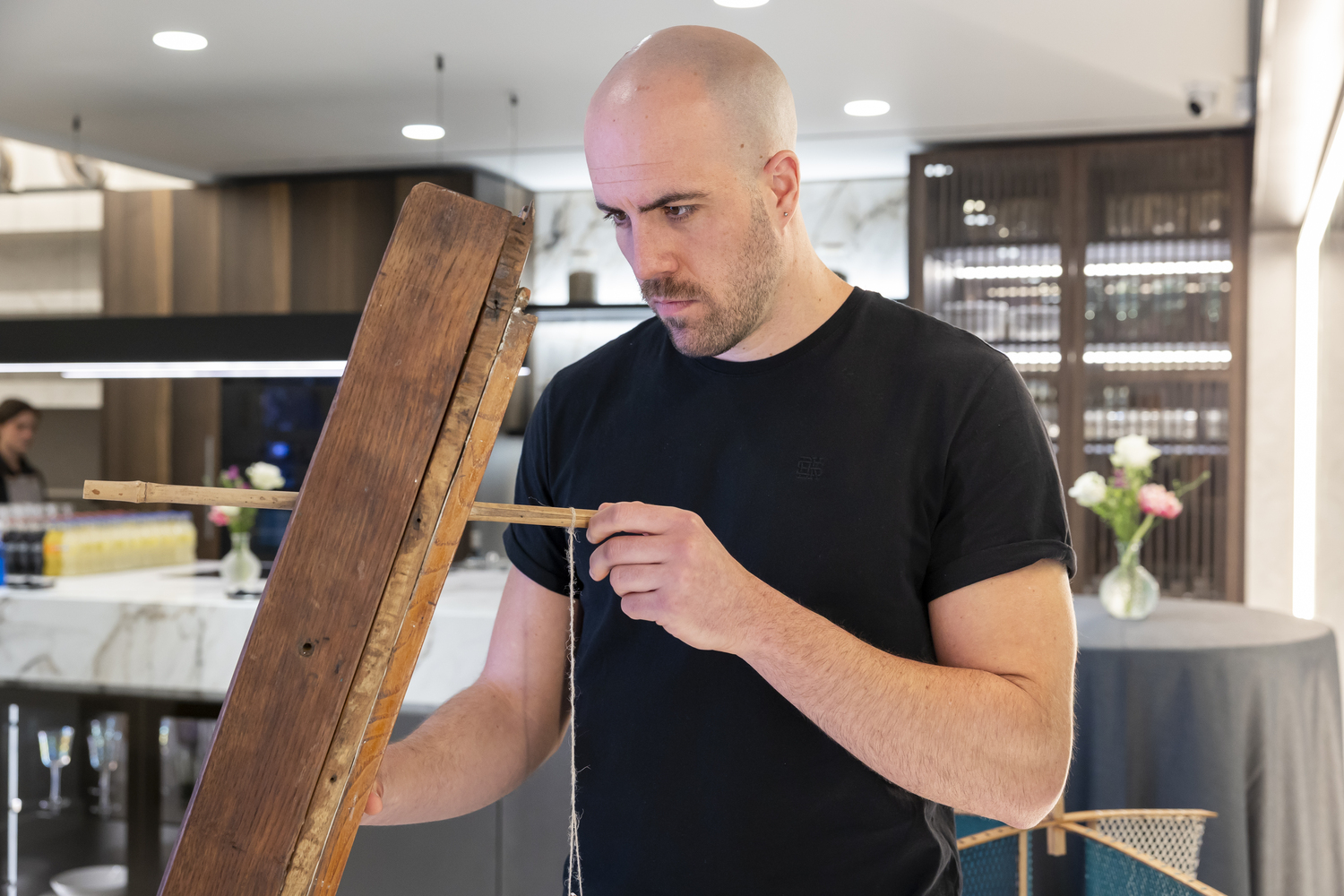
“I understand sustainability as a practice integrated into the creative process itself,” the artist says. “There is a circular economy of means in which materials are constantly reused, giving rise to new forms and meanings.”
This vision aligns naturally with Retorno project and with Neolith’s philosophy. In both cases, matter is understood through responsibility, durability, and care. In Relinga, that affinity is expressed through a work that transforms recovered materials into a contemporary proposal while keeping them connected to their origin and to the culture they contain.
The trace that remains
There is something especially meaningful about working with elements that have already had a previous life: they invite us to understand creation not as an absolute beginning, but as a continuation. In Relinga, that idea runs through the entire piece and gives it a particular depth. The work organizes materials, while also extending stories and forms of knowledge.
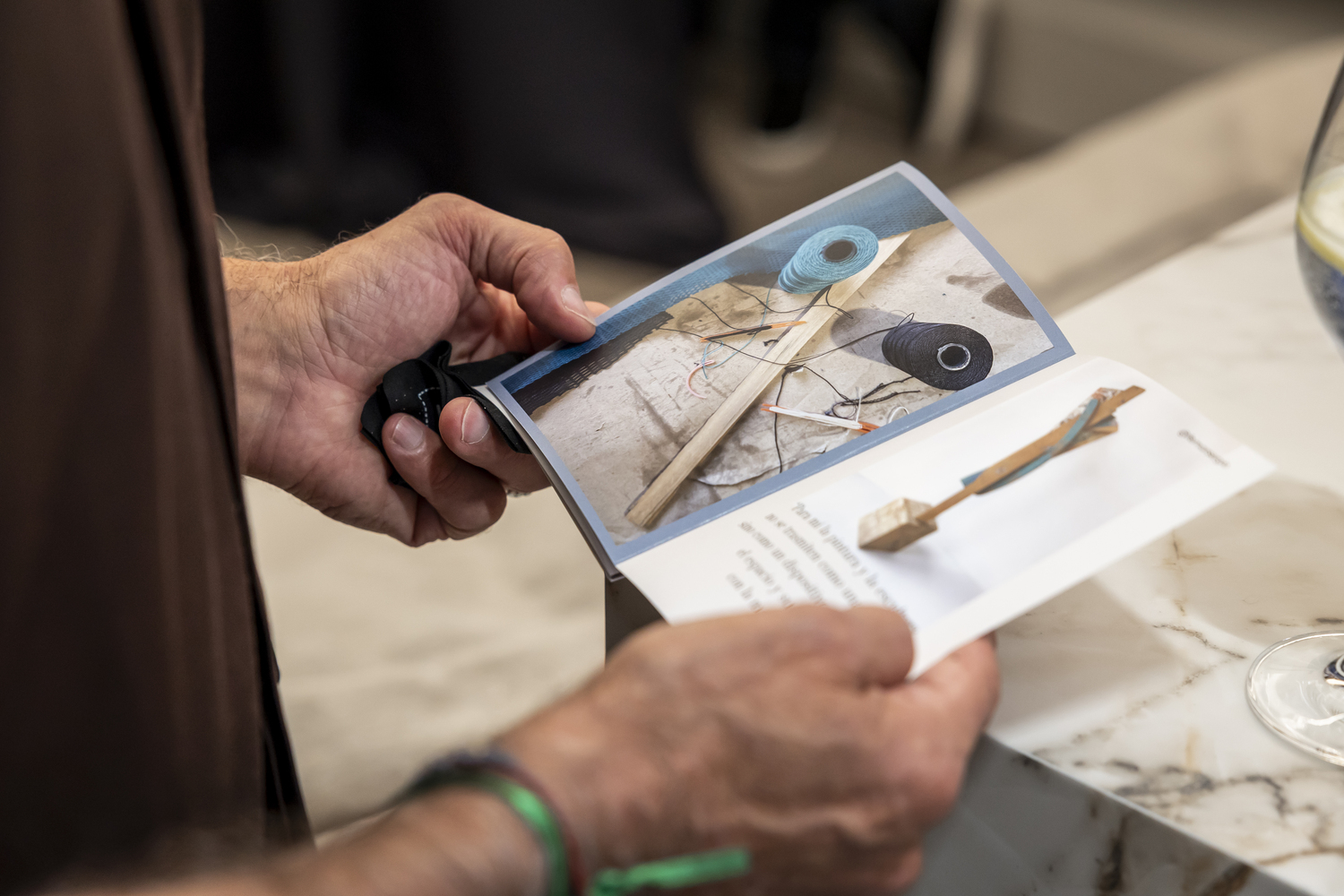
“With this body of work, I seek to highlight artisanal processes connected to traditions that are disappearing,” Femar explains. “I am interested in leaving a trace that is not only formal, but also cultural and material: a continuity that connects what has been with what can still be.”
That continuity is one of the keys to the work. Relinga brings materials with history into the present without turning them into remnants of the past. Instead, it makes them active elements capable of generating new meanings.